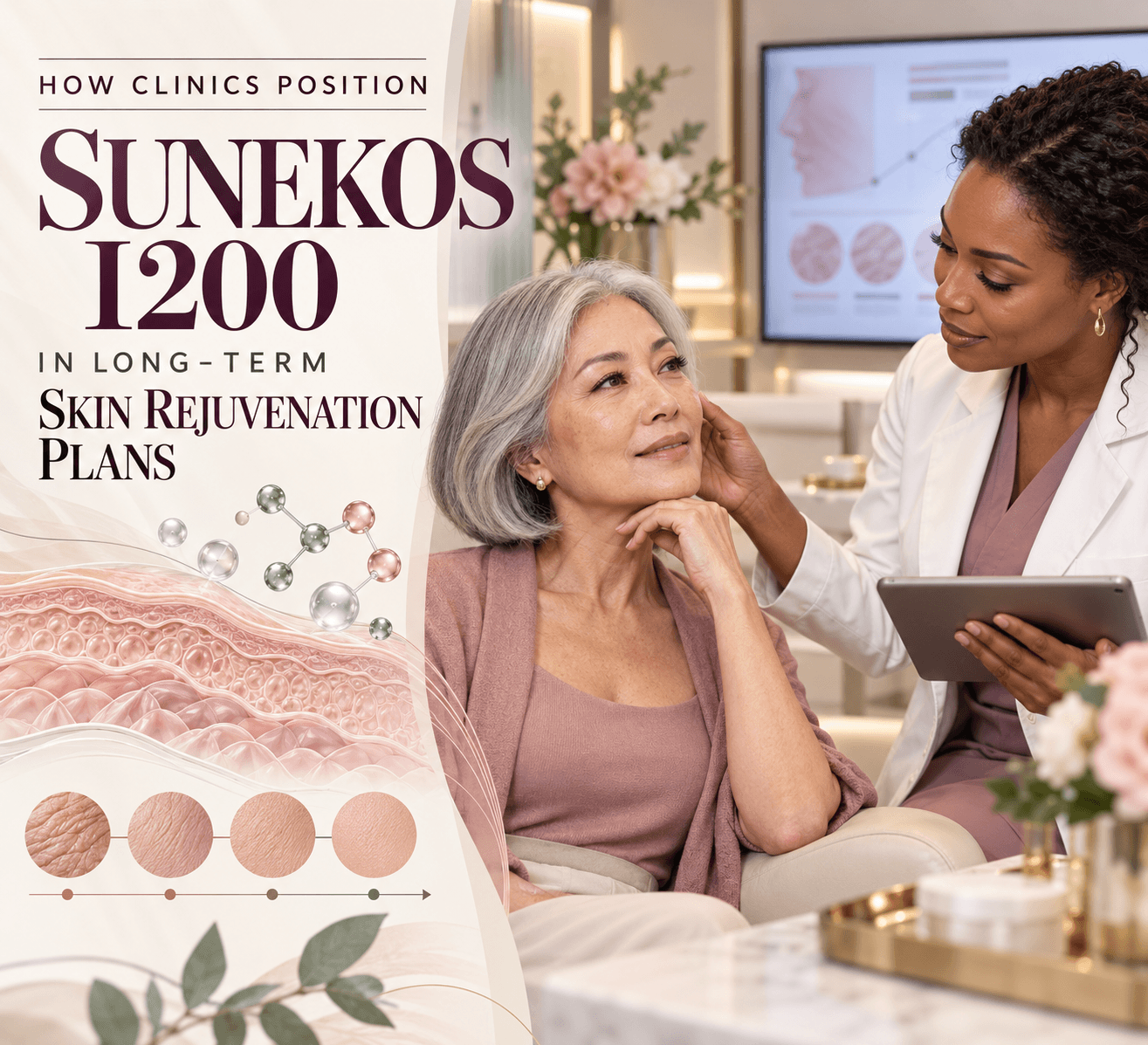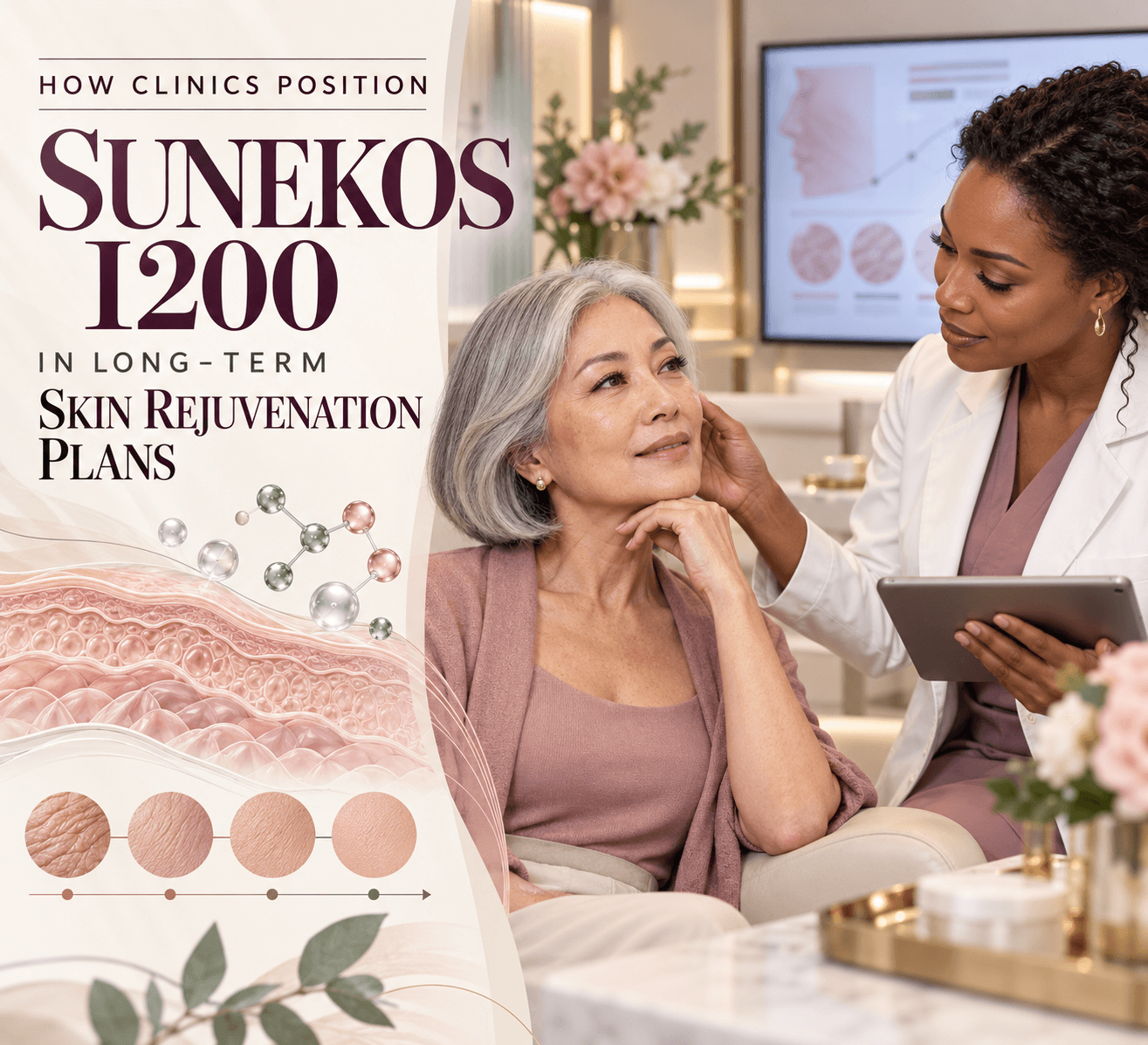

Long-term skin rejuvenation is rarely built around a single injectable or one treatment appointment. Clinics increasingly structure plans around the patient’s baseline skin quality, degree of ageing, priorities, tolerance for downtime and willingness to follow a maintenance schedule. Within this model, Sunekos 1200 can be positioned as a skin-quality treatment rather than a substitute for volumising fillers, resurfacing procedures or surgical correction.


Start with the treatment objective, not the product
A rejuvenation plan should begin with a clinical assessment. Fine lines, dehydration, laxity, volume loss, pigmentation and textural damage may appear together, but they do not necessarily respond to the same intervention.
The practitioner should establish what the patient wants to improve and whether those expectations are realistic. Someone seeking better skin quality may be suitable for a regenerative injectable approach. A patient expecting a significant lifting effect or replacement of lost structural volume may require a different or combined strategy.
This distinction helps clinics avoid presenting every injectable as an interchangeable “skin booster.” It also makes consultations clearer: the product is selected because it addresses a defined treatment objective, not because it happens to be the clinic’s current promotion.
Where Sunekos 1200 fits
Sunekos 1200 is designed to support skin quality and extracellular matrix balance through a patented combination of hyaluronic acid and amino acids. Its role is associated with biological skin improvement rather than direct structural volumisation.
Fräya supplies Sunekos 1200 for trained and licensed medical professionals. The product contains high-molecular-weight sodium hyaluronate and a combination of six amino acids. It is supplied as two 1.5 ml vials and is intended for professional administration in accordance with manufacturer instructions, appropriate training and local regulations.
For clinics, this positioning is important. Sunekos 1200 should not be described as a conventional dermal filler simply because it contains hyaluronic acid. Its clinical purpose, patient selection and expected outcome are different from those of products used primarily to create projection, replace volume or reshape facial features.
Positioning it within a staged plan
A long-term programme can be divided into three broad phases: assessment and preparation, an initial treatment phase, and maintenance. The exact protocol should always be determined by a qualified practitioner using current manufacturer guidance.
During the first phase, the clinic documents the patient’s concerns, medical history, previous procedures and baseline skin condition. Standardised photography is valuable because gradual changes in skin quality can be difficult to judge from memory alone.
The initial treatment phase should be presented as a course with cumulative goals rather than a guaranteed transformation after one appointment. Review appointments allow the practitioner to assess response, tolerance and whether the original plan remains appropriate.
Maintenance should not be sold automatically at the beginning. Its frequency can be decided after observing the patient’s response, ageing pattern, lifestyle and other treatments included in the plan.
Setting realistic expectations
Clear communication is particularly important with regenerative and skin-quality procedures because the outcome may be gradual. Patients accustomed to fillers may expect an immediate visible change, while someone familiar with resurfacing may expect peeling or a period of obvious recovery.
The consultation should explain that the goal is improvement in skin quality, not a dramatic alteration of facial structure. Clinics should avoid promising a fixed percentage of improvement, a guaranteed duration or identical results for every patient.
Useful points to discuss include:
- which concern the treatment is intended to address,
- what it is unlikely to change,
- when the response will be reviewed,
- whether a course rather than one session is being considered,
- what temporary injection-site effects may occur,
- why maintenance varies between individuals.
This approach protects informed consent and reduces the risk that a patient interprets subtle, progressive improvement as treatment failure.
Deciding who may benefit
Product selection should follow a full medical consultation and an assessment of the skin rather than age alone. Two people of the same age can have very different levels of photodamage, laxity, hydration and volume loss.
A clinic may consider Sunekos 1200 when the treatment objective centres on mature or visibly compromised skin quality and a natural-looking regenerative approach. It may be less aligned with a patient whose main concern is a structural deficit requiring projection or volume replacement.
The practitioner must also review contraindications, previous adverse reactions, active skin conditions, medication, pregnancy or breastfeeding status, immune-related concerns and any other factors relevant to injectable treatment. Current instructions for use and local professional requirements take priority over general protocols or promotional descriptions.
Combining Sunekos 1200 with other procedures
Long-term rejuvenation plans often combine different treatment categories because ageing affects several tissue layers. A skin-quality injectable may sit alongside skincare, neuromodulators, fillers, peels, energy-based treatments or other regenerative procedures.
Combination does not mean performing every procedure during the same visit. The clinic should decide:
- which concern each treatment addresses,
- the correct order of procedures,
- whether healing time is needed between appointments,
- how inflammatory responses or temporary swelling may affect assessment,
- when results should be photographed and reviewed.
For example, a patient with both skin-quality concerns and structural volume loss may require separate treatment objectives. Sunekos 1200 can be positioned within the skin-quality component, while a suitable filler may address volume or support. Keeping those roles distinct makes the overall plan easier to understand.
Clinics should follow product-specific training and current guidance when sequencing treatments. A timetable copied from another patient or a marketing package should not replace individual clinical judgement.
Measuring progress over time
Subtle improvement requires consistent documentation. Photographs should be taken using the same lighting, camera position, facial expression and distance wherever possible. Notes should record the treated area, product details, technique, patient response and relevant aftercare information.
Assessment should include more than whether the patient “looks younger.” Depending on the original objective, the clinic may review texture, hydration, fine lines, elasticity or overall skin appearance.
Patient-reported outcomes also matter. Some changes are noticed first in how the skin feels, how makeup sits or how comfortable the patient feels without heavy coverage. These observations should complement clinical assessment rather than replace it.
Regular reviews also help determine whether to continue, modify or stop the plan. Long-term treatment should remain responsive to the patient’s needs instead of becoming an automatic sequence of repeat appointments.
Avoiding the “one product solves everything” message
A strong consultation makes clear that injectable treatment is only one part of skin health. Sun exposure, smoking, sleep, skincare, medical conditions and adherence to aftercare can influence the appearance and behaviour of the skin.
Clinics should therefore position Sunekos 1200 within a broader strategy that may include daily photoprotection, appropriate topical skincare and management of other contributing factors. This does not mean promising that lifestyle changes will produce the same result as treatment. It means recognising that long-term outcomes depend on more than what happens during an appointment.
The clinic should also be willing to recommend no treatment when the product does not match the patient’s concern. This strengthens trust and prevents a skin-quality injectable from being used as a default answer to every sign of ageing.
Building treatment packages responsibly
Packages can make multi-session plans easier to understand and budget for, but they should preserve clinical flexibility. Rather than selling a rigid number of appointments to everyone, clinics can describe an initial plan followed by a scheduled review.
A responsible package should explain:
- what is included,
- which outcomes are being targeted,
- when progress will be assessed,
- whether unused sessions can be changed if the plan is revised,
- what maintenance may involve,
- which costs are separate.
Marketing should use accurate product descriptions and avoid presenting Sunekos 1200 as a filler, a surgical alternative or a guaranteed lifting treatment. Before-and-after imagery should be standardised and representative, with appropriate consent.
Procurement is part of clinical governance
Long-term plans depend on consistent access to authentic products with appropriate documentation, storage conditions and remaining shelf life. Clinics should check packaging integrity, batch information and expiry dates when stock arrives. Traceability should continue through the patient record.
Purchasing decisions should also reflect expected appointment volume. Holding too much stock can increase the risk of expiry, while ordering too late may disrupt a planned course. A reliable supply process helps the clinic maintain continuity without encouraging unnecessary treatment simply to use inventory.
Sunekos 1200 is intended for qualified healthcare professionals. Administration, patient selection, storage and treatment planning must follow the current instructions for use, professional training and regulations applicable in the clinic’s jurisdiction.
A long-term plan should remain individual
Sunekos 1200 can occupy a clear place in a rejuvenation strategy when the objective is gradual improvement in skin quality rather than immediate volumisation. Its value depends on appropriate assessment, accurate positioning and realistic communication.
The strongest plans are not those with the greatest number of procedures. They are the ones in which every treatment has a defined purpose, outcomes are reviewed consistently and maintenance is adjusted to the individual. Used within that structure, Sunekos 1200 becomes part of an ongoing clinical strategy rather than a standalone promotional treatment.