
Looking for a foundation that makes 50+ skin look fresher and more even—without settling into lines or turning cakey by lunchtime? You’re in the right place. In this warm, practical FAQ, I’m answering the big, real-life questions women ask me about Lancôme Rénergie Lift Makeup Foundation SPF 27: how it wears on mature texture, how to apply it for a lifted look, what to do if it pills or creases, and how to make it last all day without drowning your face in powder.

If you want the bigger “best of” foundation lists first, these are great starting points:
- 10 Best Foundations for Mature Skin (I’m 52 & Tested 2025)
- Best Foundations for Mature Skin (2025 Guide)
- 7 Wrinkle-Proof Foundations That Don’t Settle Into Wrinkles (2025)
Table of Contents
What is Lancôme Rénergie Lift Makeup Foundation (SPF 27)?
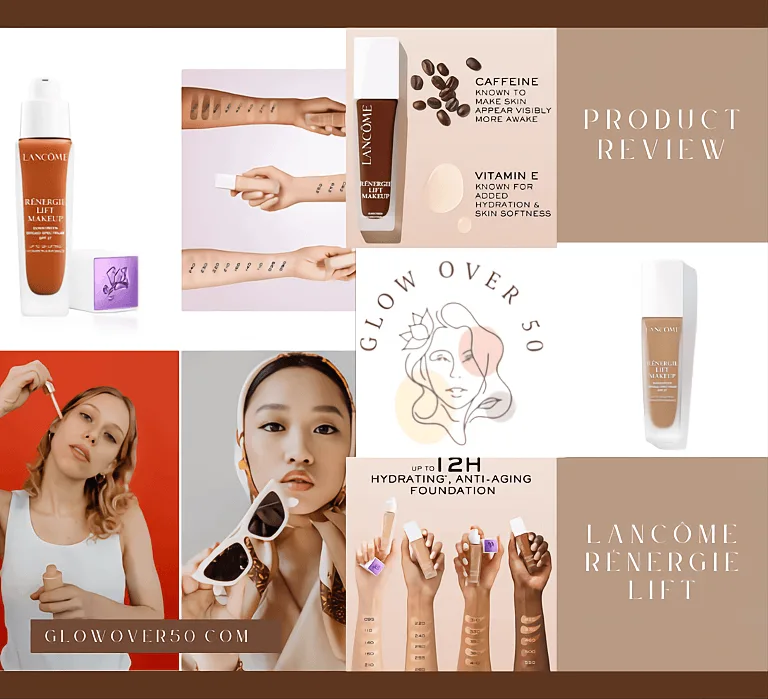
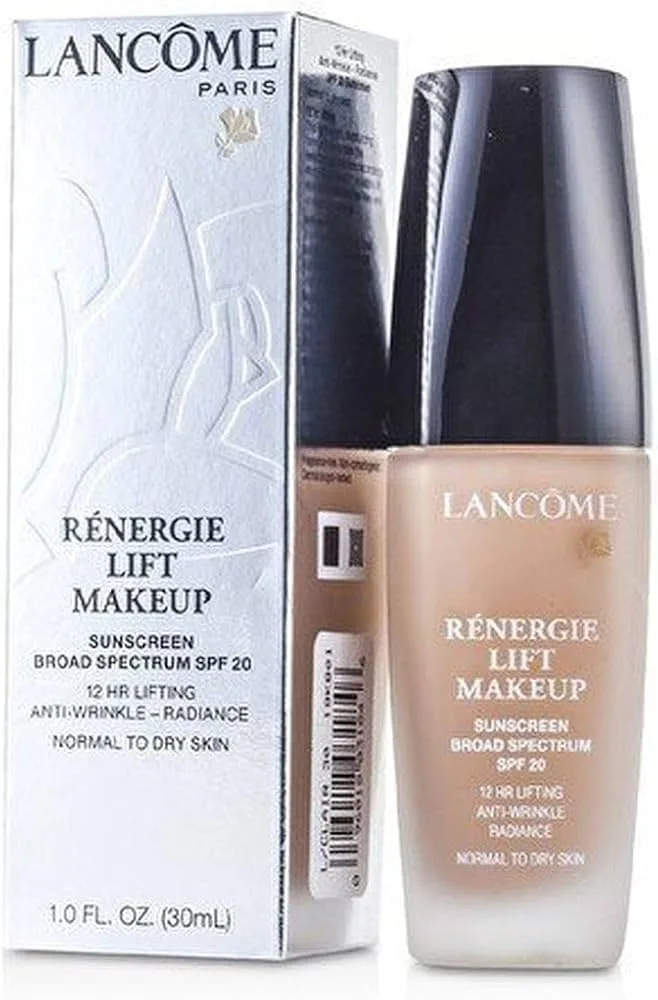
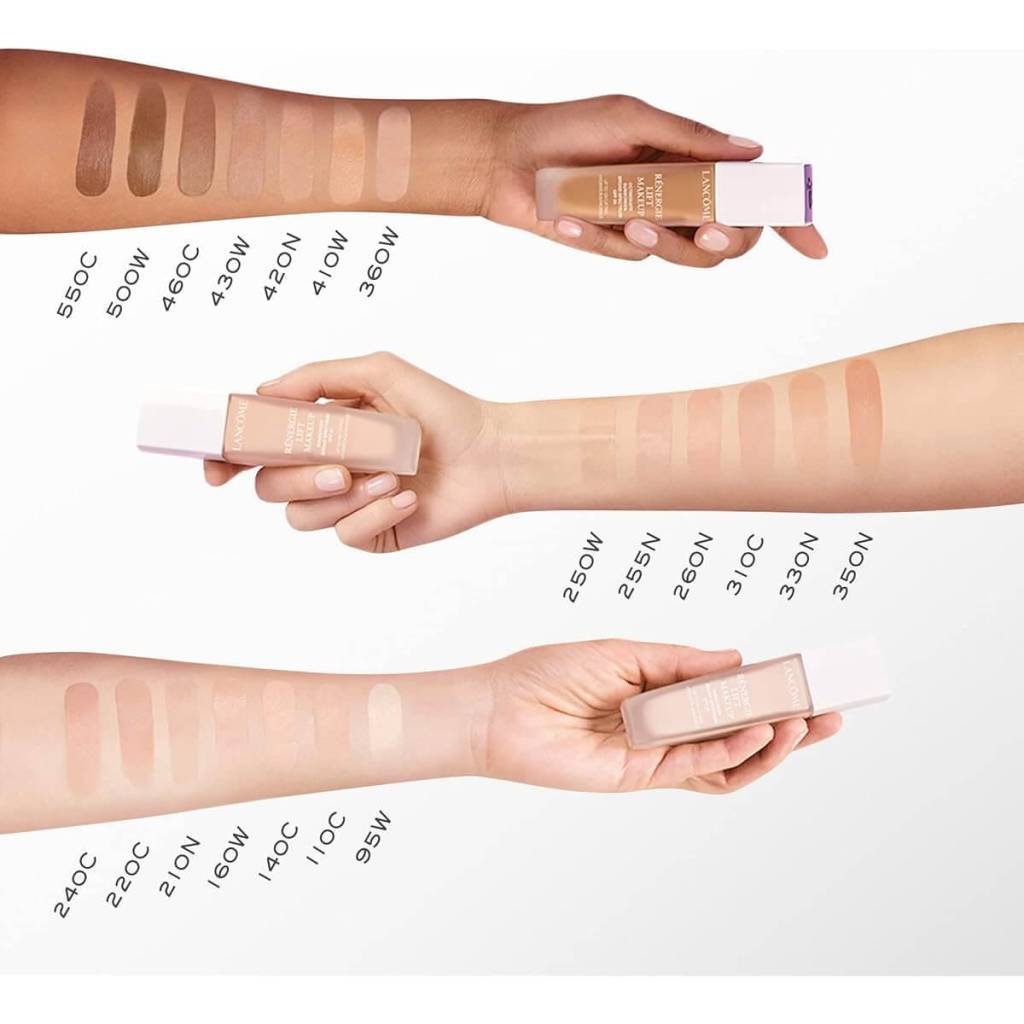
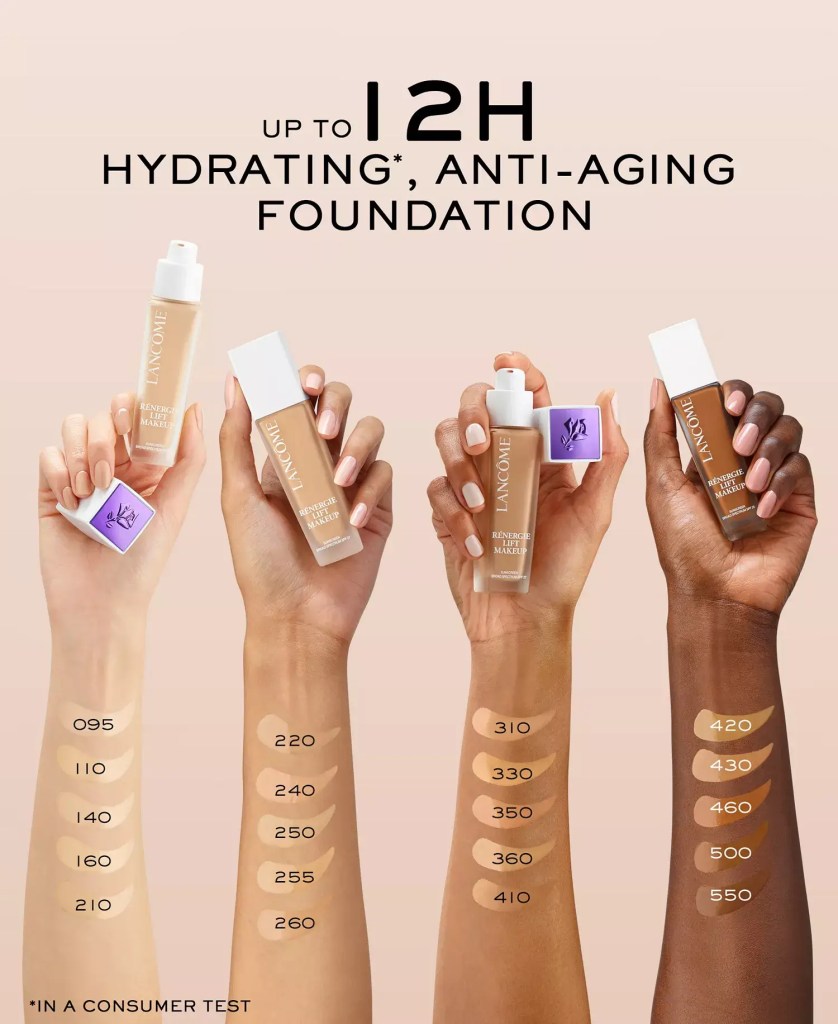
Lancôme Rénergie Lift Makeup Foundation is positioned as a lightweight, hydrating foundation with medium-to-full coverage, SPF 27, and a “lifting/firming” effect, with wear claims up to 12 hours. In real-life, mature-skin terms, that usually means it’s trying to hit the sweet spot we care about most after 50:
- Coverage that smooths, not masks
- A finish that doesn’t make texture look louder
- Comfort (no tight, dry feeling by midday)
- Longevity without heavy powder

And honestly? That’s exactly the category I’m always hunting for on GlowOver50: foundations that give a polished look, but still let skin look like skin.
If you’re coming from a place where foundation has started to feel “too much” (or it settles into lines that never used to show), start here first—because prep changes everything:
- How to Prep Mature Skin for Foundation (Step-by-Step)
- The Order Matters: The Exact Makeup Layering Routine That Works on Mature Skin
Key Features for Mature Skin
1) Lightweight + Hydrating (the “mature skin insurance policy”)
After 50, the biggest issue isn’t usually coverage—it’s how the foundation sits on the skin. A formula that stays flexible and hydrated tends to:
- cling less to dry patches
- look smoother around the mouth and smile lines
- wear more evenly through the day
If you’re in that phase where your skin looks fine right after makeup, then looks “papery” later… I always check two things: skin prep and powder technique.
2) Medium-to-Full Coverage (but the “how” matters)
Medium-to-full coverage can be gorgeous on mature skin if you apply it like a veil, not like spackle. I’m a big believer in:
- one thin layer all over
- build only where you truly need it (redness, cheeks, around nose, pigmentation)
- let concealer do the tiny-detail work instead of piling on foundation
If you’re pairing Rénergie Lift with concealer, these two are the best “no-creasing” guides to have open on your phone while you do your makeup:
- 5 Best Concealers for Mature Skin (That Won’t Age You)
- How to Choose Concealer for Mature Skin (No Creasing)

3) SPF 27 (helpful… but not your main sunscreen)
I love an SPF foundation as an extra layer—but I never treat it as my only UV protection, because most people don’t apply enough product to get the labeled SPF.
Dermatologists’ guidance is typically around 1 teaspoon for the face for proper sunscreen coverage.
So I personally use the mindset: SPF foundation = bonus, not the foundation (pun intended) of my sun protection.
Helpful resources I trust:
- AAD: How to apply sunscreen (how much to use)
- FDA: Sunscreen—how to help protect your skin
- Skin Cancer Foundation: Making sunscreen work with makeup
(And yes—UV exposure is a major driver of visible aging like wrinkles and discoloration, so this step matters.)
If you want “lighter base + SPF” days, I love having these guides on hand:
4) “Lifting & Firming” effect (what that really means in makeup terms)
No foundation truly lifts skin the way a procedure does. What it can do is create a visual lift:
- smoothing and blurring texture
- reducing the look of shadows (especially around pores and lines)
- giving a fresher, more even look that reads as “firmer”
That’s the kind of “lift” I actually care about day-to-day: Do I look more awake? More even? Less shadowy?
For a gorgeous “lifted” glow without sparkle, I’m obsessed with controlled radiance:
- I Tested 15 Highlighters After 50—These 7 Gave Me Real Lift (No Sparkle)
- CHANEL Baume Essentiel Glow Stick Review (Over-50 Glow Diary)


Pros & Cons
Pros (why mature skin tends to like formulas like this)
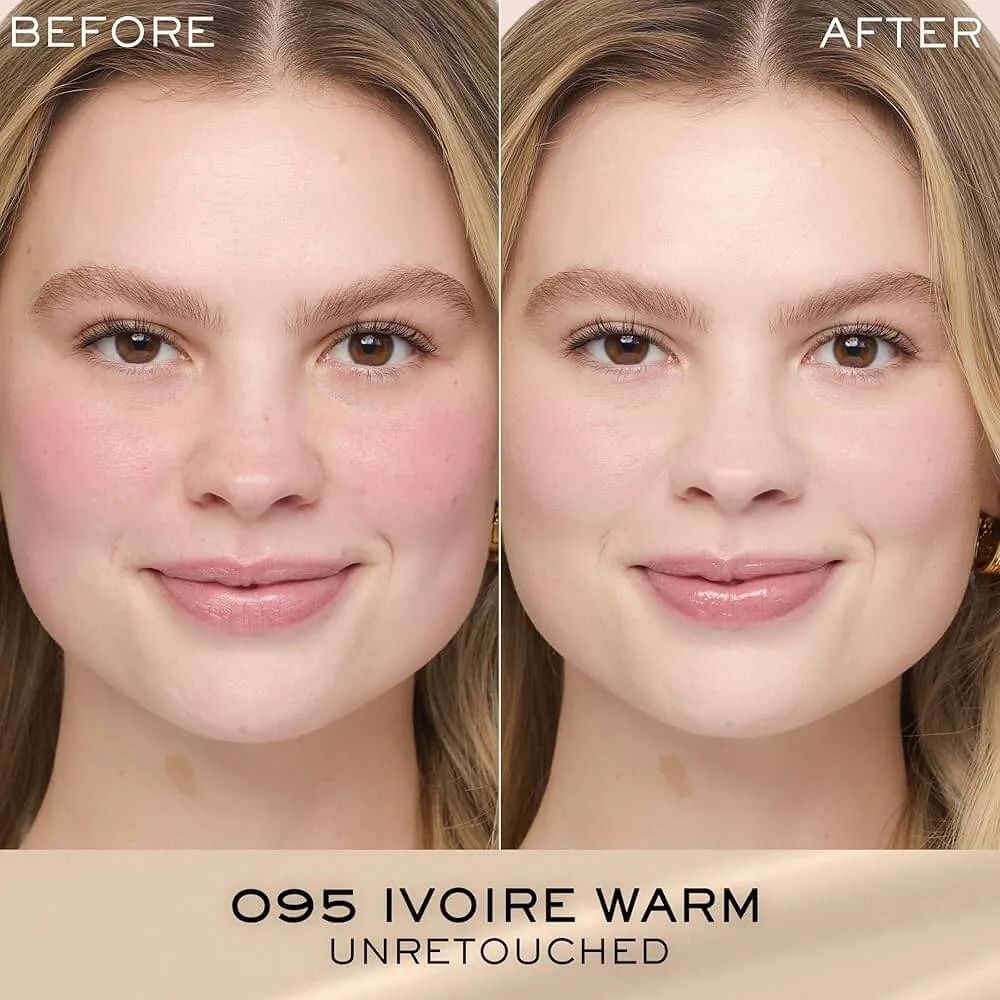
- Hydration + coverage together can look very smoothing on a 50+ complexion
- The coverage level is practical for redness, uneven tone, and pigmentation
- Satin/radiant foundations often make skin look healthier than flat matte
- SPF 27 is a nice bonus for casual days (still layer real sunscreen underneath)
Cons (where mature skin can get annoyed)
- If you apply too much, medium-to-full coverage can turn makeup-y fast
- If you set heavily with powder, the finish can go older instead of fresher
- Oily skin types may need more strategic setting to prevent breakdown
- “Lift” claims can disappoint if you expect true tightening—think visual smoothing, not actual lifting
If you’re someone who likes long-wear foundations but struggles with how they look on texture, this comparison post can help you decide if you want “hydrating long-wear” or “true matte long-wear”:
Personal Experience (How I’d Wear-Test This on Mature Skin)
I want to be transparent: I’m not going to pretend I’ve done a full week of wear-testing on Rénergie Lift if I haven’t had it on my face in my normal routine yet. What I can do (and what I do for every base product on GlowOver50) is tell you exactly how I evaluate a foundation for mature skin—and how I’d test this one so you can get a clear yes/no quickly.
My “Over-50 Foundation Test” (the exact routine)
Day 1: Hydration-first test
- Skincare + sunscreen (let it set properly)
- Hydrating primer only where needed
- One thin layer of foundation (center of face → blend outward)
- Powder only T-zone (press, don’t swipe)
- Finish with a hydrating setting spray
My go-to technique references (these are the difference makers):
- How to Prep Mature Skin for Foundation
- Best Setting Powders for Mature Skin
- I Tested 10 Setting Sprays After 50
Day 2: Texture + line check
This is where I focus on:
- smile lines
- corners of the mouth
- pores beside the nose
- chin texture
If a foundation is going to betray mature skin, it usually shows up here first.
Day 3: Longevity + “real life” check
I want to see:
- does it separate around the nose?
- does it crease under the eyes?
- does it get tight by hour 6–8?
- does it still look like skin in daylight?

My mature-skin application rules (if you want Rénergie Lift to look expensive)
- Use less than you think.
- Blend outward—keep the most product in the center of the face.
- Spot conceal instead of layering foundation.
- Set small areas only (nose, chin, maybe center forehead).
For concealer pairing (so you don’t overdo foundation):
And if your base ever looks dry no matter what, I always look at the skin barrier—because irritated, dehydrated skin makes every foundation look worse.
Pricing


Rénergie Lift sits in the luxury foundation category. And for me, luxury pricing is only worth it if I get at least one of these “over-50 benefits”:
- It makes my skin look smoother than drugstore formulas
- It stays comfortable (no tightness, no cracky wear)
- It holds up without needing a ton of powder
If you’re deciding whether it’s worth luxury money, I’d compare it mentally to the other “grown-up pretty” foundations I talk about here:
- Top Luxury Foundations for Mature Skin (Over 50 Picks)
- 10 Best Foundations for Mature Skin (I’m 52 & Tested 2025)
And if your main goal is “beautiful skin, but not too much product,” sometimes a luxe foundation isn’t necessary—sometimes it’s better technique + better prep:
Why This Is the Best Foundation for Mature Skin (When It Fits Your Skin Type)

I’m going to phrase this the way I’d say it to a friend: Rénergie Lift can be one of the best foundations for mature skin when you want coverage + comfort in the same bottle.
Here’s why this style works so well after 50:
It’s designed for the “three mature skin problems” that change everything
- Dryness/dehydration (foundation clings)
- Texture (foundation emphasizes pores/lines)
- Uneven tone (redness, pigmentation, age spots)
A hydrating medium-to-full base—applied correctly—can blur all three without making you look heavily made up.
It supports the “lifted” look mature skin actually needs
For me, “lift” is less about tightness and more about strategic glow:
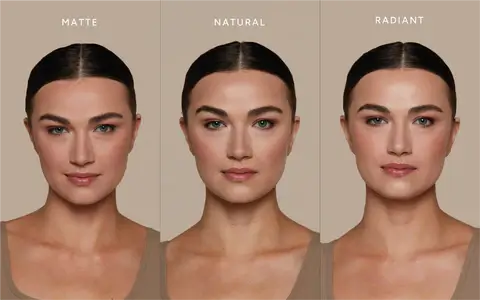
- a healthy satin finish
- no harsh matte mask
- soft, creamy cheek products
- a lipstick that doesn’t feather
If you want the full face to look modern, these are my favorite companion reads:
It’s “event coverage” that can still look soft
When I want my skin to look finished—photos, dinners, meetings—I want coverage that evens everything out but still looks like real skin up close. That’s exactly the lane Rénergie Lift is aiming for.
If you’re more of an everyday “light base” person, you might prefer:
Alternatives
Here’s how I’d choose alternatives depending on why you’re considering Rénergie Lift:
If you want full coverage + SPF and don’t mind a richer feel
If you want a budget-friendly “mature skin serum foundation” vibe
If you want luxury smoothing but in a different finish lane
- Pat McGrath Skin Fetish Foundation Review (Line-Smoothing Luxury)
- Charlotte Tilbury Beautiful Skin Foundation Review
If you want long-wear “won’t budge” (but need technique to keep it flattering)
If your main issue is winter dryness + foundation looking rough by noon
How It Compares to Other Foundations for Mature Skin
Here’s the simplest way I compare foundations after 50: What problem is it solving?
Rénergie Lift vs “serum skin tints”
Skin tints and serum foundations usually give:
- less coverage
- more visible skin texture (in a good way if you like natural)
- easier application
If you love that vibe, start here:
Rénergie Lift vs “wrinkle-proof picks”
Wrinkle-proof foundations aren’t always the most hydrating, but the best ones:
- don’t settle
- don’t crack
- don’t separate
If that’s your priority, compare your options here:
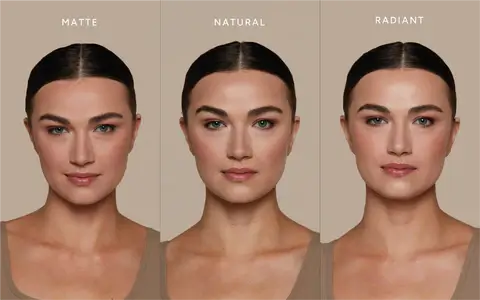
Rénergie Lift vs “true long-wear matte”
Long-wear matte foundations can look stunning, but mature skin often needs:
- more prep
- less powder
- more hydration underneath
That’s why I always pair long-wear with this technique:
And if you love the idea of long-wear but worry it’ll age you, read:
Conclusion/Summary
If you’re looking for a foundation that feels hydrating and lightweight, but still gives you that medium-to-full coverage polish—Lancôme Rénergie Lift is in the exact category I recommend most often for mature skin.
I’d consider it especially promising if:
- your skin is normal-to-dry (or combo with dry cheeks)
- you want a smoother, more even look without a heavy finish
- you like the idea of a soft “lifted” effect (visual smoothing + flattering finish)
My biggest advice is the same advice I give with every mature-skin base: thin layers, strategic setting, and a hydrating finish. The foundation matters—but the technique is what makes it look expensive.
To get the best result, I’d pair it with:
- How to Prep Mature Skin for Foundation
- Best Primers for Mature Skin
- How to Apply Setting Powder for Mature Skin
- I Tested 10 Setting Sprays After 50
FAQ
1) Is Rénergie Lift actually a good match for my mature skin type?
This foundation tends to suit mature skin best when your main goals are hydration + smoothing + medium-to-full coverage without feeling heavy. Where I see it fitting beautifully is that sweet spot of “I want polish, but I don’t want a mask.”
I’d especially consider it if you have:
- Dry or normal skin that needs comfort and a smoother finish
- Combination skin (oily T-zone, dry cheeks) and you’re willing to set strategically
- Uneven tone (redness, sun spots, pigmentation) and you like buildable coverage
- A preference for a soft satin/radiant look (more “healthy skin” than matte)
I’d think twice if you have:
- Very oily skin and you need true oil-control all day (you might prefer a different wear style, like my Double Wear breakdown for mature skin)
- You only like sheer coverage—then I’d start with Best Tinted Moisturizers for Mature Skin or Top BB & CC Creams for Mature Skin
One little mature-skin truth I’ve learned: the “best” foundation isn’t just about formula—it’s about how it fits your skin’s behavior. If your face gets dry by hour 4, a hydrating base like this can be a blessing. If you get shiny quickly, you’ll want a smarter setting routine (not heavier product).
If you’re not sure what category you’re in right now (because skin changes!), I always tell women to read this first:
2) How do I prep mature skin so Rénergie Lift looks smooth (not textured)?
If you only take one thing from this entire FAQ, let it be this: mature skin doesn’t want more foundation—it wants better prep. I’ve had days where I used a “perfect” foundation and still looked dry… and it was 100% my base routine.
My simple prep routine (that makes most foundations behave better):
- Moisturizer (enough that your skin feels cushioned, not tight)
- Sunscreen (give it time to set—this matters)
- Primer only where you need it (not always full-face)
For most 50+ skin, a primer can be the difference between “pretty” and “why is it sitting in my pores?” If you’re unsure about primer, this is my honest take:
How I choose primer based on the problem:
- Dryness / tightness: go hydrating (see my list: Best Primers for Mature Skin in 2025)
- Pores / texture: use a blurring primer only in the center face. A great affordable example is:
And if your foundation suddenly looks rough no matter what you do, I always consider skin barrier stress. Cleveland Clinic lists signs like dryness/flaking, irritation, itchiness, rough patches, and stinging when applying products.
When my barrier is cranky, I simplify everything—less exfoliation, more hydration—then makeup magically sits better again.
If you want my full “makeup-ready skin” routine in one place:
3) How do I apply Rénergie Lift for medium-to-full coverage without cakiness?
This is where mature skin wins or loses the day. Rénergie Lift can look beautifully polished, but the trick is to apply it like a thin, flexible veil instead of a thick layer.
My “thin layer first” method:
Step 1: Start small.
I begin with a small amount and apply it only in the center of my face first (where I need coverage most).
Step 2: Blend outward.
I keep the lightest amount of product on the outer face—this is where heavy foundation can start to look makeup-y on mature skin.
Step 3: Build only where needed.
Instead of adding more foundation everywhere, I build coverage only on:
- redness around the nose
- cheek discoloration
- pigmentation spots
- chin redness
Brush or sponge?
- Brush gives a smoother, more perfected finish (and slightly more coverage)
- Damp sponge presses everything into the skin and removes excess (great for mature texture)
My favorite move is brush first, sponge second: apply a thin layer with a brush, then bounce a damp sponge over it to make it look like skin.
And here’s my mature-skin coverage secret: I don’t chase perfection with foundation. I let concealer do the tiny-detail work.
If you’re the type who loves a “how to layer everything” guide, this one keeps me from overdoing it:
4) How do I set it so it lasts all day, without looking dry or older?
Setting is where so many women accidentally age their makeup. The goal isn’t to powder your whole face into a matte desert—especially not with a hydrating foundation. The goal is strategic setting.
Where I usually set (and where I usually don’t):
I set: sides of nose, chin, maybe center forehead
I avoid heavy powder: cheeks, smile lines, under-eyes (unless truly needed)
The best powder technique for mature skin:
- use a finely milled powder
- press it in lightly (don’t sweep)
- set only where makeup breaks up
Start here:
If you want specific powder reviews that behave well on texture:
- Hourglass Veil Translucent Setting Powder Review
- IT Cosmetics Bye Bye Pores Pressed Powder Review
- Laura Mercier Translucent Loose Setting Powder Review
Then I finish with setting spray (this is my “anti-cakey” step)
A good setting spray melts powder into the skin so everything looks softer and more natural. I tested a bunch here:
Touch-up tip (huge for mature skin):
If you get shiny later, blot first. If you add powder on top of oils, it can turn textured fast. I blot, tap a tiny bit of foundation only where needed, then a light mist.
5) Does SPF 27 mean I can skip sunscreen? (And how do I layer SPF under this foundation?)
I treat SPF in foundation as a bonus, not my main sun protection. Here’s why: the American Academy of Dermatology notes that when applying sunscreen to your face, you should use at least 1 teaspoon. Most of us simply don’t apply enough foundation to get the labeled SPF.
My simple SPF layering routine:
- Apply sunscreen (don’t skimp)
- Let it set for a few minutes
- Apply primer (only where needed)
- Apply foundation with a pressing/tapping motion (less rubbing = less pilling)
And one more important myth: layering multiple SPF makeup products doesn’t “add up” the way people hope. The Skin Cancer Foundation explains that SPF 30 moisturizer + SPF 30 foundation does not equal SPF 60; you generally benefit most from the highest SPF product you apply properly.
Helpful, non-product resources I trust:
- AAD: How to Apply Sunscreen
- FDA: Sunscreen—How to Help Protect Your Skin
- Skin Cancer Foundation: Making Sunscreen Work With Makeup
If you love “light base + SPF” days (especially summer), these posts are great:
6) Help—my foundation is pilling, creasing, or clinging to dry patches. What do I do?
This is the big troubleshooting section—because 90% of “foundation problems” are actually layering problems.
If it’s pilling
Common causes:
- too many skincare layers
- not waiting for sunscreen to set
- rubbing foundation instead of pressing
- primer + sunscreen textures fighting each other
What I do:
- simplify prep (moisturizer + sunscreen, done)
- wait a few minutes
- apply foundation with pressing motions
If it’s creasing in smile lines
What I do:
- use less foundation around the mouth
- avoid powder directly on the line
- finish with a setting spray to “melt” edges
I follow this routine religiously:
- The Order Matters: Makeup Layering Routine for Mature Skin
- How to Apply Setting Powder for Mature Skin
- I Tested 10 Setting Sprays After 50
If it’s clinging to dry patches
This is usually prep + barrier.
- add more moisturizer
- skip heavy powder
- consider barrier support (Cleveland Clinic’s “damaged barrier” signs are very real—dry/flaky skin and stinging are common).
Winter can make everything worse, so I keep this bookmarked:
7) What should I use instead if Rénergie Lift isn’t “the one”? (Alternatives + comparisons)
I like to choose alternatives based on why you were drawn to Rénergie Lift in the first place.
If you want a lighter, everyday “fresh skin” base
- Neutrogena Hydro Boost Hydrating Tint Review
- Laura Mercier Tinted Moisturizer Natural Skin Review
- Top BB & CC Creams for Mature Skin
If you want long-wear, fuller coverage (but need mature-skin technique)
If you want “pretty, radiant, healthy skin” luxury vibes
- Charlotte Tilbury Beautiful Skin Foundation Review (Over 50 Tested)
- And for browsing more: Top Luxury Foundations for Mature Skin (Over 50 Picks)
If you want an affordable mature-skin option with a similar “smoothing” goal
A great example of your site’s review style is:
And if you want to zoom out and pick based on finish/coverage/SPF: