When I look at a foundation now, I do not just ask, “Does it cover?” At this stage of life, I ask much better questions.
Does it sit smoothly over texture? Does it make pores look louder? Does it cling around the nose? Does it cover dark spots without making the whole face look heavy? Does it settle into smile lines by lunch? And most importantly, does it make my mature skin look fresher, calmer, and more even — or just more made up?
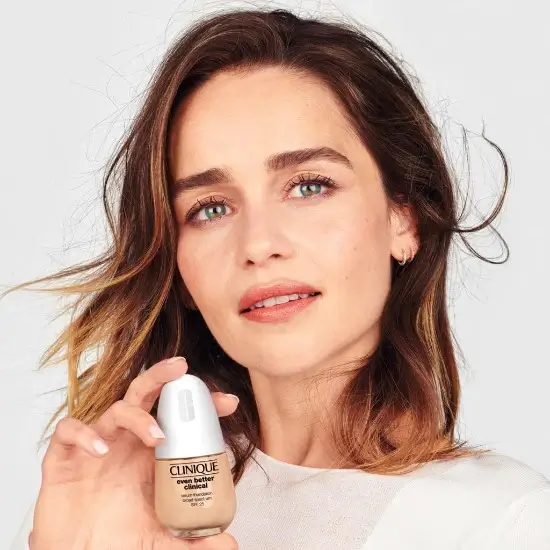
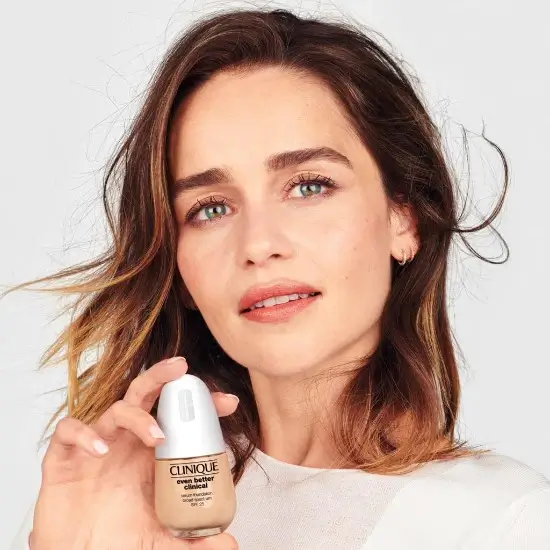
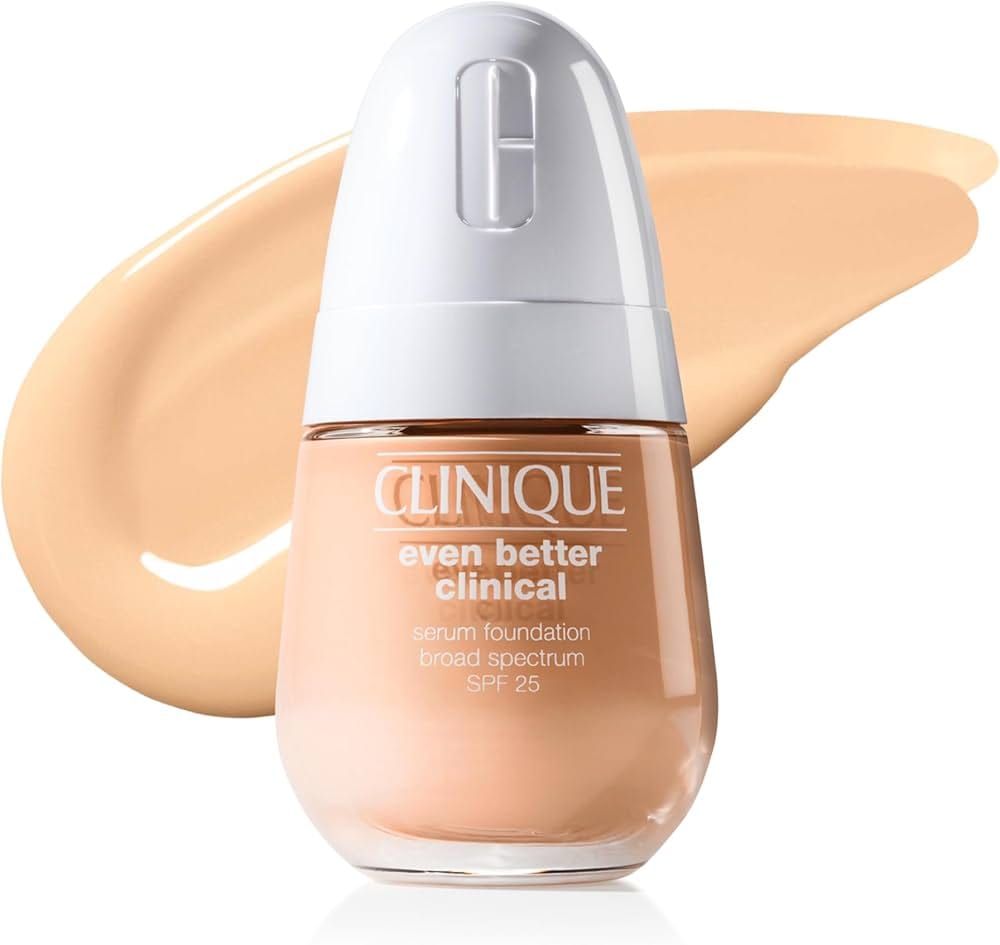
That is why Clinique Even Better Clinical Serum Foundation SPF 25 caught my attention.
Clinique describes it as a full-coverage foundation with SPF 25, a matte finish, and 3 serum technology. It is also marketed as a dark spot correcting foundation, which immediately makes it interesting for women over 50 because uneven tone is one of the biggest makeup frustrations I hear about again and again. Clinique lists UP302 + vitamin C, salicylic acid, hyaluronic acid, and SPF 25 mineral sunscreen as key parts of the formula.
We are not always trying to hide our skin. We are trying to make the tone look more even without losing softness.
That is a very different goal.
In this review, I want to look at Clinique Even Better Clinical Serum Foundation through a mature-skin lens: fine lines, redness, dark spots, texture, dryness, pores, and real everyday wear. I am not reviewing it for perfect twenty-something skin under studio lights. I am reviewing it for the kind of skin that has lived a little, laughed a lot, caught some sun, and now needs foundation to be smarter.
If you are still comparing base products, you may also want to keep my best foundations for mature skin over 50, foundations that do not settle into wrinkles, and guide to choosing the right foundation for mature skin open while you read.
This Clinique formula sits in a very specific category: more corrective than a sheer glow tint, but more skincare-aware than an old-school heavy matte foundation.
Table of Contents
Quick Verdict: Is Clinique Even Better Clinical Serum Foundation Good for Mature Skin?
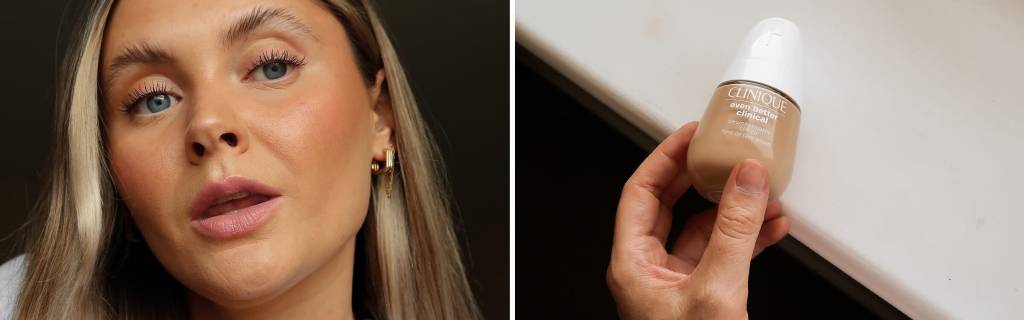
Yes, I think Clinique Even Better Clinical Serum Foundation can be a strong choice for mature skin, especially if your biggest concerns are dark spots, uneven tone, redness, and wanting fuller coverage without looking cakey.

But I would not call it the easiest foundation for every over-50 face.
This is a polished, corrective foundation with a natural matte finish. That means the prep and application matter. If your skin is very dry, flaky, or textured, I would not throw this on quickly and expect magic. I would prep carefully, apply it thinly, and build only where I need the extra help.
That said, I like the idea behind it. It gives more coverage than many serum foundations, includes skincare-minded ingredients, and has enough structure to help discoloration look less obvious. For women who feel like sheer radiant foundations are pretty but not enough, this could be a very useful step up.
I would see it as best for women who want:
- Medium-full to full coverage
- A natural matte finish rather than a very dewy glow
- Better-looking tone and less visible discoloration
- Coverage for dark spots, redness, and blotchiness
- A foundation that feels more modern than traditional full-coverage matte makeup
- A polished everyday, workday, or event base
If you love ultra-luminous foundations, you may prefer something like Giorgio Armani Luminous Silk Foundation on mature skin, Chanel Les Beiges Healthy Glow Foundation, or Charlotte Tilbury Beautiful Skin Foundation.
But if your main goal is a smoother-looking, more even-toned face with less shine, Clinique becomes much more interesting.
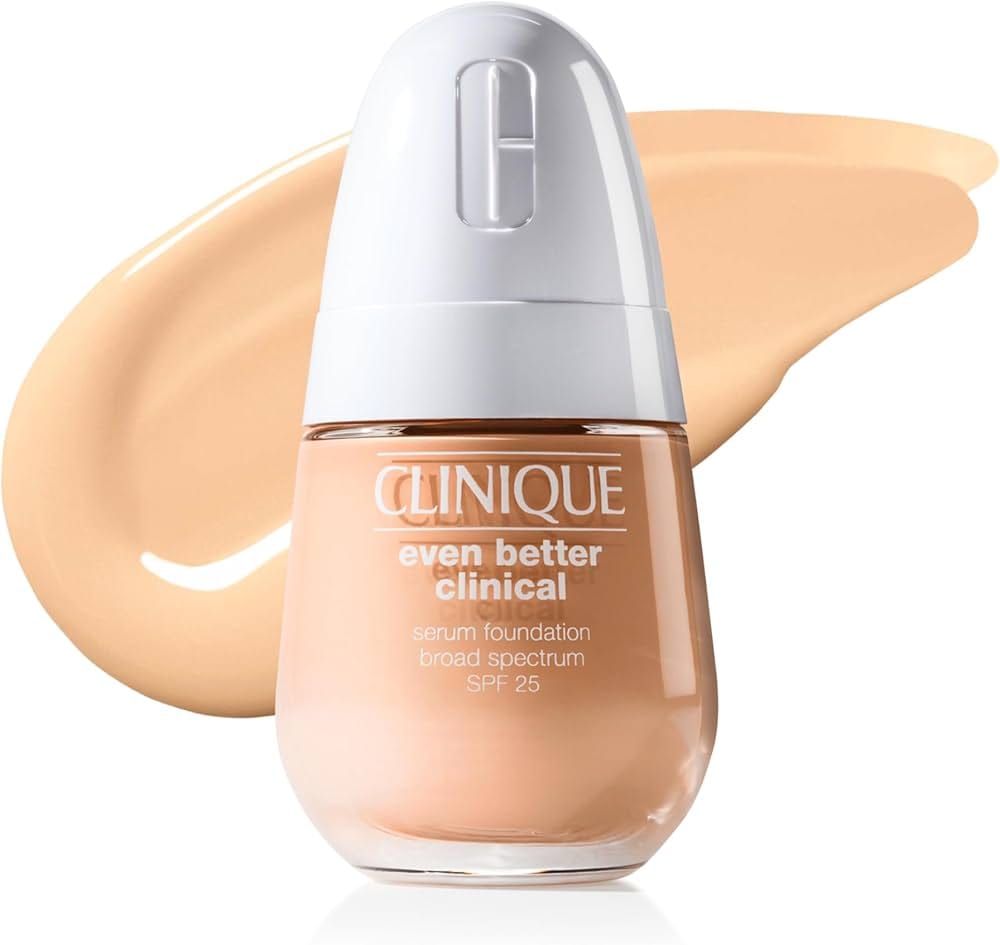
Clinique Even Better Clinical Serum Foundation SPF 25
Why It’s Great for Mature Skin
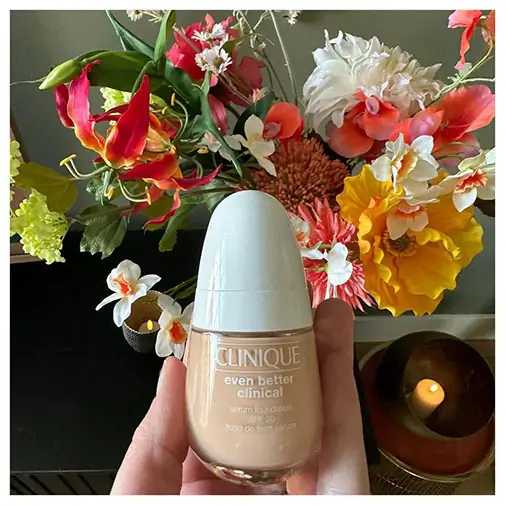
Clinique Even Better Clinical Serum Foundation is interesting for mature skin because it is built around the exact concerns many of us start noticing more after 50: dark spots, uneven tone, dullness, redness, texture, and a need for more coverage that still looks modern.
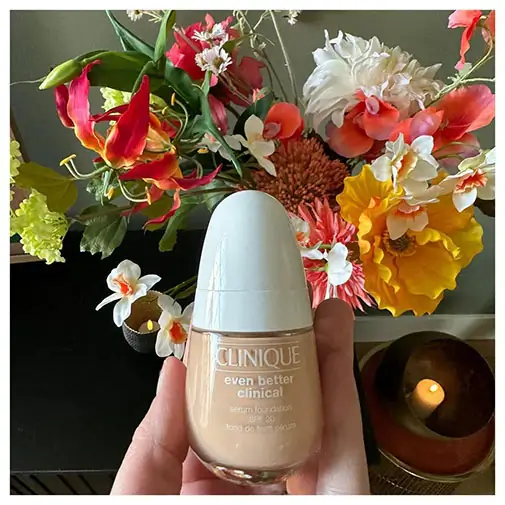
The key skincare story is its 3 serum technology:
- UP302 + vitamin C for the look of dark spots and uneven tone
- Salicylic acid for smoother-looking texture
- Hyaluronic acid for hydration and a plumper-looking feel
- SPF 25 mineral sunscreen to help protect against future discoloration
That combination makes sense for mature skin because we rarely deal with only one concern at a time.
I may want to cover redness around the nose, soften the look of pores, blur dark spots on the cheeks, and still keep the skin from looking dry around the mouth. One foundation has to behave in several different zones of the face.
That is where serum-style foundations can be helpful. They are not always as lightweight as the name suggests, but they often try to combine makeup coverage with skin-friendly ingredients.
If you enjoy that skincare-makeup crossover, you may also like my guide to BB and CC creams for mature skin, especially for casual days when you want something lighter than full foundation.
For this Clinique formula, though, the appeal is not “barely there.” The appeal is coverage with a more modern, skincare-aware feel.
Application Tips
My biggest tip for this foundation is simple: do not overapply it.
Full coverage can be wonderful on mature skin when it is used strategically. It becomes aging only when we use too much, especially in areas that move a lot.
I would apply Clinique Even Better Clinical Serum Foundation like this:
- Start with well-hydrated skin.
- Apply sunscreen first during the day.
- Use primer only where needed.
- Apply a thin layer from the center of the face outward.
- Build only on dark spots, redness, or uneven patches.
- Use concealer after foundation, not before.
- Set lightly only where makeup tends to move.
For mature skin, I would never use a thick layer all over the whole face just because one area needs more coverage. That is how foundation starts looking heavy.
The better approach is the one I use in my redness and rosacea makeup routine after 50: thin layers, targeted coverage, and very careful setting.
Pros & Cons
Pros:
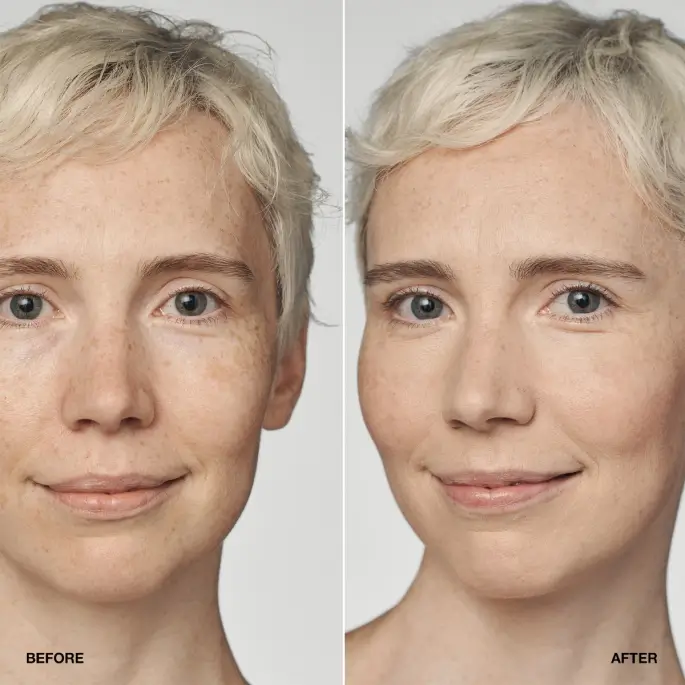
- Strong coverage for dark spots and uneven tone
- Natural matte finish can look polished and controlled
- Includes SPF 25
- Contains hyaluronic acid, salicylic acid, vitamin C, and UP302
- Good option for redness, discoloration, and blotchiness
- More skincare-aware than many traditional full-coverage foundations
- Could suit normal, combination, and mildly dry mature skin
Cons:
- May need careful prep on very dry or flaky skin
- Natural matte finish may not suit women who love glow
- Full coverage can look heavy if overapplied
- SPF 25 is helpful, but I would still wear dedicated sunscreen underneath
- May need cream blush or setting spray to bring softness back to the face
Why Mature Skin Needs a Smarter Foundation
A lot of foundation advice still sounds like it was written for much younger skin.
“Just use full coverage.”
“Just powder it down.”
“Just go matte if you want it to last.”
That can work beautifully on smooth, oily, youthful skin. But mature skin has different priorities.
After 50, skin can become drier, thinner, less bouncy, and more textured. Dark spots can look stronger. Redness can become more noticeable. Pores may appear larger. Fine lines around the mouth and eyes can catch product. And if we use one heavy layer everywhere to cover one stubborn area, the whole face can suddenly look older.
This is why I always say foundation is only one part of the routine. The prep, primer, tool, concealer, powder, and finish all matter.
If your foundation often settles, separates, or looks dry by midday, I would read my step-by-step guide to prepping mature skin for foundation and my exact makeup layering routine for mature skin before blaming the foundation alone.
With a formula like Clinique Even Better Clinical, prep is not a tiny detail. Prep is the difference between “smooth and polished” and “why does my skin look dry?”
The Finish: Natural Matte, Not Flat Matte
The word “matte” can make mature-skin women nervous, and I understand why.
A bad matte foundation can make the face look dry, dusty, and flat. It can make cheeks look older and emphasize every little line around the mouth. That is not what most of us want.
But a natural matte foundation is different.
A natural matte finish can calm the look of redness, reduce obvious shine, and make the skin look more refined. It can be especially helpful if dewy foundations make your pores or texture look more noticeable.
Clinique Even Better Clinical Serum Foundation is not the foundation I would reach for if I wanted a juicy, radiant, glowing finish. For that kind of look, I would look at my winter makeup picks for mature dry skin or compare it with more luminous formulas in my luxury foundations for women over 50 roundup.
But if you like a more controlled, even, polished look, Clinique’s natural matte finish makes sense.
If you are still unsure whether matte or dewy looks better on you now, my matte vs dewy makeup guide for mature skin explains that balance in much more detail.


The Coverage: When Full Coverage Can Actually Help Mature Skin
I know many beauty tips tell women over 50 to avoid full coverage completely.
I understand the reason. Thick, heavy foundation can absolutely age the face. But I do not agree that mature women should only wear sheer makeup.
Sometimes sheer foundation simply does not do enough.
If you have dark spots, sun damage, rosacea, broken capillaries, or pigmentation around the mouth, a sheer tint may leave you feeling unfinished. Then you keep adding more and more product, which can actually look worse than starting with a more pigmented formula and applying it carefully.
Full coverage is not the enemy.
Too much full coverage in the wrong places is the enemy.
That is why this Clinique foundation interests me. It offers enough pigment to matter, but the serum-foundation concept makes it feel more current than the dry, mask-like full coverage many of us remember from years ago.
If foundation settling is your biggest problem, you may also want to compare this with my list of foundations that do not settle into wrinkles.
The real trick is to use the coverage where you need it most.
Use it on the cheeks if you have pigmentation there. Use it around the nose if redness is the problem. Use it lightly around the mouth if foundation tends to collect there. Do not make your entire face wear the same amount of product just because one area needs more help.
Dark Spot Correcting Foundation: What I Like About the Claim
The phrase “dark spot correcting foundation” sounds very tempting.
I like it, but I also want to keep expectations realistic.
A foundation can help dark spots in two different ways.
First, it can cover them immediately. That is the makeup part.
Second, it can include ingredients that support a brighter, more even-looking skin tone over time. That is the skincare-inspired part.
Clinique Even Better Clinical Serum Foundation includes UP302 + vitamin C, which Clinique says helps visibly reduce the look of dark spots and uneven skin tone. It also includes SPF 25 mineral sunscreen, which Clinique positions as helping protect skin from future discoloration.
That is a smart combination for mature skin.
But I would not treat foundation as my only dark spot treatment. If dark spots are a serious concern, daily sunscreen is still essential. The American Academy of Dermatology explains that fading dark spots can take months, and darker or deeper discoloration can take even longer.
That is why I would use Clinique Even Better Clinical as part of a routine, not as the whole routine.
For example:
- Vitamin C or brightening serum in skincare
- Daily sunscreen
- Clinique Even Better Clinical Foundation for visible coverage
- Concealer only where needed
- Gentle powder to set small areas
If you want to understand which ingredients are worth knowing after 50, my guide to skincare ingredients every woman over 50 should know is a good next read.


Ingredient Breakdown for Mature Skin
UP302 + Vitamin C
This is the tone-evening part of the formula.
Vitamin C is often used in skincare for brightness and antioxidant support. In a foundation, I treat it as a nice bonus rather than a replacement for a real skincare serum.
Still, I like seeing it in a foundation that is aimed at dark spots, because discoloration is such a common over-50 foundation concern.
For me, the biggest benefit is that the formula is clearly designed for uneven tone. It is not just a generic foundation with a trendy ingredient added for decoration. Check out my blog: Skincare Ingredients Every Woman Over 50 Should Know to find out what ingredients are good for mature skin!
Salicylic Acid
Salicylic acid is interesting because mature skin is not always just dry skin.
Some of us still deal with:
- Pores
- Congestion
- Rough texture
- Bumpy areas
- Combination skin
- Breakouts and dryness at the same time
Very unfair, but very real.
Salicylic acid is often used in skincare for texture and pores. In this foundation, I would see it as part of the smoothing and retexturizing story.
If your skin is very sensitive, reactive, or easily irritated, I would patch test first. Mature skin can be picky, and a good ingredient for one person can be too much for another.
Hyaluronic Acid
Hyaluronic acid makes the most obvious sense for mature skin.
It is commonly used in skincare because it helps with hydration and a plumper-looking feel. Cleveland Clinic explains that hyaluronic acid is naturally found in the body and is often used in skincare because of its moisture-supporting benefits.
In a matte foundation, I like seeing hyaluronic acid because it may help the formula feel less dry and more comfortable.
That does not mean I would skip moisturizer underneath.
I would still prep well.
But I do like that Clinique did not create a matte foundation with no hydrating support at all.
Is SPF 25 in Foundation Enough?
SPF 25 in foundation is helpful, but I would not rely on it as my only sunscreen.
Most of us do not apply foundation thickly enough to get the full labeled SPF protection. And if dark spots are one of your main concerns, sun protection matters too much to leave to chance.
The American Academy of Dermatology notes that tinted sunscreen can help protect against visible light, which can worsen sun-related dark spots.
So for daytime, I would use this foundation like this:
- Skincare
- Dedicated sunscreen
- Clinique Even Better Clinical Serum Foundation SPF 25
- Concealer only where needed
- Light powder only where needed
That way, the SPF in the foundation becomes a nice extra layer, not your only protection.
This matters especially if you are using the foundation because of dark spots. It makes no sense to cover discoloration beautifully in the morning and then let sun exposure make the problem more stubborn over time.
How I Would Prep Skin Before Applying It
With this foundation, prep is everything.
I would not apply it over dry, rushed, half-ready skin and then blame the product if it catches texture.
For mature skin, I would prep like this:
Step 1: Start with comfortable skin
I would begin with skin that feels hydrated but not greasy.
That means a gentle cleanse or rinse, then skincare that makes the face feel flexible. If the skin feels tight before foundation, it will probably look tight after foundation.
Step 2: Moisturize the dry zones
For me, the key areas would be:
- Around the mouth
- Around the nose
- Cheeks
- Between the brows
- Any flaky patches
I would not overload the whole face with heavy cream unless my skin truly needed it. Too much skincare can make foundation pill or slide.
Step 3: Use primer strategically
I would not automatically use primer everywhere.
Instead, I would choose primer based on the area:
- Smoothing primer around pores
- Hydrating primer on dry cheeks
- Grip primer only where makeup disappears
- No primer where the skin already looks good
If you are unsure whether primer is helping or hurting your makeup, read my guide on whether older women really need primer and my roundup of the best primers for mature skin.
A foundation like this can look beautiful over the right primer. But over the wrong primer, it may look heavier than it needs to.
Best Way to Apply Clinique Even Better Clinical Serum Foundation

The best way to apply this foundation on mature skin is with patience and small amounts.
I know that sounds basic, but honestly, most foundation problems after 50 come from using too much product too quickly.
Start with half a pump
I would start with half a pump, especially if using a brush.
You can always add more. It is much harder to remove foundation once it has settled into lines or clung to texture.
Apply from the center outward
Most of us need the most coverage in the center of the face.
That usually means:
- Around the nose
- Across the cheeks
- Around the mouth
- On the chin
- On visible dark spots
I would apply foundation there first, then blend outward so the outer edges of the face stay lighter.
This keeps the finish much more natural.
Use a brush first, then a sponge
For this type of foundation, I would probably use both.
A brush gives more coverage and helps place the product exactly where I want it. Then a damp sponge can press over the top and remove any excess.
That final sponge press is one of my favorite mature-skin tricks. It makes foundation look less like makeup sitting on top and more like skin.
If you struggle with tools, my guide to foundation brushes and sponges for mature skin can help you choose the right one.
Makeup artists often recommend light layers and good skin prep for mature skin, and Allure’s mature-skin foundation guide also emphasizes moisturizer, careful product choice, and using powder sparingly.
Build only where needed
This is the most important part.
Do not build everywhere.
Build on:
- Brown spots
- Cheek redness
- Pigmentation around the mouth
- Broken capillaries
- Areas where uneven tone still shows
Leave the rest of the face lighter.
This is how you get coverage without that heavy “I am wearing so much foundation” look.
How I Would Use Concealer With It
I would use concealer after foundation.
Always.
At least for mature skin, this usually gives a better result.
If you conceal first, you may cover too much. Then foundation goes on top, and suddenly you have double product in the areas that crease the fastest.
If you apply foundation first, you can see what actually still needs help.
For Clinique Even Better Clinical, I would use concealer only on:
- Very stubborn dark spots
- Blue or purple under-eye shadows
- Red corners around the nose
- Small areas where foundation did not fully correct
I would avoid using thick concealer all over the under-eye area.
If concealer creasing is a problem for you, my concealer guide for mature skin and my list of the best concealers for mature skin in 2025 will help you pair this foundation with something that does not ruin the smooth base.
How I Would Set It Without Making It Look Dry
Because this foundation already has a matte-leaning finish, I would be very careful with powder.
This is not the moment to bake.
This is not the moment to powder the entire face like we did years ago.
I would set only where needed:
- Sides of the nose
- Chin
- Center forehead
- Smile lines, very lightly
- Under eyes only if concealer needs it
I would leave the cheeks alone unless they truly need setting.
Too much powder can make mature skin look dry fast. A little powder can help. A lot of powder can undo all the skincare work underneath.
If you need powder help, I would pair this with my guide on how to apply setting powder on mature skin and my roundup of setting powders that do not settle into lines.
And if the finish looks too matte after powder, I would bring softness back with cream blush and setting spray.
My guide to setting sprays that keep mature makeup fresh is perfect for this because a natural matte foundation often benefits from a final mist.

Can It Cover Redness and Rosacea?
I think Clinique Even Better Clinical Serum Foundation could work well for redness because it has real coverage and a calmer finish.
But I would not use foundation alone to fight strong redness.
If your redness is intense, I would use a thin layer of corrector first. Not everywhere. Just on the red zones.
Then I would apply the Clinique foundation in a thin layer. Then I would spot conceal only if needed.
That gives a much softer result than using two heavy layers of foundation.
This is the exact type of approach I explain in my redness and rosacea routine for mature skin. Redness coverage usually looks best when it is layered gently, not attacked with too much product.
If your redness is mild, this foundation may be enough on its own.
If your redness is moderate to strong, I would use it as part of a smarter base routine.
Can It Cover Dark Spots?
This is where I think Clinique Even Better Clinical Serum Foundation becomes most appealing.
Dark spots are tricky because they often need more coverage than the rest of the face.
If you use a sheer foundation, they still show.
If you use heavy foundation everywhere, your whole face can look older.
The best approach is targeted coverage.
Here is how I would do it:
- Apply one thin layer over the center of the face.
- Let it settle for a moment.
- Add a tiny extra amount directly over dark spots.
- Tap, do not rub.
- Use pinpoint concealer only if needed.
- Set that tiny area with a whisper of powder.
That way, the dark spots get more help, but the rest of the face still looks like skin.
This is why I often prefer buildable coverage for mature skin. You want control. You want to decide where the coverage goes.
Is It Good for Wrinkles and Fine Lines?
A foundation does not have to be dewy to work over fine lines.
But it does have to be applied carefully.
With Clinique Even Better Clinical, I would be especially light around:
- Smile lines
- Under eyes
- Crow’s feet
- Upper lip lines
- Forehead lines
These are movement areas. If you put too much product there, it will eventually have somewhere to go.
Instead, I would use the thinnest layer possible around lines and focus coverage on discoloration, not wrinkles.
This is where many women go wrong. They try to cover everything equally.
But fine lines do not need full coverage. They need less product, better blending, and sometimes a tiny bit of powder only where necessary.
For more help with this, read my post on common foundation mistakes on mature skin.
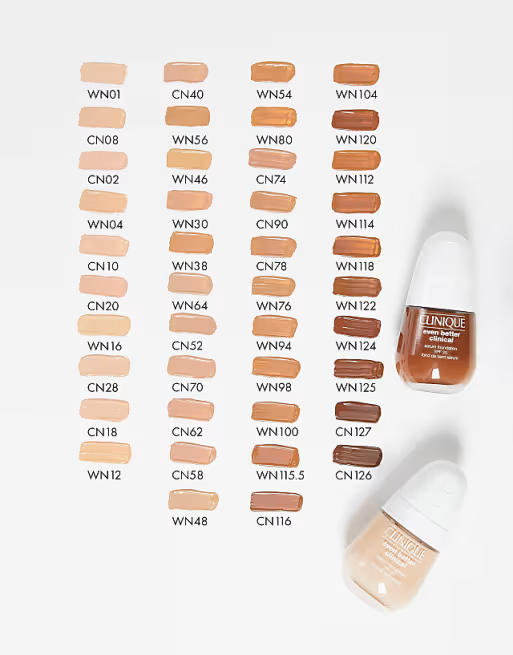
Shade Matching Tips for Mature Skin
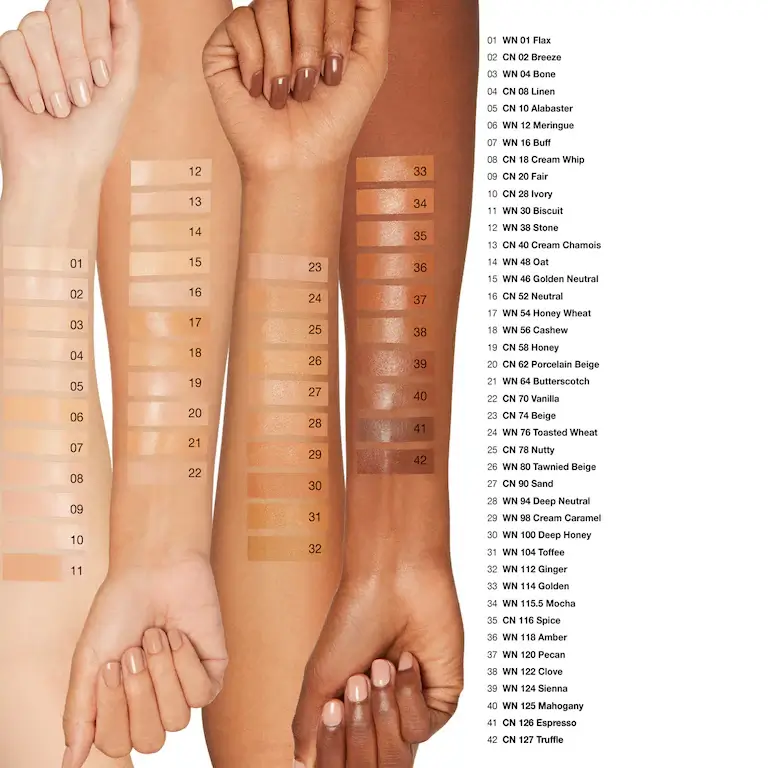

Shade matching matters even more with full coverage.
A sheer tint can be a little forgiving. A full-coverage foundation is not.
If the shade is too light, it can make mature skin look flat or chalky. If it is too dark, it can look heavy. If the undertone is wrong, it can make redness, sallowness, or pigmentation look more obvious.
Here is how I would shade match:
- Match to the jaw and neck, not just the cheek
- Check the shade in natural light
- Let it dry down before deciding
- Watch for oxidation after 10–20 minutes
- Think about undertone: cool, warm, neutral, golden, olive, or peach
- Avoid going too pale if your neck and chest are warmer
If you struggle with undertones, my foundation shade guide for mature skin will help.
This is especially important with Clinique Even Better Clinical because the coverage is strong enough that the wrong shade will be very visible.
Comparison Table: Clinique Even Better Clinical vs Other Mature Skin Foundations
| Foundation | Approx. Price | SPF | Finish | Coverage | Best For | Skincare Benefits |
|---|---|---|---|---|---|---|
| Clinique Even Better Clinical Serum Foundation SPF 25 | Mid-range | SPF 25 | Natural matte | Full | Dark spots, uneven tone, redness | UP302, vitamin C, salicylic acid, hyaluronic acid |
| Lancôme Rénergie Lift Foundation SPF 27 — Full Review Here! | Luxury | SPF 27 | Natural/radiant | Medium-full | Dry mature skin, softness, comfort | Hydrating, smoothing, mature-skin friendly |
| Estée Lauder Double Wear Review — Full Review Here! | Luxury | No SPF in classic formula | Matte/natural matte | Medium-full/full | Long wear, oil control, events | Strong wear, polished finish |
| Chanel Les Beiges Healthy Glow Review — Full Review Here! | Luxury | Varies by formula | Radiant | Light-medium | Soft glow, natural makeup days | Healthy glow, lightweight feel |
| Charlotte Tilbury Beautiful Skin Review — Full Review Here! | Luxury | No | Radiant | Medium | Plump glow, dry mature skin | Hydrating, glow-focused finish |
| Giorgio Armani Luminous Silk Review — Full Review Here! | Luxury | No | Satin/radiant | Medium | Elegant smooth skin | Lightweight, refined finish |
| Pat McGrath Skin Fetish Review — Full Review Here! | Luxury | No | Satin | Light-medium/medium | Soft-focus skin, flexible texture | Lightweight, serum-like feel |
| L’Oréal Age Perfect Radiant Serum Foundation Review — Full Review Here! | Drugstore | SPF 50 | Radiant | Light-medium | Budget-friendly mature skin glow | Serum-style hydration |
Clinique vs Estée Lauder Double Wear
This is probably the comparison many women will wonder about.
Both Clinique Even Better Clinical and Estée Lauder Double Wear sit in the polished, long-wear, more perfected category.
But they do not feel like they are aimed at exactly the same woman.
Double Wear is the classic long-wear foundation. It is famous for staying power and serious coverage. If you need makeup that lasts through heat, long workdays, events, or oily T-zones, it is hard to ignore.
Clinique feels more skincare-aware and more directly focused on dark spots and uneven tone.
So if your main goal is maximum wear, compare this with my Estée Lauder Double Wear review for mature skin.
If your main goal is dark spot coverage with a serum-foundation concept, Clinique may be the more interesting choice.
Clinique vs Lancôme Rénergie Lift
Lancôme Rénergie Lift feels more obviously mature-skin friendly in the comfort department.
It has a softer, more forgiving, more hydrated personality.
Clinique is more corrective and more matte.
If your skin is dry and you want softness first, I would lean Lancôme.
If your skin tone is uneven and you want stronger correction, I would look harder at Clinique.
This is why I do not believe in one universal best foundation for mature skin. The best foundation depends on what your skin needs most.
Some days we need glow. Some days we need coverage. Some days we need longevity. Some days we need all three and a small miracle.
Clinique vs Chanel and Armani
Chanel and Armani feel more elegant.
Clinique feels more practical.
That is not an insult. Practical can be wonderful.
Chanel Les Beiges gives that soft, healthy, expensive-looking glow. Armani Luminous Silk gives a refined satin finish that looks polished but still skin-like.
Clinique gives a more even, more corrected, more controlled face.
If I were going to lunch and wanted pretty skin, I might choose Chanel.
If I were going to an evening event and wanted elegance, I might choose Armani.
If I were going to work and wanted my dark spots and redness to stop distracting me, I would absolutely consider Clinique.
Who I Think Will Love Clinique Even Better Clinical Serum Foundation
I think this foundation is best for women over 50 who want a more perfected, even-toned base.
You may love it if:
- You have dark spots or sun spots
- You have redness or mild rosacea
- Your skin tone looks uneven even after skincare
- You like fuller coverage
- You prefer natural matte or satin-matte finishes
- You want foundation that feels skincare-focused
- You have normal, combination, or mildly dry mature skin
- You want a polished workday or event foundation
It could also be a good option if dewy foundations make your skin look too shiny.
Some radiant formulas look beautiful in photos, but on real mature skin they can sometimes emphasize pores, texture, and redness. A natural matte finish can feel calmer and more refined.
Who Might Not Love It
I would be more cautious if your skin is very dry, flaky, or you dislike matte finishes completely.
You may not love it if:
- You prefer sheer skin tints
- You want a very dewy finish
- Your skin flakes around the nose or mouth
- Full coverage always looks heavy on you
- You do not like foundation that needs thoughtful prep
- You prefer a very luminous, creamy base
In that case, I would look at hydrating foundations for mature skin, drugstore foundations for mature skin, or tinted moisturizers for mature skin instead.
Those may feel more forgiving if dryness is your number one issue.
Best Routine to Wear With This Foundation
If I wanted Clinique Even Better Clinical Serum Foundation to look as flattering as possible, I would build the whole routine around balance.
Because the foundation is corrective and matte-leaning, I would keep the rest of the face soft.
Here is the routine I would use:
Morning Prep
I would start with hydration but avoid overloading the skin.
A hydrating serum, moisturizer, and sunscreen would be enough for most days.
If my cheeks felt dry, I would add a little extra moisturizer there. If my T-zone was oily, I would keep that area lighter.
Primer
I would use primer only where needed.
A smoothing primer around pores. A hydrating primer on dry cheeks. Maybe no primer on areas where the foundation already sits well.
This is where the best primers for mature skin can make a big difference.
Foundation
I would apply half a pump first.
Brush where I need coverage. Sponge where I need softness.
Then I would step back before adding more.
That pause matters.
Sometimes foundation looks better after thirty seconds because it has settled into the skin. If you keep adding more too quickly, you can end up with too much.
Concealer
I would use concealer only after foundation.
This keeps the base lighter and avoids unnecessary product in crease-prone areas.
Powder
I would powder the T-zone only.
No heavy powder on the cheeks unless truly needed.
Blush and Finishing Spray
Because the foundation is matte-leaning, I would add life back with cream blush or a soft satin blush.
Then I would use a light setting spray if the skin looked too matte.
This is how I would keep the result polished but not flat.
My Final Rating for Mature Skin
Here is how I would rate Clinique Even Better Clinical Serum Foundation from a mature-skin point of view:
Coverage: 9/10
Dark spot coverage: 9/10
Redness coverage: 8/10
Dry skin friendliness: 6.5/10 unless prepped well
Combination skin friendliness: 8.5/10
Texture friendliness: 7/10 with careful application
Wrinkle friendliness: 7/10 if applied thinly
Best use: dark spots, uneven tone, redness, polished everyday coverage
This is not the foundation I would choose if I wanted the softest, glowiest, easiest base possible.
It is the foundation I would consider when I want my skin tone to look more even, my redness to look calmer, and my dark spots to stop being the first thing I notice in the mirror.
And honestly, that is a very real need after 50.


Join the GlowOver50 Newsletter
Stay in the loop with my latest makeup tips, skincare secrets, and honest product reviews — all tailored for women over 50. Subscribe today and keep that gorgeous glow going!
Final Thoughts: Is Clinique Even Better Clinical Serum Foundation Worth It?
I think Clinique Even Better Clinical Serum Foundation is worth considering if your mature skin needs more correction than a sheer glow foundation can give.
It is especially interesting for women over 50 who deal with dark spots, uneven tone, redness, and combination skin. The 3 serum technology gives it a more thoughtful feel than a basic full-coverage foundation, and the natural matte finish may be perfect if dewy formulas make your texture or pores look too obvious.
But the key is application.
This is not a foundation I would pile on. I would prep well, apply thinly, build only where needed, and set carefully. I would use cream products to bring softness back to the face, and I would still wear proper sunscreen underneath during the day.
For some women, this could be one of the best foundations for mature skin because it answers a very specific problem: how do I cover dark spots and uneven tone without looking cakey?
For others, it may feel a little too matte or too coverage-forward.
That is why I always say the best foundation after 50 is not just about the bottle. It is about the match between your skin, your routine, and the finish you actually enjoy seeing in the mirror.
If you want more help building the rest of your base routine, I would next read how to prep mature skin before foundation, the best brushes and sponges for mature skin, setting powders that do not settle into lines, and setting sprays that keep makeup fresh after 50.
And if you are still deciding between Clinique and other base products, my bigger guides to the best foundations for mature skin, hydrating foundations for mature skin, drugstore foundations for mature skin, and luxury foundations for women over 50 will help you compare the finish, coverage, and comfort more clearly.
Have you tried Clinique Even Better Clinical Serum Foundation yet? I would love to know how it behaved on your skin — especially if you are dealing with dark spots, redness, or texture after 50.