

The best makeup-removal routine for mature skin is not the one that leaves your face feeling squeaky-clean. It is the one that dissolves makeup thoroughly, asks very little of delicate skin and leaves your face comfortable enough for the rest of your evening skincare.
I love makeup, but I do not believe taking it off should feel like a punishment at the end of the day. A long-wear foundation, waterproof mascara and a transfer-resistant lip color may all make life easier while I am wearing them. The mistake is trying to remove those formulas with speed, pressure or a harsh cleanser. Mature skin usually looks and feels better when I give the remover time to do the work.
My method is simple: match the remover to the makeup, soften stubborn areas before wiping, use lukewarm water, and stop cleansing when the job is done. Some evenings that means one gentle cleanse. On a day when I have worn sunscreen, a full face or waterproof eye makeup, it may mean a targeted remover followed by a mild face wash. More steps are not automatically better.
This routine fits naturally after many of the looks I share on GlowOver50. Whether you have followed my exact makeup-layering routine, worn a fuller-coverage option from my favorite foundations for mature skin, or kept things light with a tinted moisturizer, the goal at night is the same: remove what is on the skin without treating the skin itself roughly.
Table of Contents
The short answer: how I remove makeup from mature skin
I wash my hands, remove contact lenses carefully if I am wearing them, and take off lip and brow products first. For stubborn eye makeup, I saturate a soft pad, press it over the closed eye for about 15 to 30 seconds, then glide downward instead of rubbing side to side. I massage a balm or oil cleanser over a dry face when I have worn sunscreen, foundation or long-wear makeup, add water until it turns milky, and rinse with lukewarm water. I follow with a gentle second cleanser only when residue remains or the first cleanser is intended as a makeup-removing step. Finally, I pat—never scrub—my face dry and apply moisturizer while my skin still feels comfortable.
That is the entire philosophy. The cleanser loosens; water carries away; a soft towel blots. My hands should never have to fight the makeup.
Why mature skin deserves a gentler removal routine
Skin changes over time, and so does the way cleansing feels. A routine that once seemed refreshing can begin to leave the cheeks tight, the eye area tender or the corners of the mouth flaky. Menopause, climate, medications, prescription skincare and individual skin conditions can all influence comfort. I therefore judge a removal routine by how the skin feels ten minutes later—not by how aggressively it foams.
The eye area needs particular care. The skin is thin, and repeated rubbing can leave it looking temporarily puffy or irritated. It can also pull on lashes just when many women are trying to make a sparse lash line look fuller with products such as the picks in my waterproof mascara guide or the liner techniques in my mature-eye eyeliner tutorial.
Gentle does not mean incomplete. Leaving a film of makeup and sunscreen behind is not my idea of kindness, either. The answer is better dissolving, not harder rubbing. The American Academy of Dermatology advises using a gentle, non-abrasive cleanser, applying it with fingertips, rinsing with lukewarm water and patting dry; it specifically warns that scrubbing can irritate skin. That dermatologist guidance is the backbone of my routine.
A good removal routine also makes the next makeup day easier. When skin is not irritated or over-stripped, base products are less likely to catch around flaky areas. That supports the same smooth finish I aim for in my guide to preparing mature skin for foundation and my troubleshooting advice for foundation that separates.
What I keep by the sink
You do not need an elaborate shelf. I would rather have a few compatible basics than six removers that all do the same job. My useful kit is:
- An oil cleanser or cleansing balm for sunscreen, foundation, long-wear lipstick and other oil-soluble makeup.
- A gentle water-based cleanser for a simple single cleanse or as an optional second step.
- Micellar water or a dedicated eye remover for targeted removal, travel or nights when eye makeup needs extra time.
- Soft cotton or reusable pads that hold enough liquid to stay slippery against the skin.
- A clean, soft towel used for blotting rather than rubbing.
- A straightforward moisturizer that you already know your skin tolerates.
I look for fragrance-free or low-fragrance options when my skin is reactive, and I avoid rough cleansing grains in a makeup remover. Cleveland Clinic’s anti-aging skincare guidance recommends keeping cleansing mild and simple and notes that rough cloths and scrub-like cleansers can irritate the moisture barrier. That is a useful filter when the cleanser aisle feels overwhelming.
The word oil can sound intimidating, but an oil cleanser is formulated to rinse away. It is not the same thing as simply coating the face with a random kitchen or facial oil. A cleansing balm is usually solid or buttery in the jar and melts on contact; a cleansing oil begins liquid. Either can work. Texture preference matters more to me than trendiness.

How I choose the right remover for the makeup
I choose by formula, not by age label. “For mature skin” can be useful marketing shorthand, but it does not tell me whether a remover can dissolve the makeup I actually wore or whether my own skin tolerates its fragrance and surfactants. I read the directions, check whether the product is intended for eyes, and consider how it is meant to be rinsed.
Cleansing balm
A balm is my most convenient choice for a full face because it stays where I put it and creates plenty of slip. It suits evenings when I wore sunscreen, foundation, cream color and a setting product. A good balm melts evenly, gives me time to work, emulsifies with water and rinses without requiring a rough cloth. A rich texture is not proof that it will suit every dry or sensitive complexion, so I still pay attention to fragrance and irritation.
I recommend Clinique Take The Day Off Cleansing Balm for a fragrance-free luxury option, or e.l.f. Holy Hydration! Makeup Melting Cleansing Balm for a more affordable alternative. Both melt into an oil that makes removing a full face much easier.
Cleansing oil
An oil cleanser does the same first-cleanse job in a fluid texture. I like it when I want fast spread over the face and neck, but I prefer a reliable pump because slippery bottles are awkward at the sink. I apply it with dry hands, keep it away from the inside of the eyes, then emulsify exactly as the label directs. If it never turns milky and leaves a heavy film, I check whether I am using enough water or whether that particular formula simply needs a gentle follow-up cleanse.
I recommend DHC Deep Cleansing Oil for dry or mature skin, while Kose Softymo Speedy Cleansing Oil is a good affordable choice when I want something lightweight and quick to rinse.
Micellar water
Micellar water is useful for light makeup, targeted cleanup and travel. Its greatest advantage is control: I can place a saturated pad on the lips or eyes without covering the whole face in balm. Its weakness is that the pad can become a rubbing tool if I use too little liquid or expect it to remove a heavy water-resistant base in one sweep. I would rather change methods than use pad after pad on increasingly tender skin.
My first choice is Bioderma Sensibio H2O Micellar Water because it is designed for sensitive skin and works well for light makeup or targeted removal without lots of rubbing. bioderma.us
Bi-phase eye remover
A bi-phase remover has water- and oil-based layers that are shaken together before use. It can be effective on waterproof mascara and liner. I check that the bottle is mixed, saturate the pad, and give it contact time. I do not use an eye remover all over the face unless the instructions say it is suitable there; a targeted product can be excellent at one job without being the best full-face cleanser.
For waterproof mascara and eyeliner, I recommend Lancôme Bi-Facil Eye Makeup Remover or Clinique Take The Day Off Makeup Remover for Lids, Lashes & Lips. Both are especially useful when I use the press-and-hold method. Lancôme
Cream, lotion or low-foam cleanser
This is often my choice for a one-step light-makeup night or the second step after balm. The texture should move comfortably under my fingertips and rinse without leaving the cheeks tight. Foam itself is not automatically harmful, but abundant foam is not a measure of cleanliness. I focus on how thoroughly the cleanser removes residue and how my skin feels afterward.
I am cautious with fragranced essential oils, exfoliating particles and products that promise a tingling “deep clean.” A cosmetic remover does not need to announce that it is working. If I can feel burning, that is a reason to rinse and stop, not evidence of extra effectiveness.
I recommend CeraVe Hydrating Facial Cleanser for a gentle non-foaming cleanse, or CeraVe Hydrating Cream-to-Foam Cleanser when I want slightly stronger makeup removal without leaving my skin feeling stripped.
Do I need to double cleanse every night?
No. Double cleansing is a tool, not a nightly test of virtue. Cleveland Clinic defines it as an oil-based cleanse followed by a water-based cleanser and says the first step can be especially useful for waterproof makeup and sunscreen. The same guidance also says most people do not need to wash twice every night and warns that overwashing can contribute to dryness and irritation. Here is the full dermatologist explanation of when double cleansing helps.
I make the decision based on what I wore and how well the first cleanser rinsed—not on a rigid rule. If I used one of my tinted moisturizers with SPF, a water-resistant sunscreen or a setting spray from my setting-spray comparison, an oil or balm first cleanse often makes sense. If I wore only a little cream blush and washable mascara, one thorough gentle cleanse may be enough.

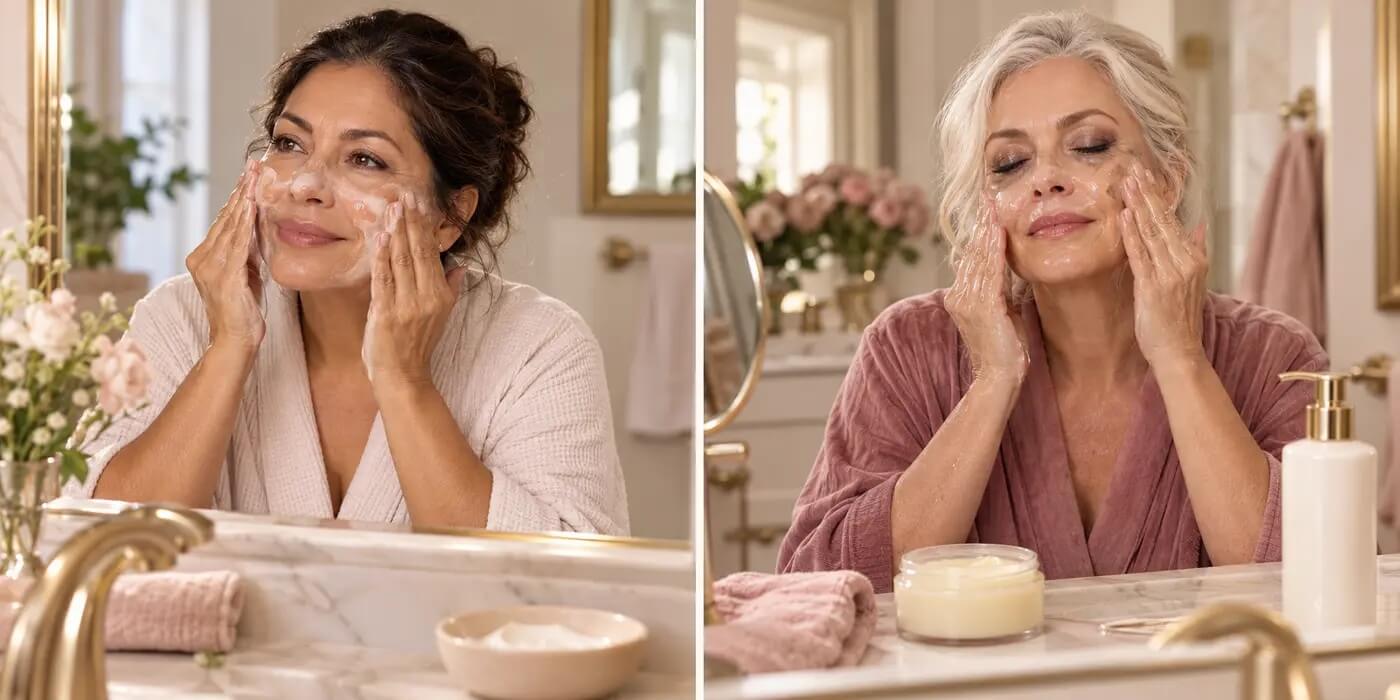
A light makeup day may need one gentle cleanse; sunscreen and long-wear makeup often benefit from a balm or oil first.
What I wore | First removal step | Second cleanse? |
|---|---|---|
Very light, washable makeup | Gentle cream or lotion cleanser | Usually unnecessary if skin rinses clean |
Foundation plus daily sunscreen | Emulsifying balm or oil | Optional; use a mild cleanser if residue remains |
Waterproof mascara or long-wear liner | Targeted eye remover with press-and-hold | Cleanse the rest of the face as needed |
Long-wear full face and setting spray | Balm or oil over dry skin | Often useful, but keep it brief and gentle |
Bare face with no water-resistant SPF | One gentle cleanser | No |
My stopping point is simple: makeup is gone, the hairline and sides of the nose feel clean, and my skin does not feel squeaky or tight. If the face is already clean after one rinse, a second cleanser adds work without adding a benefit.
My gentle 7-step makeup-removal routine
Step 1: Wash my hands and set up before touching my face
I begin with clean hands, a clear counter and everything within reach. That sounds unglamorous, but it prevents me from hunting for a towel with cleanser dripping toward my eyes. I pull hair away from the face with a soft band, take off jewelry that could catch, and make sure the water is lukewarm before I start.
If I am wearing contact lenses, I follow the instructions from my lens provider and remove them with clean, dry hands before working remover around the eyes. I never improvise if an eye feels painful, unusually red or infected. The FDA advises stopping an eye cosmetic immediately if it causes irritation, avoiding eye cosmetics when an infection or inflamed skin is present, and keeping hands and eye-area tools clean. I keep that FDA safety checklist in mind whenever an eye is already uncomfortable.
This is also the moment to notice what I actually wore. A sheer base from my BB and CC cream guide does not need the same removal plan as full-coverage foundation, powder, waterproof liner and mascara. Matching the routine to the makeup is the easiest way to avoid both residue and over-cleansing.
Step 2: Remove lip color and brow makeup first
I start with the small areas so pigment does not smear across a freshly cleansed face later. For a comfortable tinted balm, including the types in my tinted lip balm roundup, a damp soft pad or the face cleanser may be enough. For a traditional long-wear lipstick, I press a small amount of balm or oil-based remover over the closed lips, wait, and wipe inward from each corner.
I do not saw back and forth across vertical lip lines. If color remains in those lines, I repeat with fresh remover rather than pressing harder. This is especially useful after combining lipstick with one of my lip liners for mature lips. After removal, I blot away excess remover; a simple lip balm can wait until the face is finished.
Brows usually need even less effort. I sweep remover in the direction of hair growth and use the clean side of the pad for a second pass. That protects the hairs I have carefully defined with a pencil from my eyebrow-pencil guide. A clean spoolie can lift softened wax from dense areas, but I avoid scraping at the skin underneath.
Step 3: Use the press-and-hold method on eye makeup
This is the step that makes the biggest difference. I saturate a soft pad with a remover labeled for the eye area. The pad should be wet enough to glide, not merely damp enough to drag. With the eye closed, I place it flat over the lid and lashes and hold it there for 15 to 30 seconds. Waterproof formulas may need a little longer.
During that pause, the remover is dissolving waxes, film formers and pigment. I am not rubbing. I then glide the pad gently downward over the lashes and outward along the lid. I turn to a clean section and repeat. If black residue remains at the lash roots, I press again rather than scrubbing.
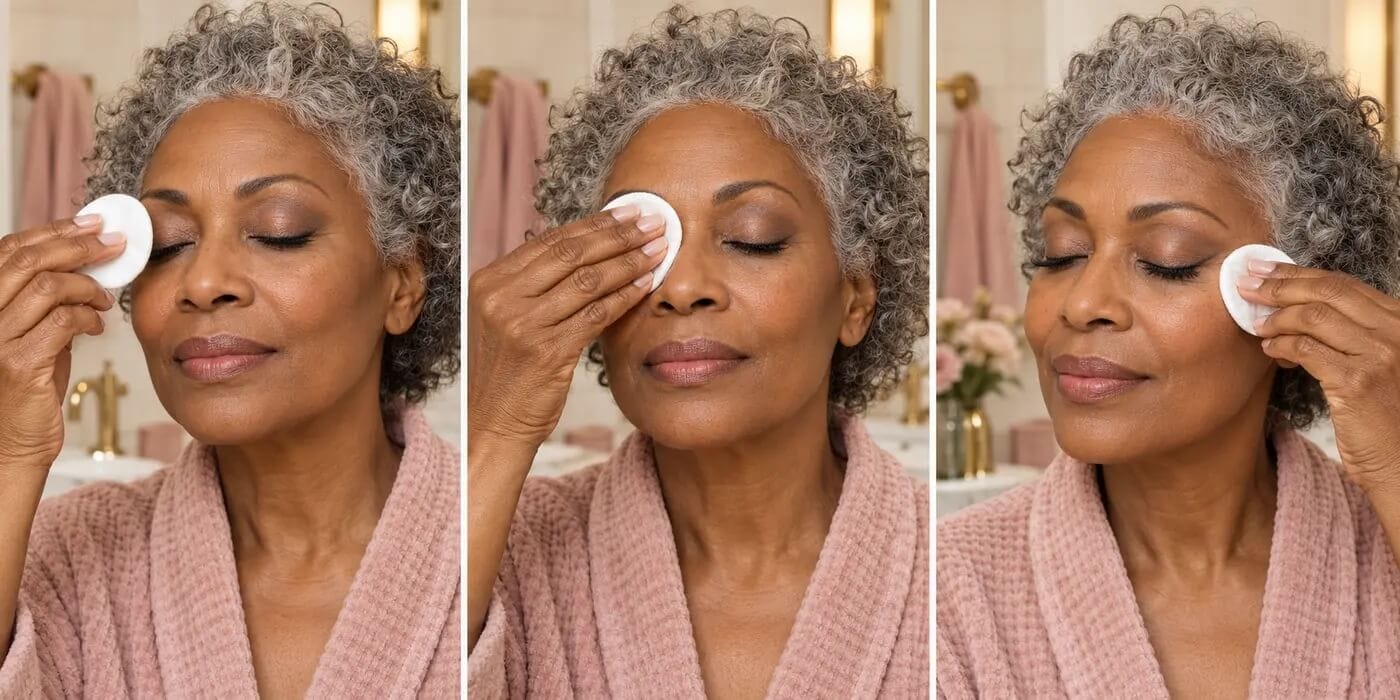

Press, wait, then glide. The remover needs contact time more than the eyelid needs pressure.
This technique is helpful after a soft pencil look from my best eyeliners for mature eyes or a cream shadow from my cream-eyeshadow comparison. It is even more important after waterproof mascara. If you want to see the kind of long-wear formula I mean, my Clinique High Impact Waterproof Mascara review explains why removal technique matters as much as wear time.
For the lower lash line, I look slightly upward with the eye closed or relaxed and use the folded edge of a fresh pad to sweep outward. I do not dig at the waterline with a cotton bud. If makeup appears to be inside the eye or the eye starts stinging, I stop and rinse as directed on the remover. Persistent irritation, pain, swelling, discharge or vision changes belong with an eye-care professional, not another round of cleansing.
Step 4: Massage balm or cleansing oil over a dry face
Once the eyes, lips and brows are mostly clean, I move to the complexion. I dispense the amount recommended on the cleanser—usually enough to create slip without pouring down the neck—and apply it to dry hands and a dry face. Starting dry lets the oil phase meet makeup and sunscreen directly.
I spread it with flat fingertips in slow circles across the forehead, cheeks and chin. Around the nose, hairline and jaw, I use smaller movements because those are the places base makeup likes to hide. I include the neck if I blended foundation or bronzer below the jaw. I do not massage for five dramatic minutes. About 30 to 60 seconds is generally enough for the product to loosen what I wore.
On days when I have built a polished base with primer for mature skin, concealer and one of my setting-powder picks, this balm step keeps me from trying to erase three layers with one foamy wash. It is also useful after the heat-resistant techniques in my summer makeup routine.
I keep pressure light enough that the skin moves very little under my fingers. The point is contact and slip, not a facial massage contest. If a balm becomes tacky, I add a touch more product instead of increasing pressure.
Step 5: Add water and emulsify before rinsing
Emulsification is the little step that makes many balms and oils rinse cleanly. I wet my fingertips with lukewarm water and massage them over the cleanser. A well-formulated product usually turns thinner and milky. I repeat with a little more water until the slippery oil phase has become a light emulsion, then rinse thoroughly.


Start on dry skin, massage gently, then add water until the balm or oil turns milky before rinsing.
I use lukewarm water because hot water can make already-dry skin feel more uncomfortable. I cup water in my hands rather than firing a strong shower stream directly at my face. I rinse around the nostrils, temples, brows, ears and jawline, where cleanser and dissolved makeup can linger.
If the product directions specify a damp cloth, I use the softest one I own and lay it against the face before lifting away. I do not polish the skin with it. Mature skin does not need a nightly mechanical exfoliation hidden inside the cleansing step. If dullness is the concern, I would address ingredients separately using the measured approach in my guide to skincare ingredients for mature women.
Step 6: Decide whether a second cleanse is actually needed
After rinsing, I run clean wet fingertips gently along the hairline and sides of the nose. If the skin feels clean, comfortable and free of makeup, I stop. If there is a waxy film, visible base pigment on a white towel, or the first cleanser is specifically designed only to dissolve makeup, I use a small amount of mild water-based cleanser.
The second cleanse is brief—usually 20 to 30 seconds—and focused on the face, not another long massage. I choose a cream, lotion or low-foam texture if my skin is dry. I rinse well with lukewarm water. Cleveland Clinic notes that cream cleansers tend to be less drying than foaming cleansers for dry, sensitive skin, and it also emphasizes that double cleansing is not necessary for everyone.
Micellar water can fill the first-cleanse role for some makeup days. Micelles attract and lift dirt, oil and makeup; Cleveland Clinic describes micellar water as gentle and potentially useful for dry, sensitive or rosacea-prone skin, while noting that very heavy or waterproof makeup may need another cleanser. That explanation helps clarify what micellar water can—and cannot—do.
If I use micellar water on a pad, I saturate it generously and press or sweep; I do not scrub until the pad squeaks. Depending on the formula, my preferences and the product directions, I may rinse or follow it with my regular gentle cleanser. A remover that is comfortable for one person can still sting another, particularly around the eyes.
Step 7: Pat dry and restore comfort promptly
I finish by pressing a clean, soft towel against the skin. I pat the hairline, nose and jaw instead of dragging the towel downward. The face can remain slightly damp—not dripping—when I apply moisturizer. This is a quiet step, but it is where the routine proves whether it was truly gentle.


Blot with a soft towel, then apply moisturizer before the skin has time to feel tight.
I use a familiar moisturizer rather than treating every cleansing night as an opportunity to test three active ingredients. If I use a prescription treatment or retinoid, I follow the instructions from my clinician. On a cold, dry evening, the skin may want a richer texture; my winter makeup guide explains why seasonal dryness also changes how makeup sits the following morning.
I extend the moisturizer gently to the neck, but I avoid placing ordinary face products directly in the eyes. If the skin around my nose or mouth feels hot, looks increasingly red or starts itching, I pause new products. Women who already manage facial redness may also find the calmer preparation principles in my guide to covering redness and rosacea after 50 useful—though persistent symptoms deserve professional advice.
How I adapt the routine for different mature-skin needs
Very dry or tight-feeling skin
For dry skin, I shorten the routine before I add richer products. I use one effective balm or cream cleanser, keep water lukewarm, avoid foaming twice and moisturize promptly. The face should not feel tight while I am still standing at the sink. If it does, I first question the cleanser, water temperature and time spent washing.
I also look at the entire day. Matte base products, generous powder and dry indoor heat can all influence how the face feels by evening. My comparison of matte versus dewy makeup on mature skin and my instructions for applying setting powder lightly can help reduce the amount of stubborn, drying product that must be removed later.
Sensitive or rosacea-prone skin
I simplify. Fragrance-free products, minimal rubbing, a soft towel and fewer temperature changes usually make more sense than a trendy ten-step routine. I patch-test new cleansers away from the eye area and do not introduce a new remover, exfoliant and retinoid on the same night. That way, if something stings or causes a rash, I have a better chance of identifying it.
Rosacea, eczema and allergies are medical conditions, not merely “fussy skin.” I would ask a dermatologist which cleanser and moisturizer fit an individual treatment plan, especially during a flare. A beautiful result starts with comfort; the same idea guides my broader list of mature makeup tips.
Watery, dry or easily irritated eyes
I keep remover out of the eye, work with the eye fully closed and use a clean pad for each side. A fragrance-free ophthalmologist-tested remover may be more comfortable, but labels do not guarantee that every person will tolerate a formula. I stop at the first persistent sting. I also replace old eye products and never dilute dried mascara with water.
On future makeup days, choosing softer formulas and placement can make removal easier. My eyeliner recommendations include glide and transfer considerations, while the eyeliner application guide shows how a thin line can define the eyes without creating a heavy band that takes repeated passes to remove.
Contact lenses
I treat lens care as its own hygiene task. I wash and dry my hands, follow the specific lens instructions I was given and keep makeup remover off the lenses. If the eyes are red, painful, light-sensitive or producing discharge, I do not try to solve it with cosmetic advice. I remove lenses if directed and contact an eye-care professional promptly.
Lash extensions or a lash lift
I follow the technician’s aftercare instructions because adhesives and services differ. Many extension systems have restrictions around oils, heat, steam and rubbing, so a general balm routine may not be appropriate directly on the lashes. I can still remove complexion makeup gently while using the approved eye-area method.
Limited hand mobility or a shaky grip
I sit at the vanity, support my elbow and use a pump bottle or easy-open balm jar. Large soft pads are easier to hold than tiny ones. I divide the face into zones and take short pauses. The supported-elbow idea is similar to the steady-hand technique I recommend for filling sparse brows after 50: stability reduces pressure and makes precise work less tiring.
Keeping pads, cloths and towels gentle and clean
The softest technique can be undermined by a scratchy or stale cloth. I keep several small face towels in rotation so a clean one is always available, and I let used cloths dry before they go into the laundry rather than leaving them damp in a pile. I wash them according to the fabric instructions with a detergent my skin tolerates and avoid relying on heavy fragrance to make them seem fresh.
Reusable rounds can work beautifully if the surface remains soft. I rinse pigment out soon after use, wash the rounds thoroughly, and retire any pad that has become rough, curled or permanently stiff. A mesh laundry bag keeps small pads together. I reserve them for my face rather than using the same cloth for household cleaning.
Disposable cotton pads are practical for eye infections, travel or formulas that stain. I use a separate clean surface for each eye so I am not moving pigment and potential contamination back and forth. Reusable does not automatically mean gentler, and disposable does not automatically mean wasteful in every circumstance; the safest choice is the one I can keep clean and use with minimal friction.
I also clean the sink area and wipe down pump tops. Makeup mixed with oily cleanser can collect around caps, and dipping wet fingers repeatedly into a jar is not ideal. If a balm comes with a spatula, I wash and dry it. These small habits are less glamorous than a new serum, but they keep the routine predictable.
Finally, I never share eye-removal pads or eye cosmetics. The FDA’s eye-safety advice is straightforward about clean hands, clean instruments and not sharing cosmetics. If an eye infection develops, I follow medical advice and replace any eye products that may have been contaminated rather than trying to sanitize mascara or liquid liner at home.
Seven mistakes that make removal harsher than it needs to be
1. Starting with too little remover
A nearly dry pad creates friction. I use enough liquid to saturate the contact surface and replenish it when the pad starts dragging. More pressure is not a substitute for enough product.
2. Wiping waterproof eye makeup immediately
Waterproof mascara is designed to resist moisture. If I swipe as soon as the pad touches the lashes, I am testing the strength of the lashes, not the remover. Holding first allows the formula to soften. This is especially important after the more durable looks in my waterproof mascara roundup.
3. Using hot water
Very hot water may feel luxurious, but it can leave dry skin feeling tighter. I keep it comfortably lukewarm. The temperature should make rinsing easy without turning the face pink.
4. Treating a makeup wipe as the whole routine
A wipe can be useful while traveling or for the first pass on a small area, but it often encourages repeated rubbing and can leave cleanser and makeup behind. If I use one, I press and lift, then follow with a proper rinse-off cleanse when possible. I do not keep wiping simply because the cloth is still picking up color.
5. Scrubbing with a textured cloth
A textured cloth may feel efficient because it visibly removes pigment, but the nightly friction adds up. I reserve deliberate exfoliation for an appropriate product and schedule, not the towel I use to remove foundation. That distinction matters after correcting issues such as the ones in my guide to common foundation mistakes on mature skin.
6. Cleansing twice out of habit
I double cleanse for residue, sunscreen or long-wear makeup—not because social media says a routine is incomplete without two bottles. Cleveland Clinic’s guidance on washing frequency specifically says double cleansing is not recommended for people who do not wear makeup. That is a useful reminder that cleansing should respond to the day you actually had.
7. Waiting until the skin feels tight to moisturize
I keep moisturizer beside the sink and apply it after patting dry. If I wander off and return only when my cheeks feel papery, the routine has lost its comfortable finish. Consistency is more valuable than an elaborate night ritual I am too tired to repeat.


Three simple routines for real evenings
A five-minute light-makeup routine
1. Wash hands and remove contact lenses as directed.
2. Press micellar water or remover over mascara and lip color.
3. Massage one gentle cleanser over the face with fingertips.
4. Rinse with lukewarm water and check the hairline.
5. Pat dry and moisturize.
This is enough after many everyday looks, especially a light base, cream blush and a soft lip. If you want a daytime routine that is easier to remove at night, see my natural blush application and highlighter guide for women over 50.
A sunscreen-and-foundation routine
1. Remove eye and lip makeup with targeted remover.
2. Massage an emulsifying balm or oil over the dry face and neck.
3. Add water until milky, then rinse thoroughly.
4. Use a small amount of gentle second cleanser only if residue remains.
5. Pat dry and apply moisturizer.
This is the routine I would choose after a polished base built with a drugstore foundation for mature skin, concealer and powder. Thorough removal matters, but the second cleanse should still be short and mild.
A waterproof-eye-makeup routine
1. Use a dedicated eye remover and a fully saturated soft pad.
2. Press over the closed eye for 15 to 30 seconds.
3. Glide downward, turn the pad and repeat without rubbing.
4. Remove complexion makeup with balm or cleanser.
5. Rinse, pat dry and moisturize.
When I have also worn a long-wear cream shadow, I give the lid its own second press. The same principle applies to a dependable stick such as the one discussed in my Julep Eyeshadow 101 review: longevity on the eye should be met with patient dissolving at night.
How I know the routine is working
Clean skin should feel clean, not punished. I look for five signs:
- No visible mascara, liner or foundation remains around the hairline, nose or jaw.
- The towel does not pick up obvious pigment after rinsing.
- The cheeks do not feel tight before moisturizer.
- The eye area is calm, without ongoing stinging or redness.
- The skin is ready for a simple moisturizer rather than urgently needing to be “rescued.”
If makeup repeatedly remains, I improve the first removal step rather than scrubbing harder. If the skin repeatedly burns or feels tight, I simplify the products and speak with a dermatologist. The balance is much like choosing the right base: a technique should cooperate with the skin, not force it. That is the larger idea behind my Primer 101 guide and my advice on choosing concealer for mature skin.
Frequently asked questions about removing makeup from mature skin
1. Should mature skin be double cleansed every night?
No. I double cleanse when the first step has a clear job: dissolving sunscreen, long-wear foundation, waterproof makeup or a stubborn setting film. If I wore very light, washable makeup and one gentle cleanser removes it completely, I stop there. Mature skin does not earn extra points for enduring more surfactant exposure than necessary.
The important distinction is between two complementary steps and washing twice with two harsh cleansers. A balm followed by a mild cream cleanser can be comfortable for some people; two strong foaming washes may not be. Dryness, burning, scaling or tightness are reasons to reassess the products and frequency.
I also consider how the makeup was built. A full face sealed with powder and setting spray may genuinely need two stages. A soft look using cream blush and sheer base probably will not. For help building lighter layers, my guide to the correct order of makeup shows where small amounts can replace unnecessary buildup.
2. Is micellar water enough to remove makeup?
It can be enough for light, non-waterproof makeup if the formula removes everything cleanly and suits your skin. It can also be an excellent targeted first step around the lips, brows and eyes. I saturate the pad so it glides, press it against stubborn areas and use a clean section until pigment stops transferring.
For heavy foundation, water-resistant sunscreen, waterproof mascara or long-wear lipstick, micellar water may need help from an oil-based remover or gentle rinse-off cleanser. I follow the directions on the particular formula because some are designed as no-rinse products and others feel better rinsed from my skin.
What I do not do is use twelve barely damp pads and scrub. At that point, a balm that dissolves the full face may be both faster and gentler. If your makeup is deliberately long-lasting—like the complexion techniques in my mature summer makeup guide—plan the removal step before you apply it.
3. What is the gentlest way to remove waterproof mascara?
Use a remover intended for waterproof eye makeup, saturate a soft pad, close the eye and press the pad over the lashes long enough for the mascara to soften. Then glide downward in the direction of lash growth. Repeat with a clean area of the pad. Avoid rapid side-to-side rubbing, pinching the lashes between fingernails or pulling at remaining tubes and flakes.
If a formula is a tubing mascara, check its removal instructions; some release with warm water and gentle pressure rather than an oily remover. “Waterproof” and “tubing” are not interchangeable. In either case, stop if the eye itself stings or becomes red.
A difficult removal night can also be useful feedback for the next purchase. Wear, flaking and removability all belong in the decision, which is why I discuss them together in my best waterproof mascaras for women over 50.
4. Are cleansing balms good for dry mature skin?
They can be. A well-formulated cleansing balm provides slip and can dissolve sunscreen and long-wear makeup without asking you to scrub. The best experience depends on the formula, how completely it emulsifies, whether it contains ingredients you tolerate and whether you truly need a second cleanse afterward.
I apply balm to dry skin, massage gently, add water until it turns milky and rinse carefully. If the face feels coated, I use a small amount of a mild second cleanser. If it feels clean and comfortable, I stop. I do not assume a balm is automatically moisturizing or suitable simply because it feels rich.
Anyone with acne, rosacea, eczema, allergies or a prescribed skincare routine may need more individualized advice. Patch-testing and changing one product at a time make reactions easier to trace. The broader ingredient principles in my mature-skin ingredient guide can help you read a label, but they do not replace medical care.
5. Are makeup wipes bad for mature skin?
I see wipes as a convenience tool, not my ideal everyday complete cleanse. The cloth can encourage rubbing, especially when it begins to dry, and a single wipe may redistribute rather than fully remove a long-wear base. Some people also prefer to rinse away the cleansing solution left behind.
If a wipe is the only practical option, I choose a soft one, hold it over makeup before moving it, use more than one when needed and avoid scrubbing the eyes. When possible, I follow with a gentle rinse-off cleanser. On a truly exhausted evening, a careful wipe is still better than sleeping in a full face—but I return to my usual sink routine the next night.
The larger lesson is not perfection; it is reducing repeated friction. That is the same reason I favor light tapping and pressing when applying complexion products in my foundation-mistakes guide.
6. What should I do if my skin still feels tight, itchy or irritated after cleansing?
First, stop adding new active products that evening. Rinse away any remaining cleanser with lukewarm water, pat gently and use a plain moisturizer you already know you tolerate. Review the likely triggers: hot water, a fragranced remover, too much rubbing, a strong foaming cleanser, a rough cloth, cleansing for too long or using several new products at once.
If discomfort recurs, simplify to one gentle cleanser and moisturizer and arrange advice from a dermatologist. Seek prompt professional help for significant swelling, hives, blistering, severe pain, eye involvement, discharge, breathing difficulty or changes in vision. A beauty routine should never be used to push through a concerning reaction.
Once the skin is calm, reintroduce products one at a time. On the next makeup day, keep the base simple—perhaps one of the options in my mature-skin tinted moisturizer guide—so you can remove it with fewer steps.
My final takeaway
The best way to remove makeup from mature skin is to replace force with time. I let remover sit on waterproof formulas, use balm or oil when the makeup calls for it, emulsify fully, keep water lukewarm and stop after one cleanse when one cleanse is enough. The skin should finish the evening calm and comfortable.
That simple routine supports everything that comes next: a smoother base, softer eye makeup and a complexion that looks like skin. If you are rebuilding your whole routine, continue with my foundation-prep guide, then choose the coverage and finish that suit you rather than trying to correct irritation with more makeup.
Note: This article offers general cosmetic and skincare information, not a diagnosis or individualized medical advice. Persistent skin or eye symptoms should be assessed by a qualified healthcare professional.