
There is something so lovely about summer makeup: softer colors, glowing skin, a little bronzer, perhaps a bright lip and that fresh, rested look we all want on a warm day.
But summer makeup on mature skin can also turn into a bit of a balancing act.
The same foundation that looked smooth and luminous in cooler weather can suddenly feel too rich, too shiny or too noticeable once heat and humidity arrive. Makeup can slip around the nose, collect in smile lines, separate over sunscreen or become powdery when we try too hard to make it last.
I have learned that the answer is not piling on more primer, more powder and more long-wear foundation.

For me, the most flattering summer makeup for mature skin is about using lighter layers, giving each layer time to settle and placing longevity only where I genuinely need it. I still want my complexion to look polished, but I never want it to look covered, dry or frozen in place.
That is especially true after 50, when fine lines, dryness, texture, sun spots and changing oil levels can all affect how makeup wears through a warm day.
In this guide, I am sharing the summer base routine I rely on when I want foundation to look fresh without caking or melting. I will walk through skin prep, sunscreen, choosing the right base, powdering without looking dry, refreshing makeup in the afternoon and adapting the routine for dry or combination mature skin.
And because foundation is only as beautiful as the routine underneath it, I will also link to my more detailed guides wherever they can help you fine-tune your own summer makeup bag.
Table of Contents
Why Summer Makeup Can Be Tricky on Mature Skin
In cooler weather, I can often get away with a richer moisturizer, a radiant foundation and a little extra glow on the cheeks.
In summer, those same layers can begin to move around.
Heat can make the skin feel warmer and shinier. Humidity can leave foundation looking slippery around the centre of the face. Sunscreen, which is absolutely essential, adds another layer underneath makeup. If every product is rich, creamy and dewy, the finished base can look beautiful at 9 a.m. and start sliding by lunchtime.
At the same time, trying to control everything with heavy powder is rarely the best answer for mature skin. Too much powder can cling to dry areas, make texture look more obvious and turn soft expression lines into the main event.
That is why I approach makeup for mature skin in summer differently from winter makeup.
My summer goal is not to create a perfectly matte, completely budge-proof face. My goal is to create a light, even, comfortable complexion that can handle warmth gracefully and still look like skin.
I usually focus on four things:
- Hydration without heaviness
- Daily sun protection that layers well under makeup
- Thin, targeted complexion coverage
- Strategic setting instead of powdering the whole face
If you have ever struggled to decide whether a matte or luminous base looks more flattering after 50, my guide to matte vs dewy makeup on mature skin explains why I usually prefer a balanced satin finish in warm weather: enough freshness to avoid dryness, but not so much shine that everything starts to slide.


My Number One Summer Rule: Use Less Makeup, But Place It Better
When foundation starts melting in summer, it is tempting to buy something heavier and more long-wearing.
Sometimes that helps, especially for an event or a long outdoor day. But for everyday summer makeup over 50, I find that less foundation applied in the right places usually wears better than full coverage everywhere.
I do not need the same amount of product across my whole face.
My cheeks may only need a sheer veil of coverage. Around my nose or chin, I may need a little more. Under my eyes, I usually need brightness rather than a thick layer of foundation. If I have redness, I prefer to correct that small area instead of adding another full layer over my entire complexion.
This is also why a flexible, lightweight formula can look much more youthful than a heavy base. If you are still searching for formulas that look smooth rather than settling into lines, my roundup of the best foundations for mature skin that do not crease is a useful place to compare finishes and coverage levels.
The summer version of a polished face is not a mask. It is even skin, a little warmth, softly defined eyes, comfortable lips and a finish that still moves naturally when you smile.
Step 1: I Start With Light Hydration, Not a Heavy Layer of Cream
My summer makeup always starts with skincare, but I adjust the texture of that skincare according to the weather.
Mature skin still needs hydration in summer. In fact, skin that feels dehydrated can make foundation cling, separate or settle into fine lines more quickly. But there is a difference between hydration and heaviness.
On hot days, I prefer a light moisturizing layer that makes my skin feel comfortable without leaving a rich film behind. I apply it, then give it time to settle before going in with sunscreen or makeup.
This little pause matters more than I used to think.
When moisturizer, sunscreen, primer and foundation are layered too quickly, they can start mixing together on the surface of the skin. That is often when I notice pilling, sliding or foundation looking uneven around the nose.
For mature skin that feels especially dry, dermatologists recommend using moisturizer to support a dry, fragile skin barrier. I simply choose a lighter daytime texture in summer and save richer creams for the evening when I do not need makeup to sit beautifully over them.
My quick summer prep routine usually looks like this:
- Cleanse gently or rinse my face in the morning.
- Apply a light hydrating serum or moisturizer.
- Let it settle for a few minutes.
- Apply sunscreen generously.
- Wait again before starting makeup.
If your base tends to cling to dry patches or sit unevenly around lines, I go into much more detail in my step-by-step guide to prepping mature skin for foundation.


Step 2: Sunscreen Comes Before Summer Makeup
I love makeup, but in summer, sunscreen is the part of my beauty routine I take most seriously.
Foundation with SPF can be a lovely extra layer, but I do not rely on a few dots of foundation to provide the sun protection my face needs. I want a proper, even layer of sunscreen first, especially when I am going outside, sitting in a garden, walking, travelling or spending time near windows and bright daylight.
For everyday summer wear, I look for sunscreen that feels comfortable under makeup and does not make my base roll up or turn greasy. A lighter fluid, lotion or serum-like sunscreen often behaves better under foundation than a very rich cream.
The American Academy of Dermatology recommends a broad-spectrum, water-resistant sunscreen with SPF 30 or higher, while the FDA advises applying sunscreen 15 minutes before sun exposure. Giving sunscreen a few minutes before makeup also helps my foundation sit more smoothly.
If I am outdoors for a longer period, I remember that a beautiful morning application is not an all-day sun-protection plan. The Skin Cancer Foundation recommends reapplying sunscreen every two hours and immediately after sweating or swimming.
For makeup days, I find the easiest approach is:
- Apply my proper sunscreen underneath makeup in the morning.
- Keep the base lighter if I know I need to refresh sun protection.
- Use shade, sunglasses and a hat whenever possible.
- Reapply sunscreen according to the product directions, especially during prolonged outdoor exposure.
If you enjoy a very light summer base, you may also like my guide to tinted moisturizers with SPF for women over 50. I still treat SPF makeup as part of the beauty finish rather than my only sun-protection layer, but a tinted moisturizer can be a lovely alternative to heavier foundation on warm days.
Step 3: I Choose My Base According to the Day, Not Just My Skin Type
There is no single best summer foundation for mature skin that is perfect for every day.
My ideal base depends on what I am actually doing.
A morning coffee, shopping trip or casual lunch does not require the same foundation as an outdoor wedding, a full workday or a humid sightseeing day on holiday.
For Easy, Everyday Summer Days
On a relaxed summer day, I prefer lightweight coverage: a tinted moisturizer, skin tint, BB cream or CC cream that evens the complexion while leaving the skin looking fresh.
This is especially nice when my skin is behaving well and I do not need much coverage. Lighter bases tend to feel comfortable, require less powder and are easier to refresh if I become warm during the day.
My guide to the best BB and CC creams for mature skin is helpful for days when full foundation simply feels like too much.


For Days When I Want a Polished Finish
If I have lunch plans, photographs or simply want my skin to look a little more refined, I choose a lightweight liquid foundation with a natural, satin or softly radiant finish.
I like a formula that can be applied sheerly and built only where needed. The important word here is thin. In summer, I rarely want one thick layer of foundation over the whole face.
A radiant foundation can look beautiful on mature skin, but I avoid making every layer underneath it glowy too. Rich moisturizer, luminous sunscreen, radiant primer, dewy foundation, cream highlighter and mist can quickly become too much in warm weather.
For Long, Hot or Humid Days
For a long day, I may reach for a more secure, long-wearing base, particularly through the T-zone and around the nose.
That does not mean I coat my whole face in a thick matte foundation.
Instead, I keep the application thin, hydrate carefully beforehand and add glow back later with cream blush or a gentle cheek highlight. My Estée Lauder Double Wear review for mature skin explains how a longer-wearing formula can work beautifully after 50 when applied with restraint and the right prep.
For mature skin that prefers a softer, more luminous base with SPF included as a cosmetic extra, my Lancôme Rénergie Lift Foundation SPF 27 review also shows how a lighter, more flexible foundation can suit a polished summer look.
My Summer Base Routine at a Glance
| Step | What I Use | Why It Helps Mature Skin in Summer |
|---|---|---|
| 1 | Lightweight moisturizer | Helps foundation sit smoothly without creating a heavy base |
| 2 | Broad-spectrum sunscreen | Protects skin before makeup and supports a sensible summer routine |
| 3 | Optional primer only where needed | Adds grip or smoothness without unnecessary layers |
| 4 | Thin foundation, skin tint or CC cream | Evens the skin while keeping the finish natural |
| 5 | Small amount of concealer | Adds coverage only where I need it |
| 6 | Cream blush or bronzer | Restores warmth without a powdery finish |
| 7 | Tiny amount of powder in targeted areas | Controls movement without drying the whole face |
| 8 | Comfortable setting spray | Helps everything look more seamless and refreshed |
Step 4: I Do Not Automatically Prime My Whole Face
Primer can be wonderful for mature skin, but in summer I am careful not to turn it into one more unnecessary layer.
If my sunscreen already leaves a smooth, comfortable finish, I may not need primer all over my face.
Instead, I use primer according to the problem I am trying to solve:
- Around the nose if foundation tends to break apart there.
- Through the T-zone if I become shiny quickly.
- Over visible texture if I want a smoother-looking finish.
- On dry areas only if I have a hydrating primer that genuinely improves the way foundation applies.
I prefer to press primer into the skin rather than rub it around. Then I wait briefly before applying my base.
The mistake I used to make was assuming more primer meant longer-lasting makeup. On mature skin in hot weather, too many slippery layers can have the opposite effect.
If primer is a confusing category for you, my post about the primers I chose for mature skin and smoother foundation wear can help you decide whether you need hydration, grip or soft blurring.

Step 5: I Apply Foundation in the Thinnest Possible Layer
This is the part of my summer makeup routine that makes the biggest difference.
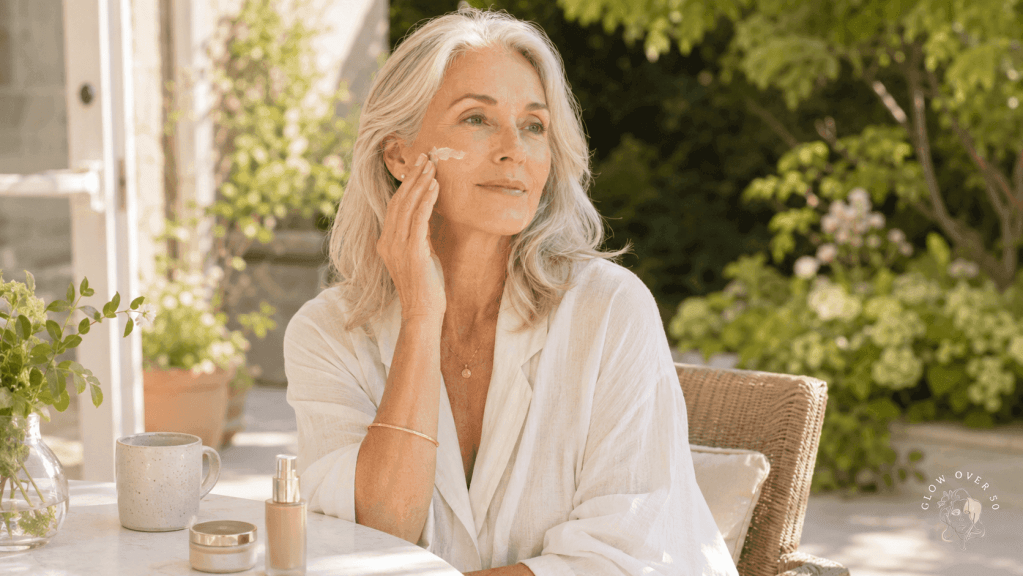
Rather than covering my entire face with a generous amount of foundation, I begin with very little product in the centre of the face: around the nose, across the inner cheeks, a touch on the chin and perhaps a little on the forehead.
Then I blend outward.
Most of us need more evening-out in the centre of the face than around the outer cheekbones or hairline. Keeping less product on the areas with movement and texture helps the finished look stay softer.
The Application Method I Prefer in Summer
For a lightweight, fresh base, I like using either:
- Clean fingers to warm and press in a skin tint or very fluid foundation.
- A damp sponge to remove excess product and soften the finish.
- A small foundation brush for targeted coverage, followed by a sponge press to make everything look more natural.
I avoid dragging a heavy layer over the skin. I press and tap instead.
If I want more coverage, I add it only where needed rather than applying a second complete layer. That helps with how to stop foundation from settling into wrinkles in summer, because there is simply less excess product available to gather in lines.
For more help choosing tools, my guide to the best foundation brushes and sponges for mature skin explains which application styles create a lighter, smoother result.
Step 6: I Conceal Carefully Instead of Adding More Foundation
One of the easiest ways to make summer makeup look heavy is to keep building foundation because of one or two areas that need more coverage.
For me, concealer is much more useful.
I use a small amount:
- At the inner corners under the eyes if I look tired.
- Around the nose if there is redness.
- Over a dark spot or blemish.
- Around the mouth only where uneven tone needs softening.
I do not automatically apply a large triangle of concealer under the eyes, especially in hot weather. The more product I place in an area that moves, the more chance it has to crease. Ive made a list of my Top 5 Concealers for Mature Skin
A hydrating concealer applied in tiny amounts usually looks fresher than a thick full-coverage layer. I explain this in more detail in my guide to choosing concealer for mature skin without creasing.
If redness or rosacea is the main reason you feel you need fuller summer coverage, you may also find my step-by-step base routine for covering redness after 50 without looking cakey helpful. Correcting the redness where it appears can look much lighter than covering the whole face more heavily.


Step 7: I Add Colour Back With Cream Products
A very light summer base can sometimes leave the complexion looking a little flat, especially after concealing redness or uneven tone.
That is when blush and bronzer make such a difference.
For summer makeup over 50, I often prefer a cream or soft liquid cheek product because it melts into a lighter foundation beautifully. It gives the complexion that healthy, awake look without sitting visibly on top of the skin.
I keep the placement lifted:
- Blush slightly higher on the cheeks rather than too close to the nose.
- Bronzer softly around the outer face, temples and upper cheek area.
- Highlight only where I want a gentle gleam, not over every line or pore.
The key is avoiding too much shine in the centre of the face. A little radiance on the cheeks can look fresh and youthful; a glossy nose, forehead and chin on a hot day can simply make the base feel less polished.
For colour ideas that work alongside a fresh base, see my roundup of the best blush and bronzer choices for mature skin.
Step 8: I Powder Only Where Makeup Actually Moves
I know powder can be a nervous subject after 50. We want makeup to last, but we do not want our skin to look dry or older.
My approach is very simple: powder the areas that need it, and leave the areas that do not need it alone.
In summer, I may place the smallest amount of finely milled powder:
- Beside the nostrils.
- Across the sides of the nose.
- Lightly on the chin.
- Between the brows or through the centre of the forehead.
- Very carefully under the eyes only if concealer is likely to move.
I usually avoid dusting a thick layer across the outer cheeks, where I want the skin to retain a little freshness.
The difference between strategic setting and full-face powdering is enormous on mature skin. Strategic setting helps control movement. Heavy powdering can turn a pretty, natural base into a dry-looking one.
If you are unsure how much powder is enough, my full guide on how to apply setting powder for mature skin without emphasizing lines walks through a gentle technique. You can also compare formulas in my post on the best setting powders for mature skin that still look soft and flattering.
Step 9: Setting Spray Helps My Makeup Look Less Powdery
A good setting spray is one of my favourite finishing steps for long lasting makeup for mature skin, especially when I have used even a small amount of powder.
Rather than wanting my face to feel locked down or stiff, I want the finished makeup to look blended together. A light mist can help powder and foundation appear more seamless and take away that overly finished look.
In summer, I look for a spray that helps makeup feel fresh without making the skin tight, tacky or overly glossy.
I spray lightly, let it dry naturally and resist the urge to touch my face straight away.
For days when my base needs more staying power, this step can feel much more flattering than adding another layer of powder. I compared formulas specifically with comfort in mind in my post where I tested setting sprays after 50 for fresh, comfortable makeup wear.


My Full Step-by-Step Summer Makeup Routine for Mature Skin
Here is the complete routine I follow when I want my makeup to stay fresh in warm weather without becoming heavy.
1. Prep With Light Moisture
I apply enough moisturizer to make my skin feel comfortable, but not so much that my face feels slick. Dry skin needs support, but summer makeup behaves best when the surface of the skin is not overloaded.
2. Apply Sunscreen and Let It Settle
I apply sunscreen before makeup and give it a few minutes before adding anything else. This is one of the best tricks I have found for preventing foundation from pilling or separating.
The expert guidance on making sunscreen work smoothly underneath makeup is a useful reminder that sun protection and a beautiful base can absolutely work together.
3. Use Primer Selectively
I add primer only where my makeup usually disappears or where texture is more noticeable. In summer, this is often around my nose or through my T-zone rather than all over.
4. Apply a Thin Base
I use a skin tint, tinted moisturizer, CC cream or a light application of liquid foundation depending on the day. I begin in the centre of the face and blend out, keeping the edges sheer.
5. Add Small, Targeted Coverage
Rather than building more foundation, I tap concealer over the spots that need it. This keeps the rest of the face looking natural and helps prevent a cakey finish.
6. Add Soft Colour
Cream blush and a little bronzer make a lightweight base come alive. I keep the placement lifted and softly blended, with no harsh lines.
7. Powder the T-Zone Lightly
I use a small brush and apply hardly any powder. I do not want to see powder on the skin; I only want to reduce unwanted shine and movement.
8. Finish With Setting Spray
A light mist helps the layers melt together and leaves the complexion looking softer.
9. Carry Only What I Need for Touch-Ups
Instead of bringing half my makeup bag, I prefer a small summer touch-up kit:
- Blotting tissue or a clean tissue.
- Lip product.
- A small concealer if needed.
- Sun-protection refresh products appropriate for the day.
- Perhaps a small cream blush if I am going out into the evening.
How I Keep Foundation From Melting in Summer

When someone asks me how to keep foundation from melting in summer, I always think about what is underneath the foundation before blaming the formula itself. Mascara is part of that too, so I rounded up the best waterproof mascaras for women over 50.
A foundation can start sliding because:
- The moisturizer underneath is too rich for the weather.
- Sunscreen has not settled before makeup was applied.
- Too much primer has been layered over skincare.
- The foundation application is too thick.
- Cream products have been stacked generously over a dewy base.
- Powder was added after the makeup had already started moving.
My first fix is usually not buying another foundation. It is simplifying the routine.
What I Do Instead
- I use lighter skincare in the daytime.
- I allow sunscreen time to settle.
- I apply foundation in thin layers.
- I use concealer strategically.
- I set the centre of the face before it becomes shiny.
- I keep my hands away from my face as much as possible.
If I notice shine developing during the day, I do not immediately put powder on top of it. Powder over perspiration or oil can create a thick, uneven finish.
Instead, I gently blot first. Only after excess moisture is removed do I consider adding the tiniest touch of powder or concealer.
This simple step helps keep makeup that does not melt on mature skin looking smooth rather than patched together.
How I Prevent Cakey Foundation in Hot Weather
Cakiness is not always caused by foundation itself. Often, it comes from the combination of too much product and not enough flexibility.
In summer, I avoid cakey foundation by following a few quiet rules:
I Do Not Chase Perfect Coverage Everywhere
My skin does not need to look entirely uniform to look beautiful. A soft amount of natural variation is far more flattering than a thick base that covers everything but highlights texture.
I Keep Powder Away From Dry Areas
If my cheeks already look balanced, I leave them alone. There is no reason to mattify an area that is not moving.
I Press Rather Than Rub
If I need to blend or repair makeup, I gently tap with a sponge or fingertip. Rubbing can disturb the layers and make the base look uneven.
I Use Setting Spray to Soften the Finish
A light mist often makes powder look much more natural than applying another creamy product over the top.
I Check My Makeup in Natural Light
Bathroom lighting can make us think we need more coverage than we really do. Before adding more product, I like to check my skin near a window. Often, the lighter base is far more flattering in real life.
Summer Makeup for Mature Dry Skin
Dry mature skin can still become uncomfortable or patchy in warm weather, even if it is not especially oily.
For makeup for mature dry skin in summer, I focus on keeping the skin cushioned but not overloaded.
I prefer:
- A gentle, hydrating morning skincare routine.
- A sunscreen that feels comfortable rather than drying.
- A luminous or satin skin tint or foundation.
- Minimal powder, applied only where absolutely necessary.
- Cream blush rather than a dry powder cheek product.
- A comfortable mist to refresh the finish.
If my face feels dry during the day, I do not automatically add more foundation. I would rather gently press the existing makeup into the skin and add a freshening mist than pile coverage onto dry texture.
Dry mature skin usually looks its best in summer when the foundation layer is thin enough to move naturally and the glow is controlled rather than eliminated.


Summer Makeup for Mature Combination or Oily Skin
Mature skin is not always dry. Many women still become oily through the nose, chin and forehead while the cheeks remain normal or even slightly dry.
For makeup for mature oily skin in summer, I do not recommend treating the whole face as though it is oily.
Instead, I balance the zones separately:
- Light moisturizer across the face.
- A smoothing or grip-style primer through the areas that become shiny.
- A natural or satin base rather than an extremely dewy formula.
- A touch of powder through the T-zone.
- Cream products placed away from the oiliest centre of the face.
- Setting spray chosen for comfort and longevity.
A soft matte or satin foundation can be particularly useful on a humid day. The important thing is to avoid creating a dry, heavy finish over the areas that do not require oil control.
If you love a more secure foundation for long days, the right preparation and thin application matter just as much as the formula itself.
What I Wear on a Very Hot Day
When the temperature rises and I know I will be outdoors, I simplify my makeup rather than fighting the heat.
A very hot day is not usually when I want a full face of layered foundation, contour, heavy eye makeup and a perfectly powdered complexion.
My hot-day routine is usually closer to this:
- Lightweight moisturizer.
- Broad-spectrum sunscreen.
- Sheer skin tint or tinted moisturizer only where I need evening out.
- Concealer around the nose or under the eyes.
- Cream blush.
- Brows and mascara.
- Comfortable lip colour.
- Very light setting through the T-zone.
This look feels fresher, is easier to refresh and is much more forgiving if I become warm.
There is something elegant about letting summer makeup be simple. Beautiful mature skin does not need to be completely covered to look polished.
What I Wear for a Summer Event or Wedding
A summer wedding, garden party or special dinner is different. I still want the base to look light, but I usually need more longevity and slightly more polish.
For an event, I take extra care with each stage:
- I prep early enough that skincare and sunscreen have fully settled.
- I choose a foundation with reliable wear rather than an ultra-sheer tint.
- I apply the thinnest layer possible and build only where necessary.
- I conceal carefully rather than applying extra foundation everywhere.
- I use cream colour, then set the areas most likely to move.
- I finish with setting spray.
- I bring a small touch-up kit rather than adding a heavy layer before leaving.
For a summer event, I want my makeup to look lovely in photographs, but also soft when someone is standing close to me in daylight.
That is why I prefer a carefully layered complexion over very full coverage. My exact makeup layering routine for mature skin is especially helpful for events because it explains the order that keeps products from fighting with each other.
How I Refresh Makeup Midday Without Making It Look Heavy
This is one of the most useful summer habits I have learned: do not treat a midday touch-up like a second morning makeup routine.
If my foundation has become a little shiny or soft around the nose, I do not apply more product straight on top.
Instead, I refresh in this order:
First, I Blot
I gently press away excess oil or moisture with tissue or blotting paper. I never rub, because that can lift foundation unevenly.
Second, I Smooth
Using a clean fingertip or sponge, I softly press any foundation that has gathered near the nose or smile lines back into place.
Third, I Add the Smallest Amount of Product
Only if I genuinely need it, I add a dot of concealer or a whisper of powder where coverage has faded.
Finally, I Freshen the Overall Look
A touch of lip colour or cream blush can make the whole face look refreshed without adding more base.
This approach helps me avoid the heavy, patched look that can happen when powder and foundation are repeatedly layered through a hot day.
Common Summer Makeup Mistakes I Try to Avoid After 50


Mistake 1: Wearing the Same Base Routine All Year
What feels hydrating and flattering in winter may feel too rich in summer. I adapt the textures, not my entire sense of style.
Mistake 2: Depending on Foundation SPF Alone
Foundation SPF can be a helpful addition, but I begin with proper sunscreen underneath makeup. The guidance on applying and reapplying sunscreen correctly is too important to ignore, especially in summer.
Mistake 3: Applying Too Much Foundation to Cover Small Concerns
A little concealer or colour correction usually looks more natural than adding full-face coverage because of redness around the nose or one dark spot.
Mistake 4: Powdering Every Inch of the Face
Powder is a tool, not a requirement. I set areas that move and keep softness elsewhere.
Mistake 5: Putting More Powder Straight Onto Shine
I blot first, then decide whether I even need powder. This alone keeps my base looking cleaner and lighter.
Mistake 6: Layering Too Many Glow Products
Radiance is lovely, but summer light already brings glow to the skin. I usually choose one or two areas to enhance rather than making every stage luminous.
Mistake 7: Forgetting Comfort
If a foundation feels tight, thick or irritating in the morning, it is unlikely to become more comfortable in heat. I want makeup I can actually enjoy wearing.
I’ve made a full guide on How to Avoid Common Foundation Mistakes on Mature Skin
The Products I Look for in a Summer Makeup Routine Over 50
I do not think every woman needs the same products, and I certainly do not think a good summer routine needs to be expensive.
Instead of shopping by hype, I look for textures and features that suit the way mature skin behaves in warm weather.
In a Moisturizer, I Look For:
- Comfortable hydration.
- A finish that absorbs rather than stays slippery.
- A texture that works underneath sunscreen.
In a Sunscreen, I Look For:
- Broad-spectrum protection.
- Comfortable wear under makeup.
- A finish that does not pill when foundation is tapped over it.
- Water resistance when outdoor plans require it.
In a Summer Foundation or Tint, I Look For:
- Lightweight texture.
- Flexible coverage.
- A natural, satin or softly radiant finish.
- The ability to build coverage only where needed.
- Comfortable wear over sunscreen.
In a Concealer, I Look For:
- Thin, blendable texture.
- Enough pigment to cover small areas.
- A finish that does not dry out the under-eye area.
In Powder, I Look For:
- A finely milled texture.
- No heavy, chalky appearance.
- Enough control for the T-zone without flattening the complexion.
In Setting Spray, I Look For:
- Comfort.
- A fine mist.
- A finish that softens powder rather than leaving the skin tight.
This is why I love building a routine rather than relying on one so-called miracle product. A foundation can only do so much if the sunscreen underneath is slipping, the powder is heavy or the application is too thick. The Order Matters: The Exact Makeup Layering Routine That Works on Mature Skin
My Favourite Finish for Summer Makeup After 50
For everyday summer makeup, my favourite finish is neither completely matte nor extremely dewy.
I like a soft satin finish with gentle glow on the cheeks and controlled shine through the centre of the face.
This finish suits mature skin beautifully because it keeps the complexion alive without drawing attention to texture. It also looks natural in daylight, which is especially important in summer when makeup is often seen in brighter light.
I want my skin to look:
- Even, but not masked.
- Fresh, but not greasy.
- Smooth, but not overly powdered.
- Radiant, but not sparkly.
- Polished, but still like me.
That, to me, is the sweet spot for lightweight makeup for mature skin.
My Simple Summer Makeup Checklist
Before I leave the house on a warm day, I ask myself:
- Does my skin feel comfortable, not sticky?
- Have I applied proper sunscreen?
- Is my foundation layer thin enough?
- Did I use coverage only where I need it?
- Have I kept powder light?
- Is there enough warmth in my cheeks so the base looks fresh?
- Do I have what I need to refresh sun protection during outdoor time?
- Does my makeup still look like skin in daylight?
If the answer is yes, I stop adding products.
That last part is important. Sometimes the most flattering finishing step is knowing when the makeup is already enough.

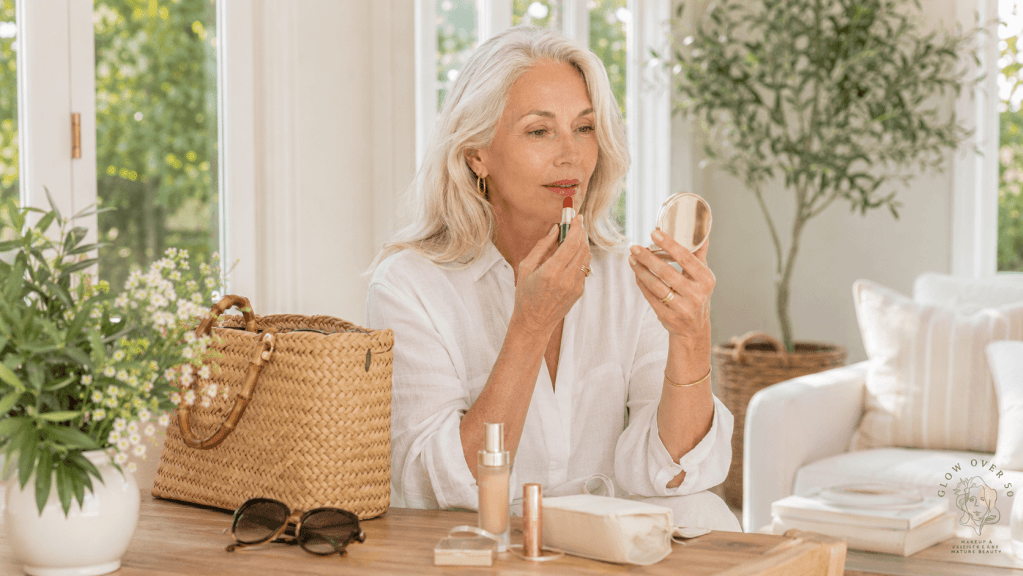
Final Thoughts: Fresh Summer Makeup Is About Light Layers, Not Perfection
Summer makeup for mature skin does not need to feel like a battle against heat, lines, texture or shine.
I have found that my foundation looks far better when I stop asking it to do everything. I prepare my skin gently, protect it with sunscreen, use a lightweight base, add coverage only where I need it and set the areas that genuinely tend to move.
That is how I keep foundation fresh without caking or melting.
Not by hiding my skin underneath heavier layers, but by letting it look soft, comfortable and beautifully alive.
Whether you prefer a tinted moisturizer on relaxed days, a natural liquid foundation for lunch or a more long-wearing base for a summer wedding, the same principle applies: thin layers almost always look fresher on mature skin than more product.
And summer is exactly the season to enjoy a lighter touch — glowing cheeks, comfortable lips, soft coverage and a complexion that still looks like your own skin.
Have you found a summer foundation, skin tint, sunscreen or setting spray that works beautifully on mature skin? I would love to know what keeps your makeup fresh in warm weather — share your favourites in the comments.
Frequently Asked Questions About Summer Makeup for Mature Skin
What is the best summer makeup for mature skin?
The best summer makeup for mature skin is light, flexible and comfortable. I do not want my skin to feel sealed under layers when the weather is warm. I want makeup that evens my complexion, softens redness, gives me a healthy glow and still lets my skin look like skin.
For me, the best routine starts with lightweight hydration, proper sunscreen, a thin base and small amounts of concealer only where I need it. I avoid using heavy foundation all over my face just because one area needs more coverage. That is one of the biggest summer makeup lessons I have learned after 50.
A good summer routine usually includes:
- A light moisturizer that does not feel greasy
- A broad-spectrum sunscreen that layers well under makeup
- A skin tint, tinted moisturizer, BB cream, CC cream or lightweight foundation
- A small amount of concealer for redness, dark circles or spots
- Cream blush or bronzer to bring life back to the face
- A tiny bit of setting powder only where makeup moves
- A comfortable setting spray to soften the finish
The goal is not to look perfectly matte. It is also not to look overly shiny. The sweet spot is a soft satin finish: fresh on the cheeks, controlled through the centre of the face and smooth enough that the makeup does not settle into every fine line.
If you are still deciding what kind of base suits you best, my guide to the best foundations for mature skin that look smooth instead of cakey is a good place to start. And if you prefer something lighter for hot days, my roundup of tinted moisturizers with SPF for women over 50 may feel more wearable for everyday summer makeup.
Should mature skin wear less foundation in summer?
In most cases, yes — I think mature skin usually looks fresher with less foundation in summer. That does not mean no coverage. It means smarter coverage.
When the weather is hot, thick foundation has more chances to move, separate, crease or collect around expression lines. Mature skin often has more texture, fine lines and dryness than it did years ago, so a heavy layer can become obvious very quickly in daylight.
I prefer to apply foundation only where I need evening out. Usually, that is the centre of the face: around the nose, inner cheeks, chin and sometimes the forehead. I blend outward so the edges stay sheer. Then I use a tiny amount of concealer for anything foundation did not cover.
This is much more flattering than applying a full layer everywhere and then trying to powder it into place.
Less foundation can also make blush, bronzer and highlighter look softer because they are sitting on a thinner base. When the skin still has a little natural movement, the whole face looks more relaxed and elegant.
If you are worried that less foundation will not cover enough, try this instead: apply a thin base first, wait one minute, then check what still bothers you. You may only need a dot of concealer around the nose or on a dark spot. My guide on how to choose concealer for mature skin without creasing can help if your concealer is doing too much or not enough.
For summer, I would rather see a little real skin than a thick layer of foundation struggling to survive heat and humidity.
Is powder or setting spray better for mature skin in hot weather?
For mature skin in hot weather, I like using both — but in very different ways.
Powder is best for controlling specific areas where makeup moves, like around the nose, chin, between the brows or lightly through the T-zone. Setting spray is better for helping the finished makeup look softer, fresher and less powdery.
The mistake is using too much of either one.
Too much powder can make mature skin look dry, flat or textured. It can cling around fine lines and make the face look more made-up than we intended. But skipping powder completely can allow foundation to slide around in warm weather, especially if your sunscreen or base is dewy.
So I do a tiny amount of powder only where I need it. I use a small brush, not a huge fluffy brush, because I want control. I press powder lightly around the nose and chin, then stop. I do not automatically powder the entire cheek area if it already looks fresh.
Then I use setting spray to take down the powdery look and help everything melt together.
A good setting spray should not make mature skin feel tight, dry or sticky. I prefer a mist that keeps makeup fresh without turning my face into a mask. If you are choosing one for summer, my post where I tested setting sprays after 50 for fresh makeup that does not feel tight is especially helpful.
For powder technique, I would also read my guide on how to apply setting powder for mature skin without emphasizing wrinkles. The right product matters, but the application matters even more.
How do I stop foundation from creasing in summer?
To stop foundation from creasing in summer, the first thing I do is reduce the amount of product sitting on areas that move.
Fine lines are normal. Smile lines are normal. Under-eye texture is normal. But when too much foundation, concealer or powder sits in those areas, the makeup has nowhere to go except into the lines.
My best summer trick is thin layers.
I start with light skincare, apply sunscreen, let it settle, then apply foundation sparingly. I do not drag a heavy layer over my smile lines or under my eyes. I use a sponge or fingertips to press the foundation into the skin, then I gently tap away any excess before setting.
If foundation creases around the mouth or nose, I usually do this:
- Apply less foundation in that area
- Use a tiny brush or sponge for precision
- Let the base sit for a minute
- Tap out any product that has collected
- Set with the smallest amount of powder
Do not set creased makeup before smoothing it first. Powder will only lock the crease in place.
Under the eyes, I prefer using very little concealer. A large triangle of bright concealer may look good for five minutes, but on mature skin in summer, it can crease quickly. I place concealer only where there is darkness and blend the edges softly.
If creasing is your biggest issue, my article on foundations that do not settle into wrinkles on mature skin can help you choose formulas that behave better. And if your issue is mostly product order, my exact makeup layering routine for mature skin shows how to stop products from fighting each other.
Can women over 50 wear dewy makeup in summer?
Yes, women over 50 can absolutely wear dewy makeup in summer. The trick is choosing where the glow goes.
I love glow on mature skin. A soft radiance can make the face look fresher, smoother and more awake. But in summer, too much glow all over the face can turn into shine very quickly. That is why I prefer controlled dewiness instead of a fully glossy base.
For me, the prettiest summer glow is usually on:
- The tops of the cheeks
- A soft touch above the brows
- A little cream blush with radiance
- A fresh lip
- Maybe a subtle highlight, but never glittery
I avoid placing too much glow down the centre of the face, especially on the nose, chin and forehead. Those areas naturally become shinier in heat, so I do not need to add more shine there.
A dewy foundation can work beautifully if the skincare underneath is not too rich and the powder is placed strategically. If every layer is luminous — glowy moisturizer, glowy sunscreen, radiant primer, dewy foundation, cream highlighter and dewy spray — it can become too much.
That is why I often prefer a satin base in summer, then add glow back with blush or highlighter. My guide to matte vs dewy makeup on mature skin explains this balance in more detail.
So yes, wear the glow. Just place it like jewellery, not like a full-face filter.
What type of foundation works best for mature skin in humidity?
In humidity, mature skin usually does best with a lightweight, flexible foundation that sets enough to stay in place but does not become dry or mask-like.
I look for words like natural finish, satin finish, lightweight, long-wear, serum foundation, skin tint or flexible coverage. I am more careful with very thick full-coverage formulas unless I need them for a special event. They can work, but they need careful prep and a thin application.
For everyday humidity, I usually prefer:
- A skin tint for casual days
- A tinted moisturizer or CC cream for light coverage
- A satin liquid foundation for polished days
- A long-wear foundation applied thinly for events
If your skin is dry, avoid formulas that are too matte or alcohol-heavy, because they can make mature texture look more obvious. If your skin is combination or oily, avoid very emollient formulas all over the face, because they may slide faster in humidity.
The best foundation for mature skin in hot weather is usually not the one with the most coverage. It is the one that still looks smooth after a few hours of real life.
If you want a more polished long-wear option, my Estée Lauder Double Wear review for mature skin shows how I make a fuller foundation look softer. If you prefer a serum-style base with SPF as a cosmetic bonus, my Clinique Even Better Clinical Serum Foundation review may be a better match.
How do I keep makeup fresh in hot weather after 50?
To keep makeup fresh in hot weather after 50, I focus on prevention first and touch-ups second.
Fresh makeup starts before foundation. If I use heavy skincare, rush sunscreen, apply too much primer and then add a generous layer of foundation, the makeup is already under pressure before I leave the house.
My best fresh-makeup routine is simple:
- Use light hydration.
- Apply sunscreen and let it settle.
- Use primer only where needed.
- Apply foundation in a thin layer.
- Spot-conceal instead of adding more base.
- Powder only the areas that move.
- Finish with setting spray.
For touch-ups, I blot before adding anything. This matters so much. If I put powder directly on top of oil or sweat, the finish can become thick and patchy. I gently press away shine first, smooth any foundation that has gathered, then add a tiny bit of powder only if I still need it.
If I am spending time outside, I also think about sun protection, not just makeup. The American Academy of Dermatology recommends reapplying sunscreen every two hours when outdoors, and more often after swimming or sweating. I treat that as part of my summer beauty routine, not a separate chore.
Makeup can be fresh and practical at the same time. A lighter base, a soft cheek colour and proper SPF habits will usually look better than trying to keep a heavy face perfect all day.
How do I stop foundation from melting in summer?
Foundation usually melts in summer because there is too much slip underneath it, too much product on top of it or not enough strategic setting.
The first thing I check is skincare. Is my moisturizer too rich for daytime? Did I let my sunscreen settle? Is my primer helping the foundation grip, or is it adding another slippery layer?
Then I look at the foundation itself. If I apply too much, even a good formula can start moving in heat. Mature skin often looks better with one thin layer and small corrections than with full coverage everywhere.
To stop foundation from melting, try this:
- Use lighter skincare in the morning
- Give sunscreen time to settle before makeup
- Skip primer unless you need it
- Apply foundation in thin layers
- Use concealer only where extra coverage is needed
- Set around the nose, chin and T-zone
- Blot before powdering during the day
I also avoid touching my face. It sounds small, but touching, rubbing or leaning on your hand can break down foundation quickly, especially in warm weather.
If sunscreen and makeup are not playing nicely together, the Skin Cancer Foundation’s advice on making sunscreen work with makeup is useful because it explains why SPF layers do not simply add up and why a proper sunscreen base still matters.
The goal is not to create makeup that never moves at all. The goal is to create makeup that wears down gracefully and can be refreshed without looking heavy.
Is tinted moisturizer better than foundation for mature skin in summer?
Tinted moisturizer can be better than foundation for mature skin in summer if you want a lighter, fresher look. It is especially nice for casual days when you want your skin to look even but not fully made up.
A tinted moisturizer usually gives light coverage, a comfortable feel and a natural finish. It is easier to apply quickly and often looks forgiving on texture. If your skin is dry or normal, this can be beautiful in warm weather.
However, foundation may still be better if you want:
- More coverage
- Longer wear
- Better redness control
- A polished event look
- More shade or finish options
I do not think one is always better than the other. I think they serve different days.
For a relaxed summer day, I might choose a tinted moisturizer, cream blush, mascara and lip balm. For a dinner, event or photos, I might choose a thin layer of foundation and set it carefully.
If you like lighter base products, my guide to the best tinted moisturizers for mature skin is a natural next read. And if you are deciding between sheer coverage and a more complete base, my post on BB and CC creams for mature skin can help you choose the right middle ground.
How can I wear sunscreen under makeup without pilling?
Sunscreen pilling under makeup is one of the most annoying summer beauty problems. I have had it happen, and once it starts, the whole base can look uneven before the day has even begun.
The first fix is using thinner layers. Too much skincare under sunscreen can make products roll up. I apply moisturizer lightly, let it settle, then apply sunscreen evenly.
The second fix is waiting. If I apply foundation immediately after sunscreen, the layers are more likely to mix together. I give sunscreen a few minutes before I start makeup.
The third fix is matching textures. Some silicone-heavy primers, rich creams or very gripping foundations do not sit well over certain sunscreens. If your makeup pills every time, the problem may be product compatibility rather than your technique.
I also press foundation over sunscreen instead of rubbing it aggressively. Tapping with fingers, a sponge or a brush disturbs the sunscreen layer less than dragging product around.
For longer outdoor days, remember that makeup with SPF is not usually enough on its own. The American Cancer Society explains that sunscreen needs to be reapplied at least every two hours, especially when sweating, swimming or spending extended time outside.
My best advice is to test your sunscreen and foundation together on a normal day before relying on the combination for a wedding, holiday or summer event.
What is the best summer makeup routine for mature dry skin?
The best summer makeup routine for mature dry skin is hydrating but not heavy.
Dry mature skin can still look patchy in summer if the base is too matte or if powder is overused. But very rich layers can also make makeup slide. So I like a balanced routine: enough moisture to soften the skin, but lightweight textures that sit well under makeup.
My dry-skin summer routine would be:
- Gentle cleanse or rinse
- Light hydrating serum or moisturizer
- Sunscreen that feels comfortable, not tight
- Optional hydrating primer only on dry areas
- Lightweight foundation, tint or CC cream
- Cream blush for freshness
- Minimal powder only around the nose or chin
- Hydrating setting spray to soften the finish
I avoid heavy powder on the cheeks because that is where dryness often shows. I also avoid very matte foundations unless I mix them with careful prep and use only a thin layer.
For dry mature skin, the skin prep often matters more than the foundation. My guide to how to prep mature skin before foundation is worth reading if your makeup clings, flakes or looks older by midday.
A fresh summer look on dry mature skin should feel soft, not greasy; glowing, not shiny; and polished, not powdered.
What is the best summer makeup routine for mature oily or combination skin?
For mature oily or combination skin, the best summer makeup routine is about controlling shine only where it appears.
Many women over 50 are not oily everywhere. The T-zone may become shiny, while the cheeks may still feel dry or normal. If you treat the whole face as oily, you can end up with makeup that looks dry and flat on the cheeks but still breaks down around the nose.
I like a zoned routine:
- Use lightweight hydration everywhere
- Apply sunscreen and let it settle
- Add gripping or smoothing primer only through the T-zone
- Use a satin or natural-finish foundation
- Keep cream blush on the outer cheeks
- Powder the nose, chin and centre forehead
- Finish with a setting spray that does not add too much shine
If your nose gets shiny quickly, use less foundation there, not more. A thick layer on the nose is often the first thing to separate. I apply a tiny amount, press it in, then set lightly.
For combination skin, I usually avoid extremely dewy foundations in summer unless I know I will only be out for a short time. A soft satin finish is much easier to manage and still looks flattering on mature skin.
If you are comparing finishes, my matte vs dewy makeup guide for mature skin can help you find that middle ground.
What products should I carry for summer makeup touch-ups?
For summer makeup touch-ups, I do not carry a full makeup bag. Too many products make it tempting to keep adding layers, and that is usually when makeup starts looking heavy.
My small touch-up kit would include:
- Blotting papers or clean tissue
- Lipstick, gloss or tinted balm
- A small concealer
- A travel powder or powder puff
- A mini setting spray if I am going somewhere special
- A sunscreen reapplication product for outdoor days
The most important step is blotting first. If I look shiny, I press away oil or moisture before applying anything else. Then I smooth the makeup gently with a fingertip or sponge. Only after that do I add a tiny bit of concealer or powder if needed.
A fresh lip colour is often the quickest way to make the whole face look better. Sometimes we think our foundation needs fixing, but really the makeup just needs a little colour and balance again.
For summer, I would rather refresh lightly than rebuild. Mature skin usually looks best when the touch-up is almost invisible.
How do I make summer makeup look natural but still polished after 50?
To make summer makeup look natural but polished after 50, focus on evenness, shape and freshness rather than full coverage.
I like to think of summer makeup as soft refinement. I do not need every mark covered. I just want my complexion to look rested, my cheeks to have life, my eyes to look awake and my lips to look comfortable.
My favourite polished summer look includes:
- Thin base
- Brightened inner corners
- Soft brows
- Mascara
- Cream blush
- A little bronzer
- Fresh lip colour
- Light powder only where needed
The biggest difference comes from blending. Harsh foundation edges, unblended concealer or too much powder can make makeup look older. Thin layers and soft edges look more expensive, even when the products are affordable.
If you struggle with base order, start with the basics: skincare, sunscreen, primer only where needed, foundation, concealer, cheek colour, powder and setting spray. My makeup layering routine for mature skin breaks that order down clearly.
Natural does not mean bare. Polished does not mean heavy. The most flattering summer makeup sits beautifully in the middle: soft, fresh, even and easy to wear.
Final FAQ Tip: What matters most for summer makeup after 50?
The most important thing for summer makeup after 50 is not finding one perfect product. It is learning how to use lighter layers together.
A beautiful summer base comes from the whole routine: skincare, sunscreen, foundation, concealer, powder, setting spray and touch-ups. If one step is too heavy, the others have to work harder. or the eyes, I keep the same light-handed approach with my soft eyeliner technique for mature eyes—short upper-lash strokes, a clean inner corner and no heavy lower line. I also keep brows lightweight in heat; my eyebrow-pencil guide for older women helps me choose a fine, controllable tip that will not overpower a sheer summer face.
My best advice is to simplify first. Use less foundation, apply it more carefully, powder less aggressively and let your skin keep some natural glow. Then build from there only if you truly need more.
Summer makeup should feel comfortable. It should move with your face. It should make you feel fresh, not trapped under product.
And honestly, that is what I love most about makeup after 50. We get to stop chasing perfect and start choosing what actually flatters real skin.