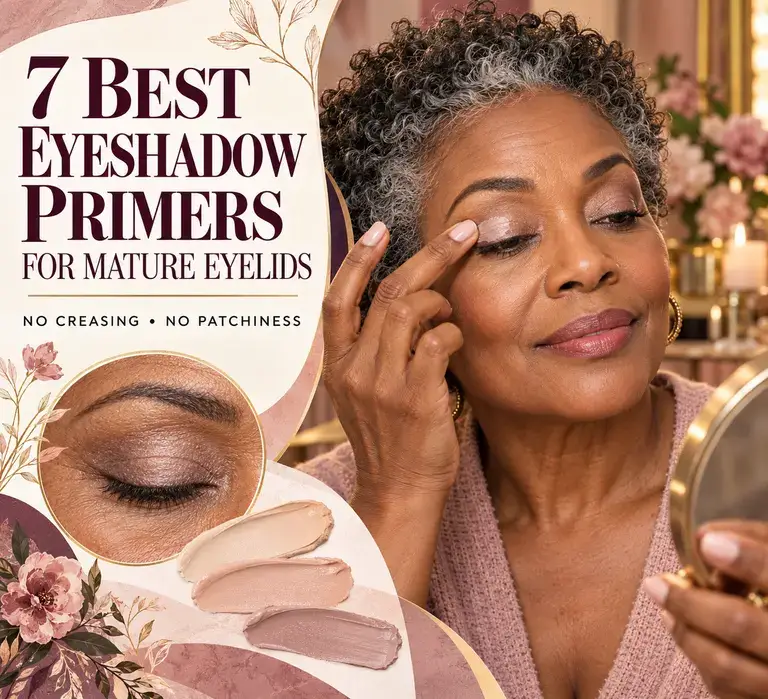
If your eyeshadow looked smooth at breakfast and settled into every fold by lunch, you are not imagining things. Mature eyelids can be dry in one place, oily in another and less even than they used to be. I compared seven popular eye bases for grip, comfort, texture, tint, ease and value to find the formulas most likely to help shadow look fresh without making delicate lids feel coated.
My best overall choice is Urban Decay Eyeshadow Primer Potion Anti-Aging because it combines reliable shadow grip with a smoothing, slightly correcting base. Laura Geller is my easier all-in-one choice when discoloration is as frustrating as creasing, and Milani is the budget tube I would try first. The most important thing, though, is matching the primer to your lids instead of buying the strongest-sounding formula.
This article is the practical bridge between my guide to the best cream eyeshadows for mature eyes and my gentle tutorial on applying eyeliner on mature eyes. If your mascara is the part that moves, see my waterproof mascaras for women over 50. Primer can improve the canvas, but it cannot rescue a formula that simply does not suit your eyes.
Table of Contents
My quick verdict
- Best overall: Urban Decay Anti-Aging Primer Potion for a smooth, dependable base and long-wear grip.
- Best for discoloration: Laura Geller Spackle Waterproof Eye Primer for tint, precision and versatility.
- Best invisible base: NARS Pro-Prime Smudge Proof Eyeshadow Base for a lightweight, clear-looking finish.
- Best for long events: Too Faced Shadow Insurance for strong hold and fade resistance.
- Best cream base: MAC Pro Longwear Paint Pot in Painterly for coverage and a matte, even canvas.
- Best for oily mature lids: Elizabeth Mott Thank Me Later for oil control and a budget-friendly tube.
- Best drugstore buy: Milani Stay Put Eyeshadow Primer for simple, comfortable everyday wear.
If you want one safe starting point, I would choose Urban Decay. If your shadow creases because your lids become shiny, Elizabeth Mott or Too Faced may suit you better. If most primers make the skin look dry, Milani deserves a look because it aims for lightweight hold rather than maximum coverage. And when blue, purple or red discoloration shows through, Laura Geller or MAC gives you more visible evening-out power.
How I chose these eyeshadow primers
I did not rank these by pretending I wore all seven for weeks. I compared current brand specifications, formula format, tint, texture, claimed wear, shade flexibility, applicator, price tier and the problems readers over 50 repeatedly describe: creasing, papery texture, patchy blending, hooded-lid transfer, sensitivity and shadow that loses color. When I say “I would choose,” that is a reasoned recommendation—not a fictional wear test.
I also checked whether each product earns a distinct place. There is little value in a list of seven nearly identical silicone tubes. NARS is the invisible option. MAC is a pigmented cream base. Laura Geller has a brush-tip format and visible correction. Too Faced and Elizabeth Mott lean toward control on oilier lids. Milani is the accessible low-cost choice. Urban Decay sits in the middle as the best-balanced recommendation.
My criteria were:
- Comfort: A mature-eye primer should not feel tight, gritty or stiff after it sets.
- Thin-layer performance: The formula must work in a tiny amount. Thick primer can magnify texture instead of smoothing it.
- Grip without grab: Shadow should adhere, but the base should still allow a soft brush to blend.
- Crease control: It should delay oils and movement without promising an impossible result for every eye shape.
- Tone: Clear, translucent and tinted bases solve different problems, so I judged each on its intended role.
- Ease: Applicator shape and packaging matter when close-up vision or hand steadiness is not perfect.
- Value: I considered how much product is required, not just the number on the price tag.
Eye-area safety mattered too. The FDA advises using cosmetics only as intended, keeping applicators clean, not sharing eye makeup and stopping if irritation occurs. Its eye-cosmetic guidance also says not to apply products while in a moving vehicle and not to use eye cosmetics when the eye area is inflamed. Primer belongs on the eyelid where the manufacturer directs it—not inside the eye or improvised as a lash-line treatment.
The American Academy of Ophthalmology similarly recommends replacing eye cosmetics regularly and avoiding products during an eye infection. If a formula causes redness, swelling, persistent watering or pain, remove it and stop using it rather than assuming discomfort is part of the “grip.” Anyone with an active eye condition, recent surgery or a clinician’s restrictions should follow medical advice before makeup advice.
Best eyeshadow primers for mature eyelids at a glance
Product | Best for | Finish / tint | Price tier |
|---|---|---|---|
Best overall balance | Sheer, smoothing | Prestige | |
Discoloration and precise application | Neutral tinted base | Mid-range | |
Invisible lightweight grip | Fast-drying matte | Prestige | |
Long events and stronger hold | Translucent | Prestige | |
Visible tone correction | Opaque beige matte | Prestige | |
Oily mature eyelids | Sheer, oil-controlling | Accessible | |
Best drugstore value | Nude-to-invisible | Budget |
The table is a shortcut, not a verdict carved in stone. Dry eyelids and oily eyelids can both crease, but for different reasons. A translucent primer can disappear beautifully on one complexion and look ashy on another. A pigmented pot can hide veins wonderfully but feel like too much on a very textured lid. Start with your main problem, then choose the least complicated formula that addresses it.
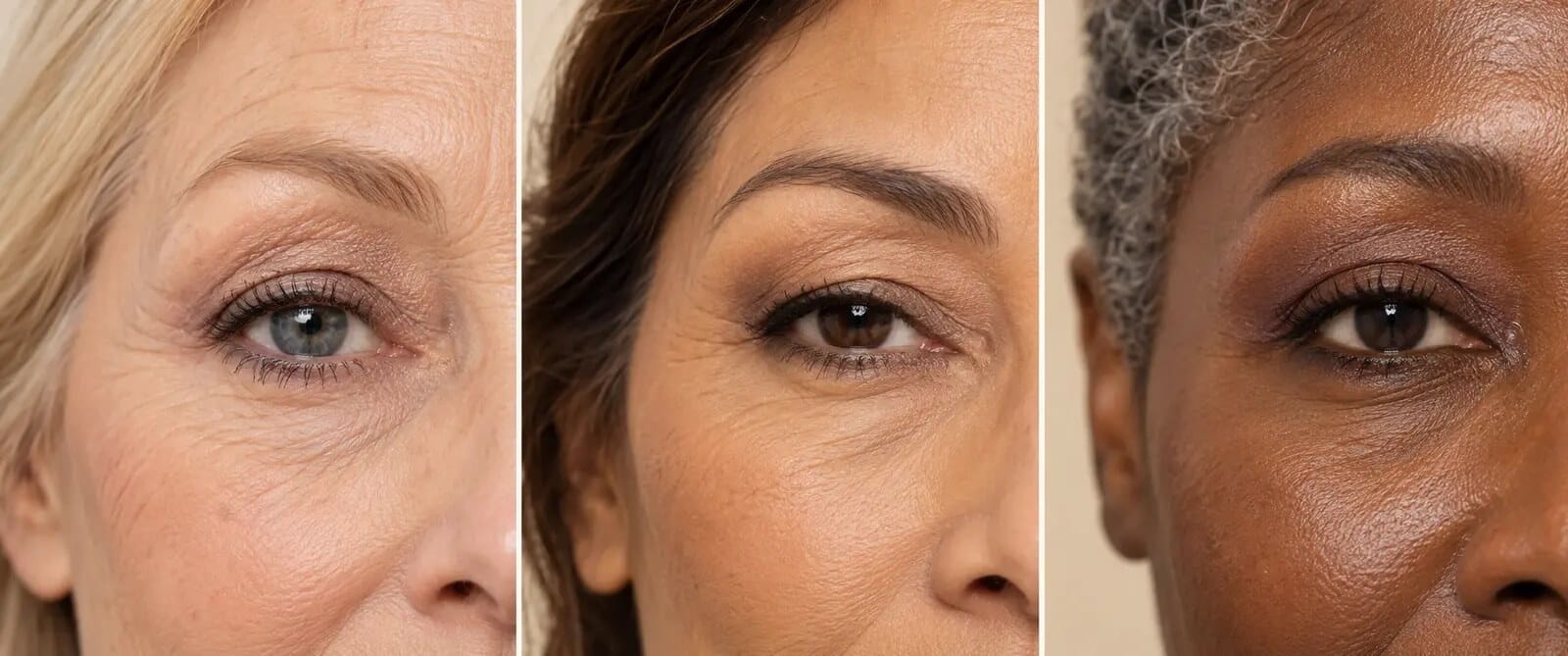
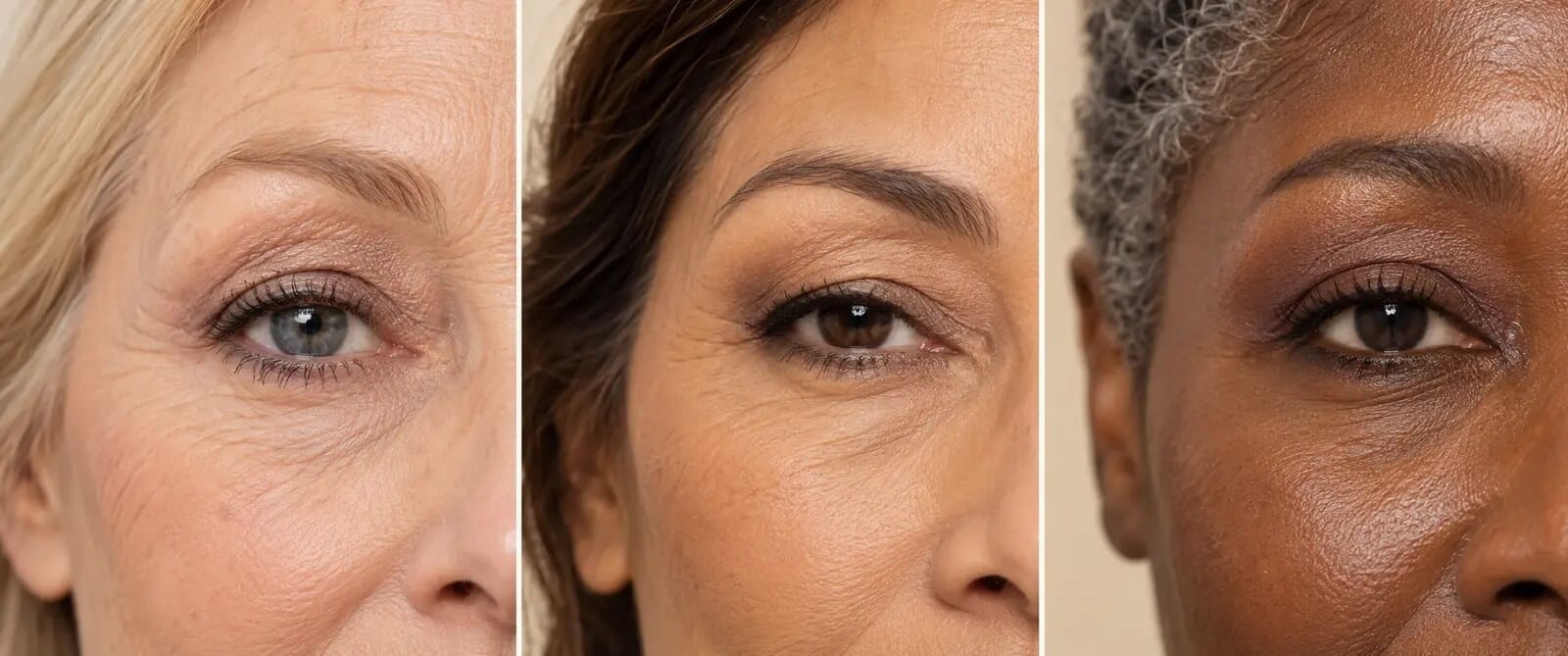
Different mature eyelids need different bases: comfort for dryness, control for transfer and flexible tint for varied skin tones.
Why eyeshadow starts behaving differently after 50
Skin changes do not stop at the brow bone. The lid can become thinner, less elastic and more folded, while the crease may sit lower or become hidden when the eye is open. At the same time, small areas can still produce oil. That combination explains the maddening “dry but creased” result: powder catches on the surface, then movement and oil push it into a fold.
The answer is rarely more product. In fact, the thicker the primer and shadow layers, the more material there is to gather. This is the same reason I recommend thin layers when preparing mature skin for foundation and when following the correct makeup layering order. Mature makeup is usually prettier when each layer has a clear job and enough time to settle.
Dryness and oiliness can exist together
A lid may feel dry immediately after cleansing yet become oily later in the day. Heavy eye cream under primer can make this worse, especially if the skincare has not absorbed. On the other hand, skipping all moisture can leave the surface tight and flaky. I use a very small amount of comfortable skincare around the orbital area, keep rich cream away from the mobile lid unless the product is meant for that location, and let it settle before makeup.
This is not a reason to treat eyelids with harsh degreasers. The skin is delicate. If you are rebuilding the whole routine, begin with the gentle ideas in my mature-skin ingredient guide, then simplify. More skincare, more primer and more powder do not automatically create more wear.
Texture needs flexibility, not spackle
The word “smoothing” can be misleading. No cosmetic erases folds, and a primer that dries like a rigid film may look smooth only while the eye is closed. I prefer a base that creates even tack without becoming brittle. The real test is the open eye: does the shadow still look soft when you blink, smile and look straight ahead?
A similar principle applies to complexion makeup. My guide to matte versus dewy makeup after 50 explains why finish is not simply a trend choice. Around the eyes, a softly matte primer often gives the easiest blend, but an aggressively dry matte can make every line more obvious.
Hooded lids change where transfer happens
When the lid folds over itself, shadow, liner and mascara touch skin for hours. Primer helps, but placement matters just as much. Keep the deepest shadow slightly above the natural fold so it remains visible with the eye open, and avoid loading thick cream color directly into the crease. My mature-eyeliner tutorial uses the same open-eye check to prevent a beautiful closed-eye line from disappearing under the hood.
Discoloration changes the finished shade
Veins, redness, brown pigmentation and bluish tones can alter a pale shadow. A clear primer improves grip but will not neutralize the lid. If color correction is your priority, a tinted base such as Laura Geller or MAC makes more sense. If your natural lid color does not bother you, clear or translucent NARS can look lighter and feel less makeup-like.
1. Urban Decay Eyeshadow Primer Potion Anti-Aging — Best overall
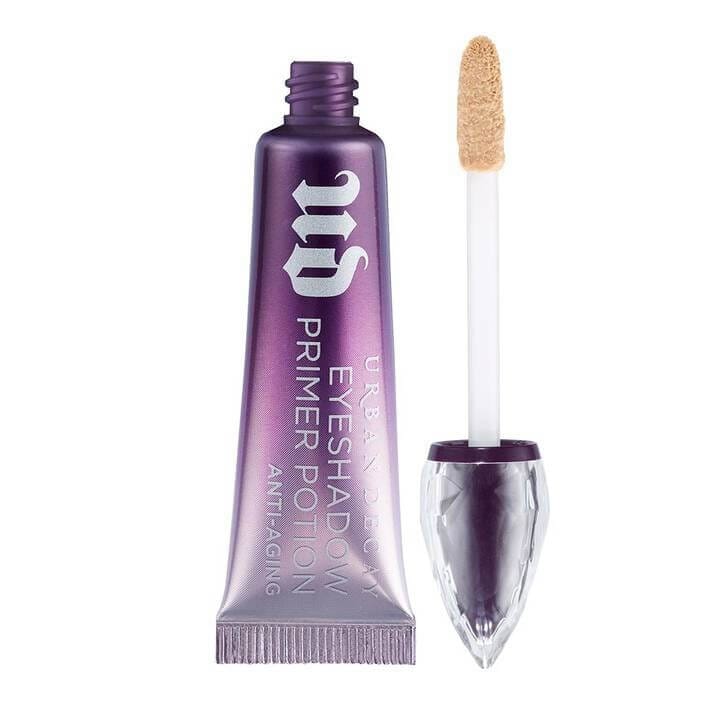
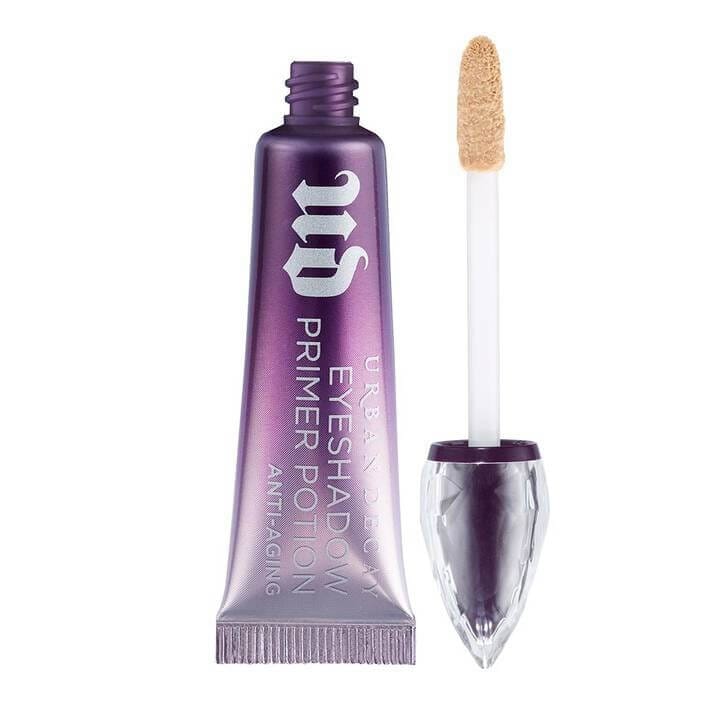
The Anti-Aging version has a creamy, sheer finish and controlled wand applicator. | Urban Decay makes several finishes; check that the listing is the Anti-Aging version you intend to buy.
Urban Decay takes first place because it is the most balanced option in the group. It is neither the most opaque nor the most oil-controlling, and that is part of its appeal. The formula gives shadow something to hold onto while creating a more even-looking surface, without forcing you into a strongly colored base.
The brand describes Eyeshadow Primer Potion as a vegan primer designed to intensify shadow and support crease-resistant wear. Urban Decay positions the Anti-Aging version as a smoothing option that helps blur the appearance of fine lines while extending eye color. I treat the “anti-aging” name as a finish description, not a claim that it changes the biology of the eyelid.
Why I ranked it first
The texture is suited to the thin-layer technique that works best on mature lids. You can place a dot, tap it outward and stop before the surface looks visibly coated. It also leaves enough working time to smooth the edges. Some very fast-drying primers grip so quickly that the first brushstroke sticks and the second skips; Urban Decay is more forgiving.
The wand is convenient, but I would not paint the lid with it. One small touch near the center is plenty. Blend with a clean ring finger or a small synthetic brush, then let the layer settle. This approach keeps the applicator away from unnecessary contact and reduces the chance of applying five times more product than the lid needs.
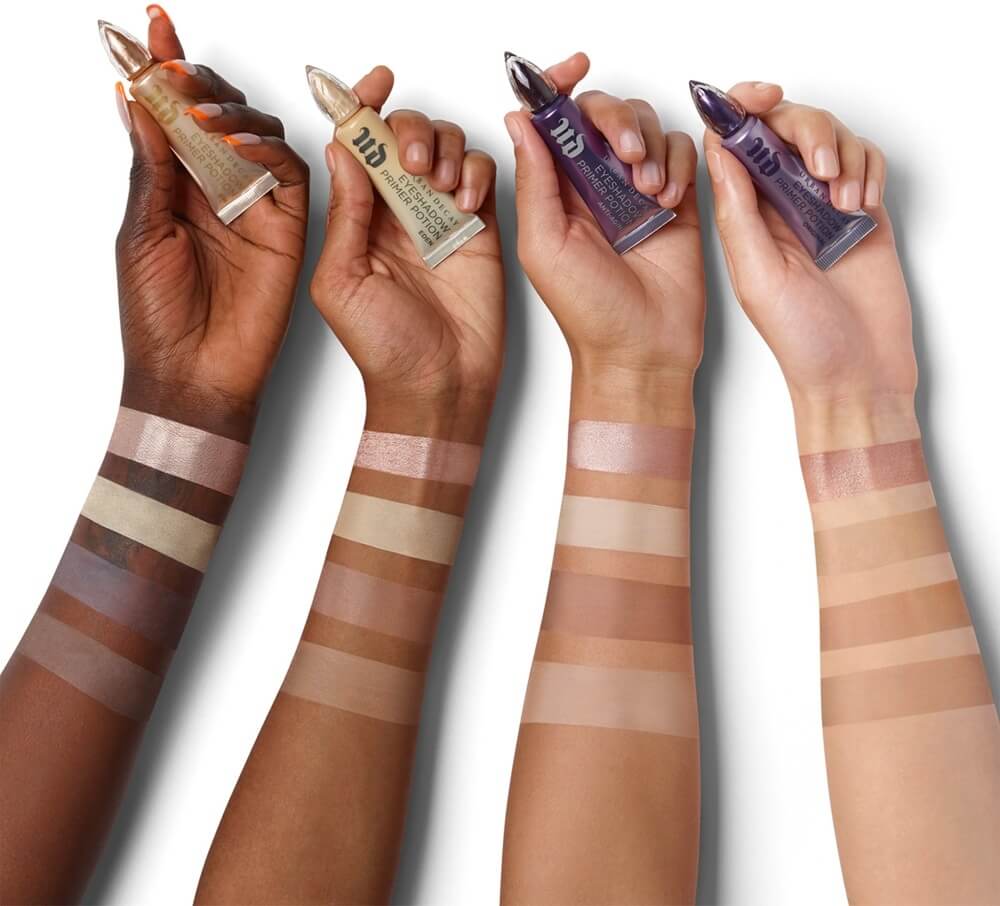

What it does well
It helps powder shadow look more saturated, extends wear and reduces the quick fade that can happen on a moving lid. It also works under the creamy formulas in my cream-eyeshadow roundup, although I would use an especially tiny amount beneath a long-wear stick. Too many grippy layers can become difficult to blend.
The translucent-sheer appearance is useful if you dislike the concealer-like look of an opaque base. It will soften minor unevenness, but it does not fully cover strong veins or pigmentation. That makes the result natural and easy, while MAC remains the better choice when visible coverage is the entire point.
Possible drawbacks
Very dry lids may still need careful preparation, and people with intensely oily lids may prefer Too Faced or Elizabeth Mott. The wand can also encourage overapplication. If the primer rolls into little pills, your eye cream may be too fresh, your primer layer may be too thick or the products may simply be incompatible.
Urban Decay sits in the prestige price range, so the value depends on using it sparingly. The tube lasts much longer when the amount is closer to a grain of rice for both eyes than a swipe per lid. Check the current Urban Decay Anti-Aging Primer Potion price and seller details, because Amazon pricing can move.
Best for: normal-to-combination mature eyelids, first-time primer users, soft powder looks and anyone who wants dependable performance without opaque coverage.
Skip it if: your main goal is full color correction, or you know that only very strong oil control keeps shadow in place.
Check today’s Urban Decay Anti-Aging Primer Potion price on Amazon
2. Laura Geller Spackle Waterproof Eye Primer — Best for discoloration


The brush-tip pen places the neutral base exactly where you want it. | The brand’s comparison shows how primer can strengthen and even the appearance of shimmer.
Laura Geller is the option I would choose when the lid needs both grip and visible evening out. Its neutral tint can soften veins and discoloration before shadow goes on, and the pen-style brush makes targeted placement easier than a broad doe foot. That can be helpful when your hands are steadier with a pencil-like object.
The official description calls it a waterproof eye primer and concealer designed to reduce the look of fine lines, prevent creasing and brighten the lid. Laura Geller presents the universal tint as a base that can be worn under eye makeup or alone. “Universal” does not mean invisible on every complexion, so I would still look closely at current swatches before buying.
Why it suits mature lids
Discoloration can make shadow look muddy even when the pigment itself is lovely. A correcting base gives pale taupe, champagne, mauve and soft peach a cleaner starting point. This is especially useful if you prefer the kind of quiet eye that appears in my guide to fresh, natural makeup on mature skin.
The pen is also tidy for the inner lid, where bluish veins often show, and beneath the brow tail if that area needs evening. I would not twist up a large amount or brush repeatedly. Dispense a little, paint one thin veil, then tap the edge with a fingertip. Once set, add shadow in light layers.

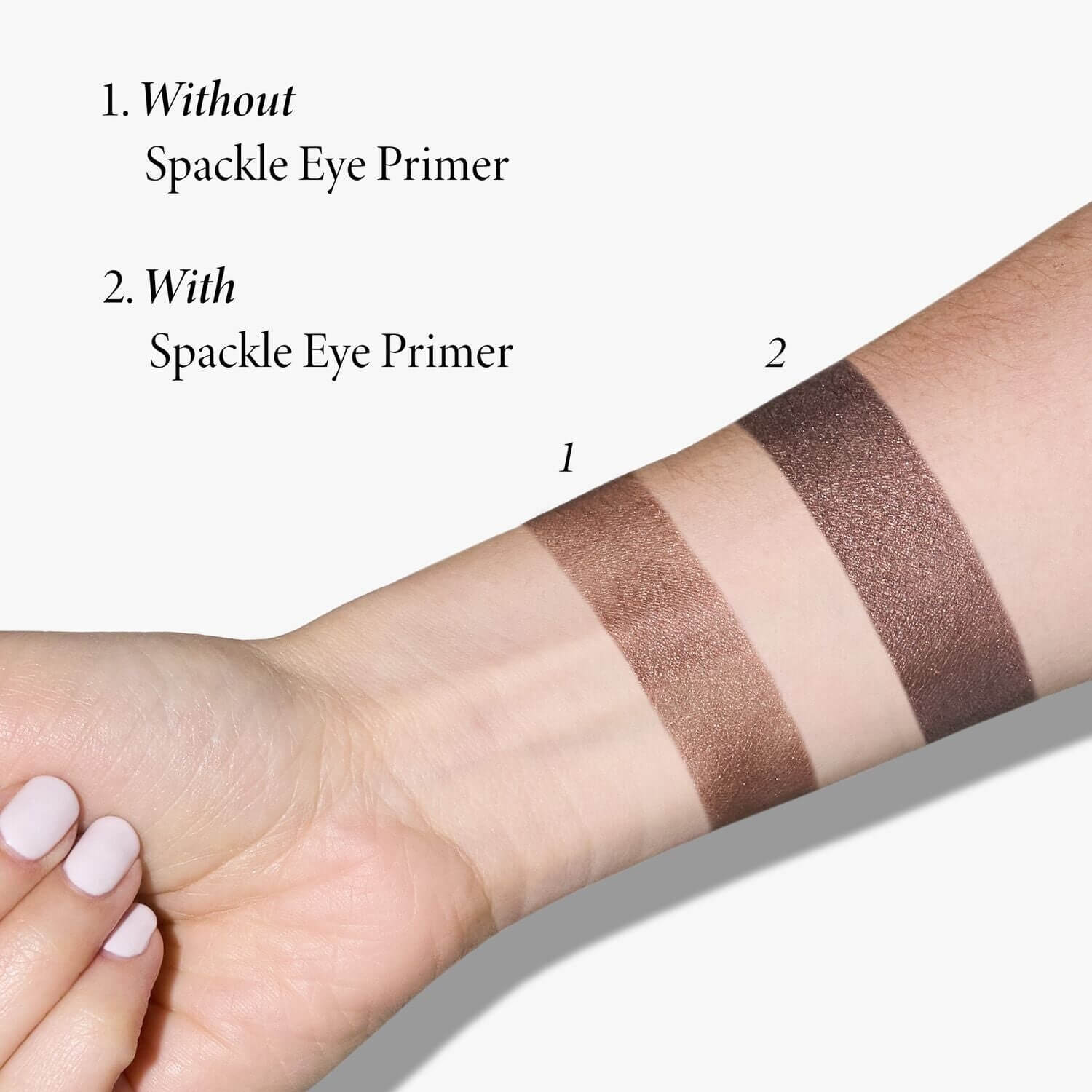
Finish and application
This has more visual presence than NARS or Milani. That is an advantage when you want coverage, but it means the edge must be blended well. On deeper skin, a beige base may intentionally brighten colors, yet it can also look pale if left uncovered. Use only where shadow will go or select a deeper shadow that fully bridges the edge.
If your eyes are hooded, let the primer dry while looking down rather than squeezing the eye shut. Then open your eyes and check the fold before adding color. That small pause can stop a wet stripe transferring above the crease. The technique also supports smoother liner when you later follow my best eyeliner recommendations for mature eyes.
Possible drawbacks
The brush mechanism will not appeal to everyone. Twist pens can release more product than expected, and leftover formula near the bristles should be kept clean. The tint is also less flexible than a truly clear primer. If your lid tone is much deeper or cooler than the base, use a very thin layer and cover it fully.
This is usually a mid-range-to-prestige buy rather than a drugstore bargain. Because the packaging and shade can change, compare the listing carefully and make sure you are buying the eye product, not Laura Geller’s face Spackle. See the current Laura Geller Spackle Waterproof Eye Primer price before deciding.
Best for: visible lid veins, uneven tone, people who like a pen applicator and makeup days when the base may be worn nearly alone.
Skip it if: you want a completely invisible primer or dislike twist-up brush packaging.
Check today’s Laura Geller Spackle Eye Primer price on Amazon
3. NARS Pro-Prime Smudge Proof Eyeshadow Base — Best invisible base
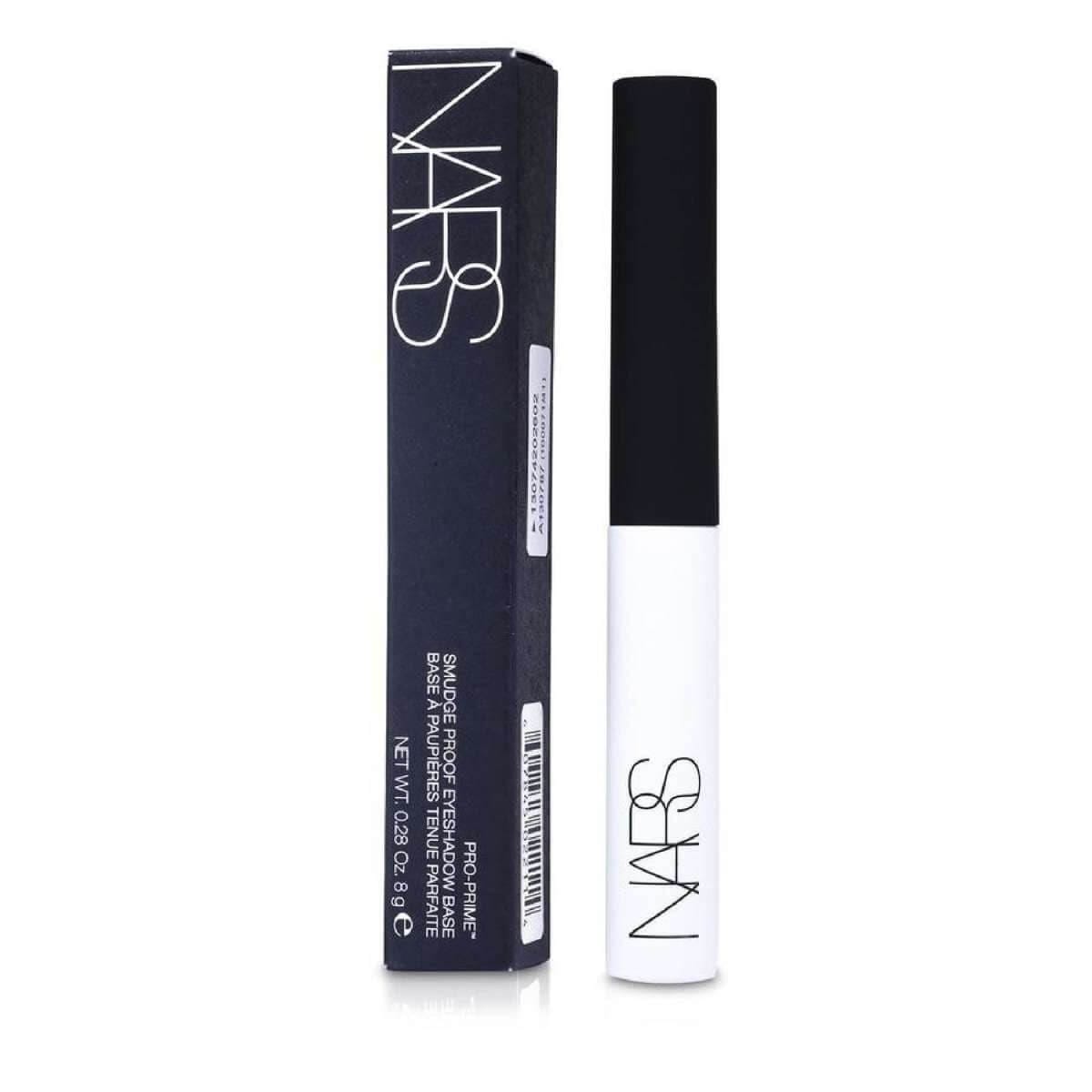
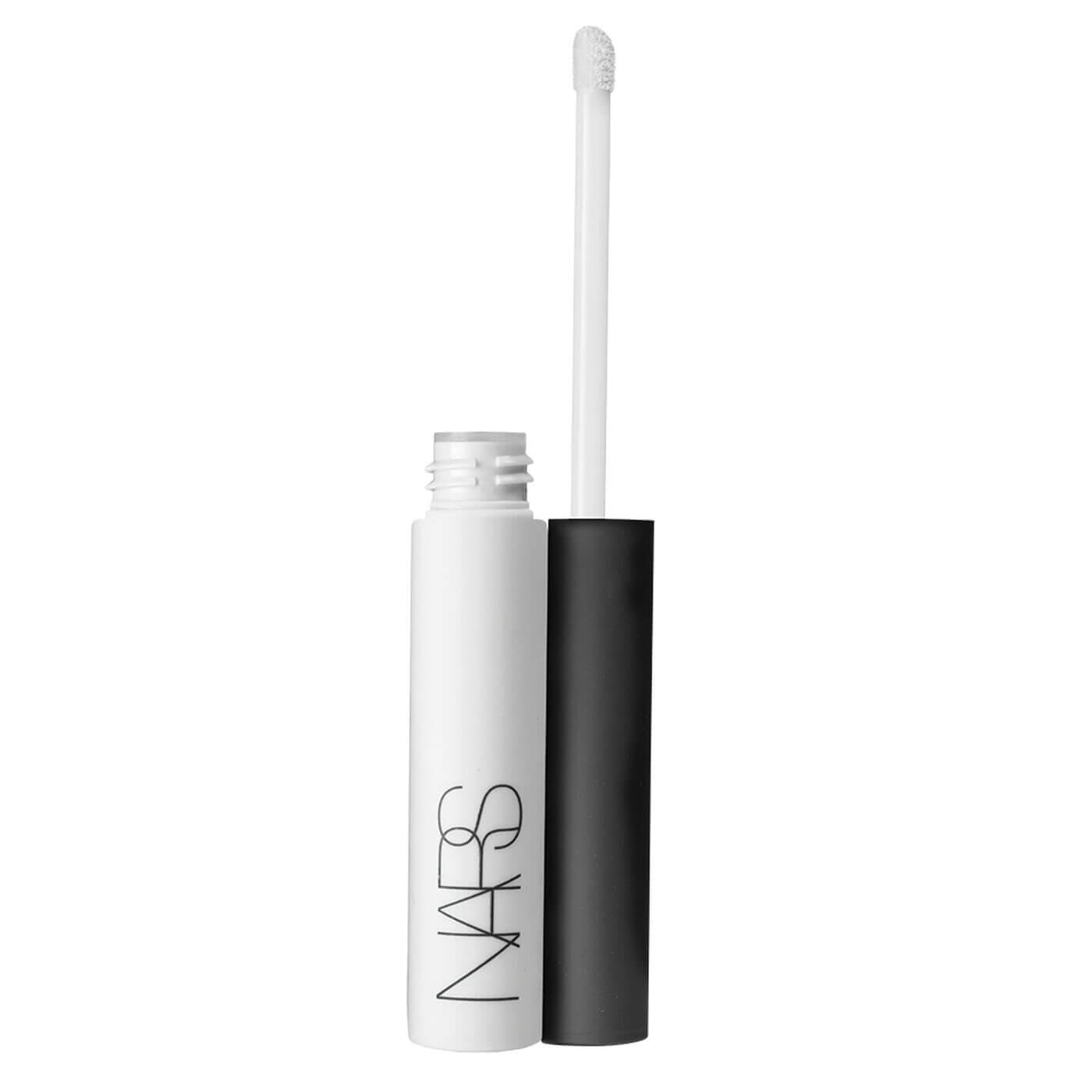
NARS uses a clean white tube and a lightweight, nearly invisible base. | The slim applicator makes it easy to place one small dot rather than a heavy stripe.
NARS is my choice for someone who wants the primer to disappear. It does not try to be concealer, skincare or cream shadow. Its job is to create a lightweight matte grip that helps powder and cream color stay where you put it. That simplicity is appealing if tinted primers look chalky or change the shades you carefully chose.
NARS describes the base as lightweight and designed to keep eye color looking vibrant while resisting smudging, creasing and caking. The brand also says it is dermatologically and ophthalmologically tested. The official product information attributes the grip to polymers and mineral powder and describes a quick-drying finish.
Why the invisible finish matters
A clear-looking base does not create a pale rectangle on deeper skin and does not make a sheer wash of shadow suddenly look opaque. If you enjoy letting your natural lid show through, NARS supports that. It also layers neatly beneath a one-and-done shadow stick, including the kind discussed in my Julep Eyeshadow 101 review.
The tradeoff is obvious: it will not hide strong pigmentation or veins. Some women solve that by adding concealer, but concealer is not automatically a good eye primer. A creamy face concealer may contain emollients that encourage creasing. If coverage is essential, I would choose one tinted base instead of stacking clear primer and concealer.

How I would apply it
Place one small dot on each lid and spread it from the lash line toward, but not all the way to, the brow. Stop where your eyeshadow stops. Work promptly because the base is designed to set. If it grabs before you finish, use a smaller area at a time instead of adding more product.
For powder shadow, I would wait briefly and then apply a light transition shade with a soft brush. For cream shadow, test whether you prefer the primer fully set or slightly tacky. A very long-wear cream over a fully grippy base can become intense quickly, so follow the same small-amount philosophy I use in my 25 mature-makeup tips.
Possible drawbacks
Fast drying can be less forgiving on a very dry, highly textured lid. If your brush skips, the problem may be too much grip rather than too little skill. Try less primer, allow skincare more time to absorb and use a softer shadow formula. You can also place a whisper of neutral powder shadow where you need extra blend—but avoid dusting the whole eye heavily.
NARS is a prestige option, and you are paying for an elegant invisible result rather than coverage. The tube can still be good value because each application should be tiny. Compare the current NARS Pro-Prime Smudge Proof Eyeshadow Base price and seller, especially when listings show older packaging.
Best for: medium-to-deep skin tones that dislike pale bases, natural shadow washes, normal-to-oily lids and people who want primer to be visually undetectable.
Skip it if: you want to cover discoloration or need a slow-setting base for leisurely blending.
Check today’s NARS Pro-Prime Eyeshadow Base price on Amazon
4. Too Faced Shadow Insurance 24-Hour Eyeshadow Primer — Best for long events


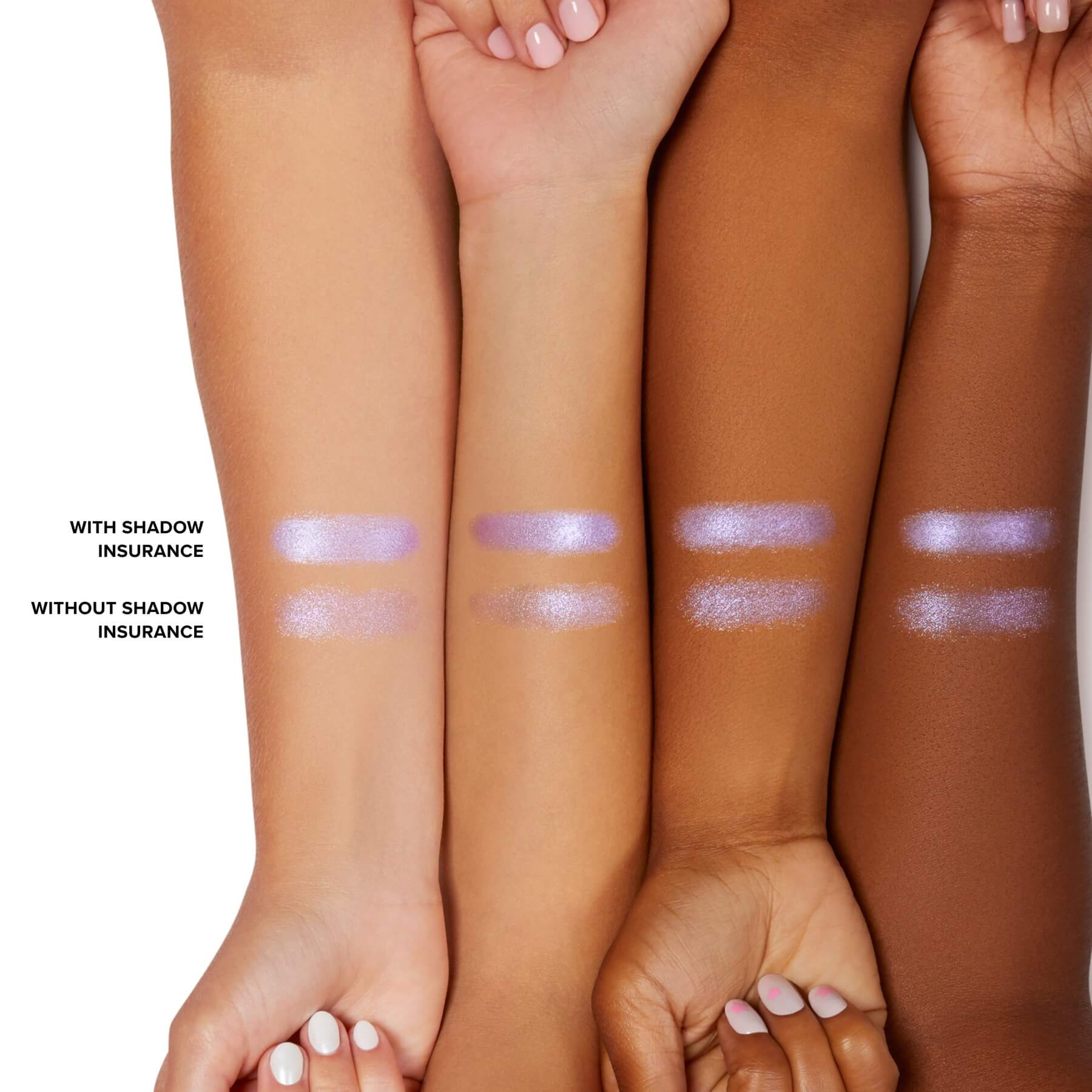
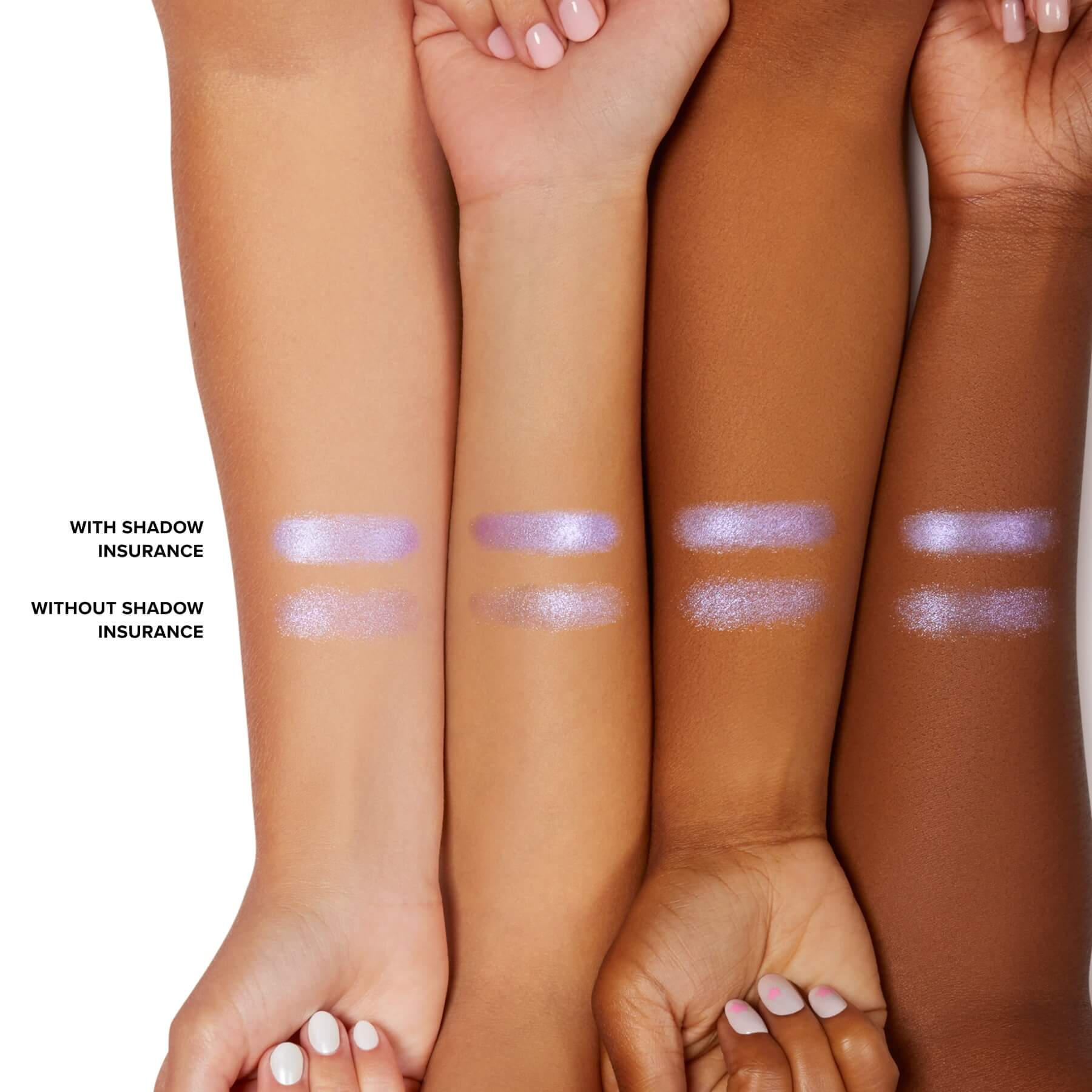
Shadow Insurance has a doe-foot applicator and translucent-looking formula. | The brand’s swatches illustrate the stronger color payoff expected over a gripping base.
Too Faced is the primer I would reserve for weddings, summer evenings, travel days and any time you care more about hold than a barely-there feel. It is designed to resist fading and creasing for extended wear, and the formula has more of that “lock it down” personality than my gentler everyday picks.
The company markets Shadow Insurance as a translucent, waterproof eye primer with 24-hour wear, fade resistance and crease control. Too Faced also says it helps intensify eyeshadow color and control oil while remaining suitable across skin tones. Those are manufacturer claims; real wear still depends on lid oils, weather, shadow formula and the amount used.
Where it earns its place
Long events create several challenges at once: warm rooms, watery eyes, repeated blinking, photography and makeup applied hours before the main moment. A stronger primer can be useful insurance. Pair it with a reliable mascara from my waterproof mascara guide and a pencil chosen from my mature-eye eyeliner roundup, rather than trying to make one product control the entire eye look.
It can also improve the impact of soft shadow. Mature makeup does not have to mean faint makeup. Plum, navy, bronze and rose can look gorgeous when the pigment remains true. Primer lets you use less shadow to reach the color you want, which can be smoother than layering powder until the lid looks dry.
How to avoid a dry-looking result
The temptation with a long-wear product is to apply extra. Resist it. Spread a translucent film and remove any obvious excess from the crease before it sets. If you can see ridges of primer, there is too much. Follow with shadow after the surface feels set but not tight.
If your lid is dry, keep richly pigmented matte shadow mainly at the outer corner and use a satin across the mobile lid. That gives dimension without asking powder to sit heavily over every line. For a complete soft-glam routine, my winter makeup guide for mature skin shows how a little luminosity can keep stronger wear products from looking severe.
Possible drawbacks
Women who prefer a creamy, cushioning base may find this more performance-focused than comfortable. Strong grip can also make beginner blending harder. If you normally use one quick taupe shade, Urban Decay or Milani may be friendlier. Too Faced makes the most sense when the extra hold solves a real problem.
This is another prestige product, and the live price can vary. Because counterfeit or old cosmetics are especially unappealing near the eyes, check the seller, condition and exact packaging. Use the current Too Faced Shadow Insurance listing to compare the price rather than relying on a number printed here.
Best for: long occasions, humid weather, oily or hooded lids, bold shadow and anyone whose eye color fades unusually quickly.
Skip it if: your eyelids are very dry or you want a slow, forgiving base for a two-minute everyday look.
Check today’s Too Faced Shadow Insurance price on Amazon
5. MAC Pro Longwear Paint Pot in Painterly — Best cream base
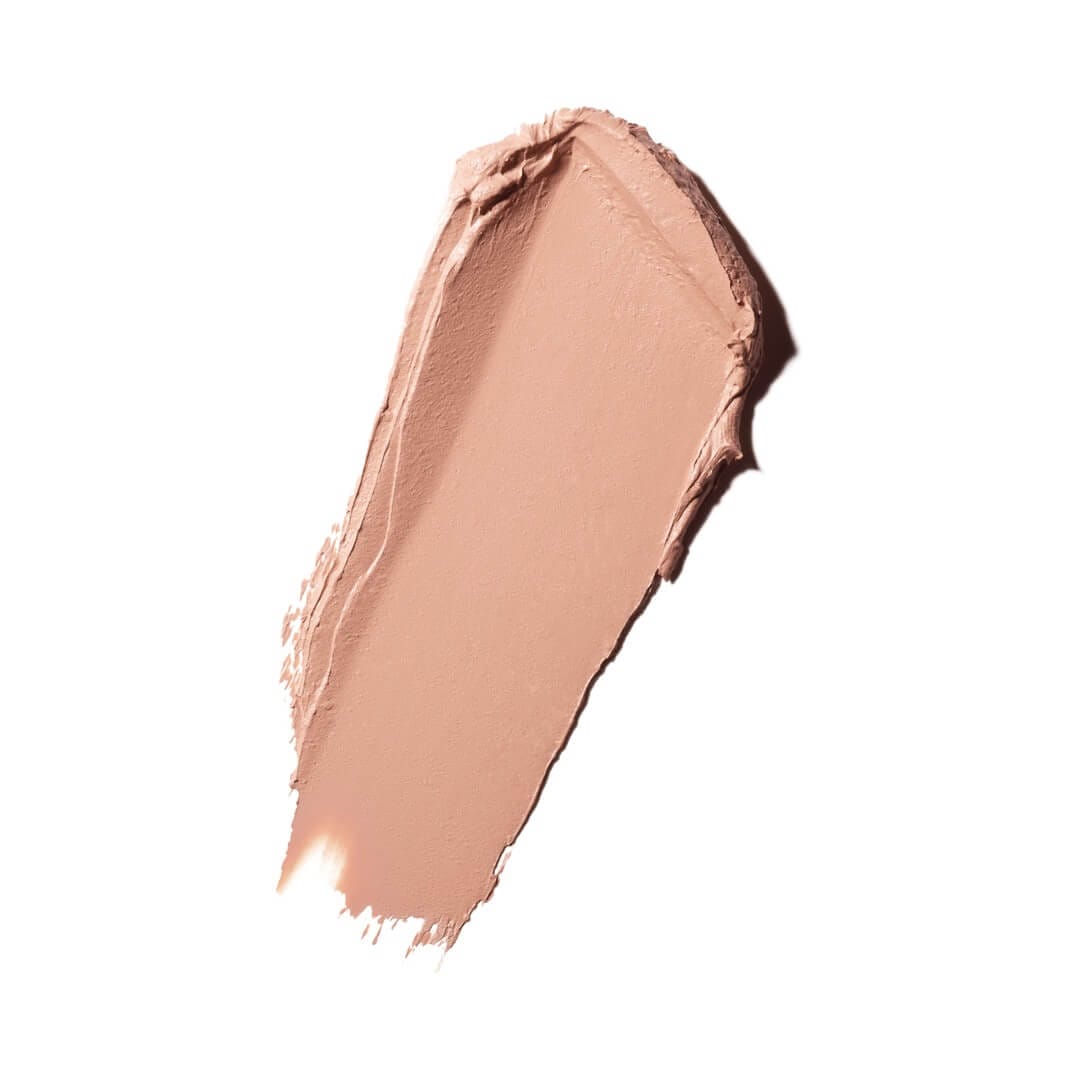

Painterly creates an opaque, softly matte beige canvas. | The glass pot is recognizable and sturdy, but it should be closed promptly to protect the cream texture.
MAC Paint Pot is different from every tube in this list. It is a cream eye color that doubles beautifully as a base, and Painterly is the classic light beige-pink shade many people use to cover veins and create an even lid. If your main frustration is not only creasing but also visible discoloration, this can make the biggest immediate visual difference.
MAC describes Pro Longwear Paint Pot as a highly pigmented, buildable cream eye shadow with long wear and a second-skin feel. The official page says it can be worn alone or mixed with complementary eye products and is designed to resist creasing and fading. Painterly is one shade within that broader formula family.
Why coverage can be helpful
A uniform base makes pale shadow read more cleanly and can make a finished eye look calmer. It also allows you to skip shadow entirely on very simple days: blend a thin veil of Painterly, add soft brown liner and mascara, and the lid looks more polished. That fits naturally with my conversational guide to fresh makeup that still looks like you.
The coverage is also useful when one eyelid is darker than the other. Instead of applying more shadow to the darker side, even the starting canvas. This is the eye-area version of choosing the right corrective base before following my advice on covering redness after 50: neutralize only what needs help and keep the layer thin.


Painterly is not a universal nude
Painterly works best on fair-to-medium complexions with neutral or cool-leaning lid tones. On deeper skin it may look pale or ashy, particularly if worn alone. MAC makes other Paint Pot shades, and a shade closer to your skin can be more elegant. I have kept Painterly in this ranking because it is the affiliate product provided and a genuinely useful correcting base, but I would never pretend one beige is perfect for everyone.
If Painterly is lighter than your skin but you still want it beneath bright shadow, use the thinnest possible coat and make sure the color fully covers the edge. A deliberately lighter base can intensify pastels and jewel tones; an accidentally visible beige border simply looks unfinished.
Pot technique matters
Use a clean fingertip or small synthetic brush, pick up very little and press rather than drag. Dragging a thick cream across loose skin can leave ridges. Work one lid at a time, smooth the crease, and close the jar promptly so the formula does not dry faster than necessary.
Because this is a cream shadow as well as a base, it may be enough on its own. If you add powder, place a satin shade on the mobile lid and deepen only the outer corner. My cream eyeshadow guide has more ideas for keeping texture soft, while my Julep shadow-stick review explains when a stick is easier than a pot.
Possible drawbacks
Paint Pot can look dry if it is applied heavily or if the jar is old. The glass pot is less hygienic than a squeeze tube unless you use clean hands or a brush. The shade is also visibly pigmented, so mistakes are more noticeable. Anyone who wants one translucent swipe should choose NARS or Milani instead.
MAC sits in the prestige tier, but the pot contains enough product for many applications because the layer should be sheer. Compare the current MAC Painterly Paint Pot price and seller. Confirm that the listing specifically says Painterly if that is the shade you want.
Best for: fair-to-medium lids with visible veins or pigmentation, people who want one product to work as both base and neutral cream shadow, and makeup that needs stronger color payoff.
Skip it if: Painterly is too light for your complexion, you dislike pot packaging or your lids are extremely dry and textured.
Check today’s MAC Painterly Paint Pot price on Amazon
6. Elizabeth Mott Thank Me Later Eye Primer — Best for oily mature lids


Thank Me Later comes in a light squeeze tube that makes a tiny amount easy to dispense. | The brand’s comparison focuses on smoother-looking color and reduced creasing.
Elizabeth Mott is the practical choice for the woman who says, “My eyelids are mature, but they certainly are not dry.” It is designed around oil control and long wear, and it offers that performance at a more accessible price than most prestige tubes. The texture is lightweight rather than creamy and correcting.
The brand says Thank Me Later uses sebum-controlling powder and pearl powder to combat oiliness, brighten the appearance of the lid and support vibrant shadow. Elizabeth Mott describes the formula as lightweight, non-greasy, cruelty-free and designed to dry transparently. As always, check the current ingredient list on the product you receive if you have known sensitivities.
Why oily lids need a different strategy
Oil can break down cream shadow, dissolve liner and carry mascara onto the brow bone. A controlling primer creates a buffer, but the rest of the routine still matters. Skip rich eye cream on the mobile lid immediately before makeup, keep face sunscreen from pooling in the crease and blot—not scrub—if the area feels slippery before you begin.
Then use a very small amount of primer. It sounds counterintuitive, but a thick oil-control layer can become pasty. Let it set before adding shadow and keep the first powder layer light. If you also struggle with liner transfer, the pencil choice in my eyeliner guide for mature eyes and the placement in my step-by-step eyeliner routine can help more than piling on extra primer.


Color payoff and blending
A grippy base makes shadow appear stronger. That is useful for washed-out color, but it also means dark pigment can land more intensely than expected. Tap excess from the brush, place the darkest shade last and build slowly. If blending becomes patchy, use a clean brush to soften the edge instead of adding more product.
For an easy balanced face, pair the stronger eye definition with one of the softer shades from my tinted lip balm guide or a natural lipstick from my mature-lipstick roundup. Makeup often looks fresher when one feature leads and the others support it.
Possible drawbacks
This is not my first choice for an eyelid that already feels tight or visibly flaky. Oil-control ingredients may solve the wrong problem. The pale formula is said to dry clear, but every translucent base should still be tested on your skin tone. And because Amazon carries multiple Elizabeth Mott listings, confirm the size and product name.
The price usually falls below the prestige primers, making it an appealing experiment for oily lids. Use the current Elizabeth Mott Thank Me Later listing to see the live price, size and seller instead of relying on an estimate that may be out of date.
Best for: oily or combination mature lids, shadow that fades quickly, hooded-eye transfer and shoppers who want strong hold without a prestige price.
Skip it if: your eyelids are dry, reactive or already prone to a tight feeling after makeup.
Check today’s Elizabeth Mott Thank Me Later price on Amazon
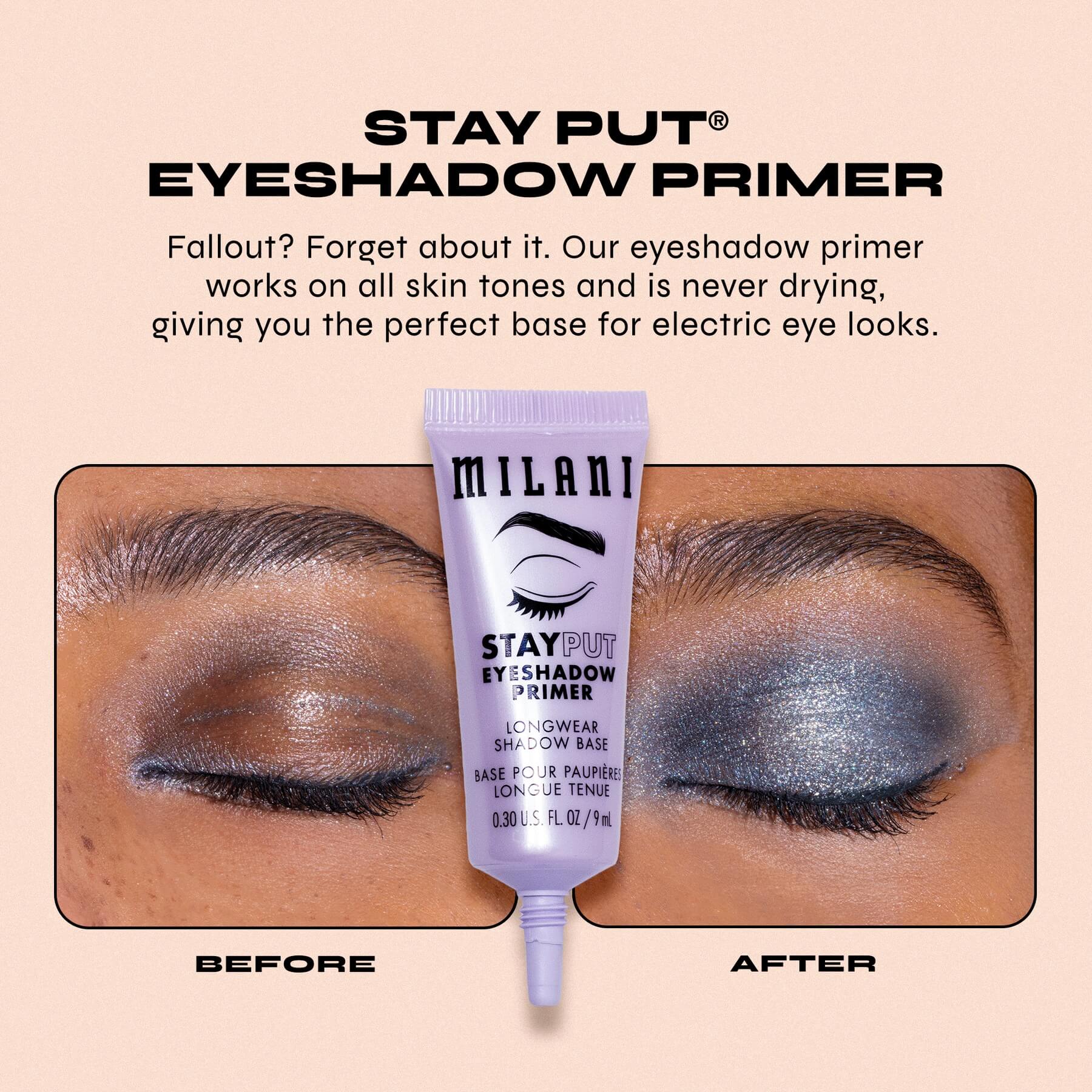
7. Milani Stay Put Eyeshadow Primer — Best drugstore value
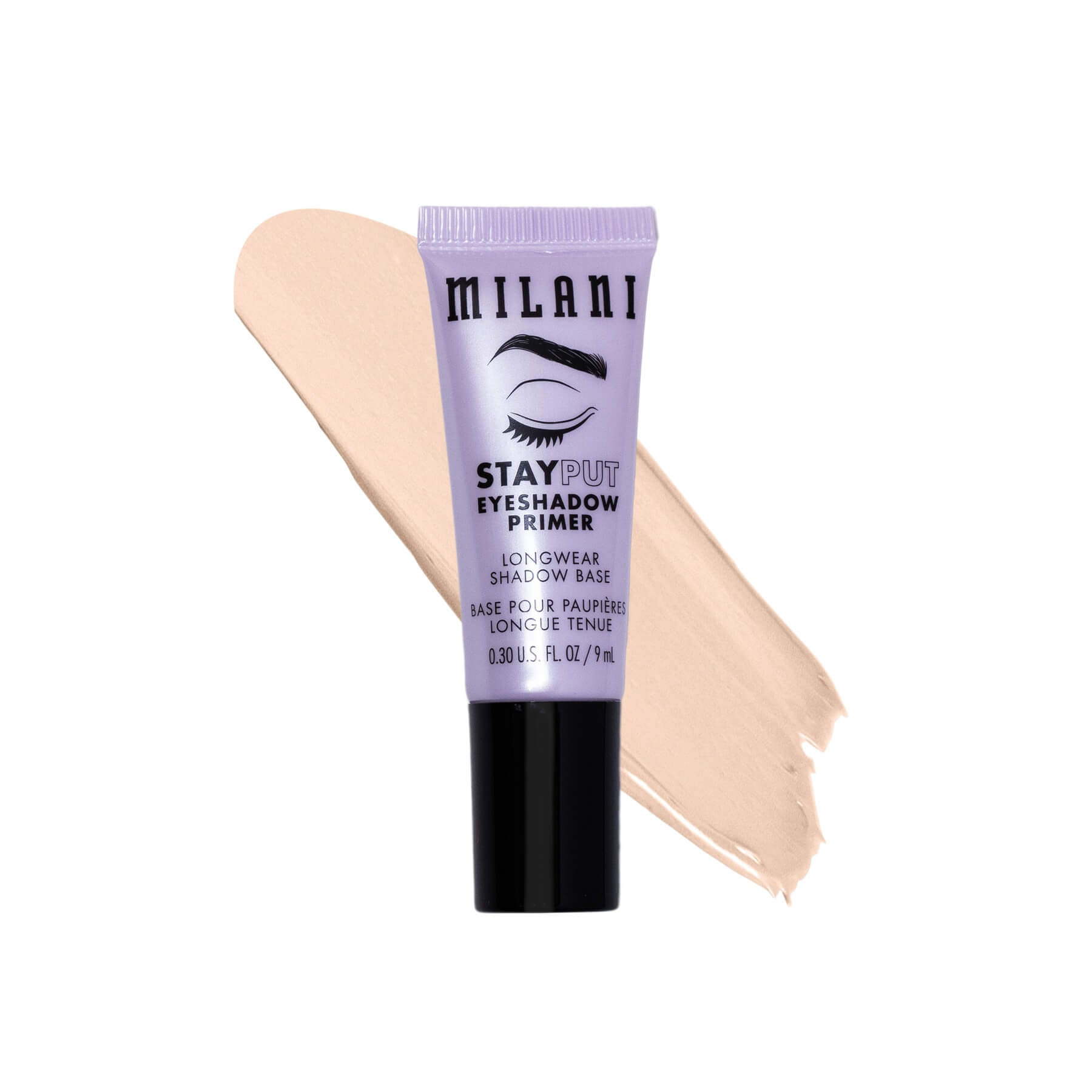
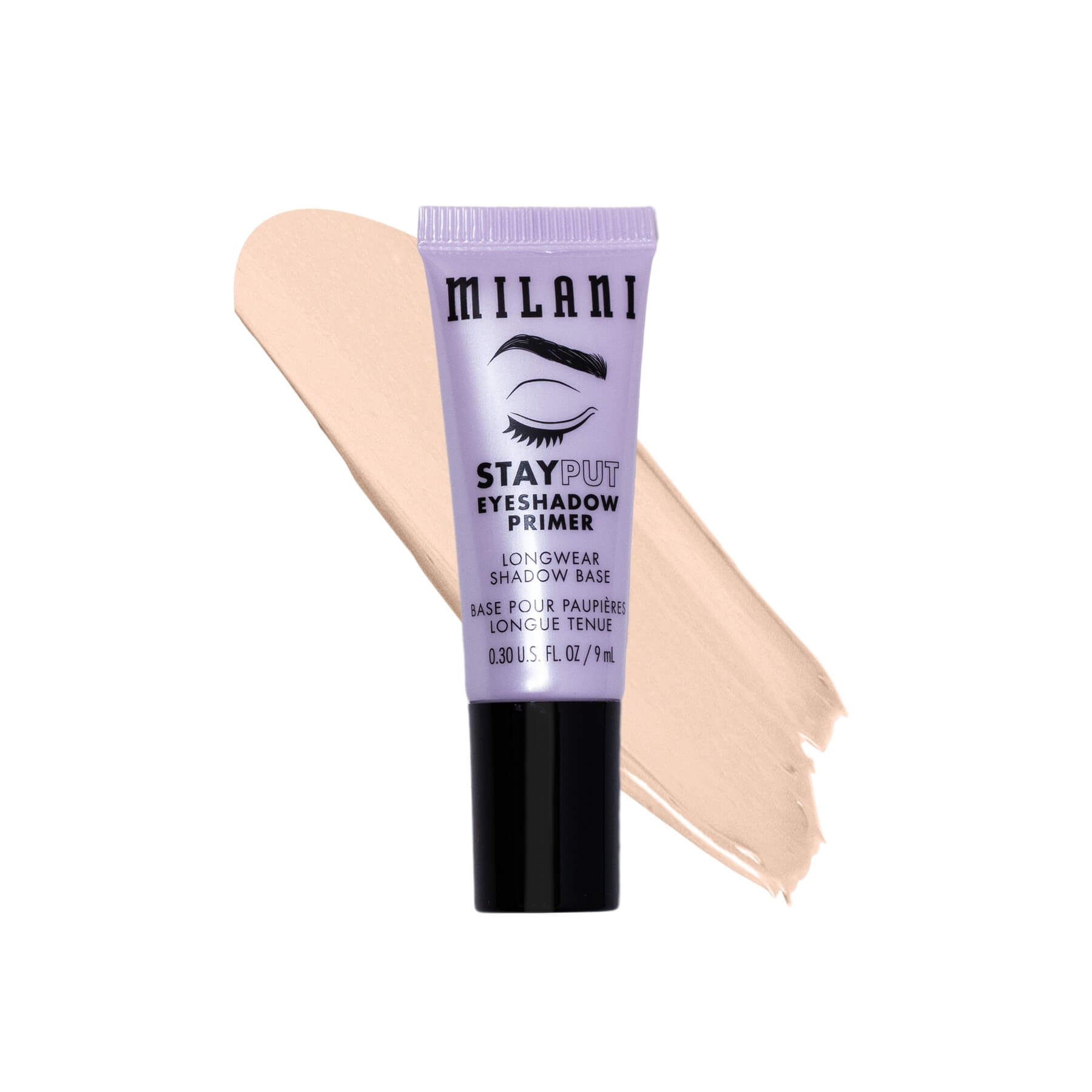
Milani’s nude base is designed to dry down invisibly in a simple squeeze-tube format. | The brand’s demonstration shows the kind of color intensity a base can add.
Milani is the budget tube I would recommend to someone who is curious about eye primer but does not want to spend prestige money on the experiment. It offers the essential benefits—smoother application, stronger pigment and crease control—without a complicated applicator or an opaque layer.
Milani describes Stay Put as a lightweight, crease-proof, never-drying primer that applies nude and dries invisibly. The official product page says it is made for all skin tones and is intended to enhance color while helping reduce fallout for up to eight hours. That eight-hour claim is more realistic for an ordinary day than some dramatic all-day promises.
Why it is a smart first primer
A budget formula lets you learn whether primer meaningfully improves your own makeup before investing more. Try it on one eye and apply shadow directly to the other. Check both eyes after four hours, then again at the end of the day. Look for fading, crease lines, patchiness and comfort—not just color intensity five minutes after application.
That one-eye comparison is more useful than copying someone else’s result because lid oil, fold depth and skincare vary so much. I use the same practical mindset when comparing drugstore foundations for mature skin: an affordable product is a winner when it solves the problem gracefully, not merely because it is inexpensive.

Texture and finish
Milani’s nude-to-invisible approach sits between NARS and Laura Geller. It gives a little visual evening when first applied but is not meant to behave like concealer. The simple squeeze tube is easy to control if you dispense onto a clean fingertip rather than directly onto the lid.
Because the brand describes it as never drying, it is the budget option I would investigate first for normal or slightly dry mature lids. That does not guarantee it will feel hydrating, and individual reactions vary, but the positioning is less oil-absorbing than Elizabeth Mott. If dry texture is your central worry, keep the accompanying shadow soft and avoid unnecessary face powder around the eyes; my setting-powder guide explains why targeted placement matters.
Possible drawbacks
Milani may not control extremely oily lids or a deep hood for as long as a stronger prestige formula. The lighter nude color may also be less invisible on deeper complexions than marketing suggests. Apply less, inspect the edge in daylight and cover it fully with shadow if needed.
Its greatest advantage is value. The tube usually costs far less than Urban Decay, NARS or Too Faced, yet only a tiny amount is required. Check the current Milani Stay Put Eyeshadow Primer price, since multipacks and third-party listings can make comparisons confusing.
Best for: beginners, normal-to-slightly-dry lids, everyday makeup, travel bags and anyone who wants to test the category affordably.
Skip it if: you need substantial color correction or already know that only strong oil control prevents transfer.
Check today’s Milani Stay Put Eyeshadow Primer price on Amazon
How to choose the right primer for your mature eyelids
The best primer is not automatically the one with the longest wear claim. Think about what happens to your makeup, what the bare lid looks and feels like, and how much effort you actually want to spend. A primer should remove friction from the routine. If it adds three more problems, it is the wrong match.
If your eyelids are dry or crepey
Choose a flexible, thin base and avoid heavy powder on top. Urban Decay or Milani is where I would begin. Allow skincare to absorb, then use less primer than feels necessary. A satin or softly luminous shadow often looks kinder than a chalky matte, but avoid chunky sparkle that sits unevenly. My comparison of cream shadows for crepey mature lids explains which textures tend to glide rather than catch.
If your eyelids become oily
Start with a clean, dry surface and choose Elizabeth Mott, Too Faced or NARS. Keep face moisturizer and sunscreen from migrating onto the mobile lid. Use one thin primer layer and give it a moment to set. If the crease still becomes shiny, the next experiment should be a different primer—not twice as much of the same one.
If you have hooded eyes
Prioritize transfer resistance and apply primer slightly above the natural crease where the hood touches. Keep the layer feather-thin at the fold. Too Faced or Elizabeth Mott may provide the control you need, while Urban Decay offers a more forgiving everyday feel. Check placement with your eyes open, just as you would when using my hooded mature-eye liner technique.
If discoloration bothers you
Choose Laura Geller for a lighter correcting veil or MAC Painterly for more coverage. The goal is not to cover the lid like foundation. Neutralize enough that your chosen shadow reads true. If Painterly is not close to your skin tone, look within the wider Paint Pot shade family instead of forcing the famous shade to work.
If your eyes are sensitive or watery
Read the current ingredient list, keep primer out of the waterline and introduce one new eye product at a time. “Ophthalmologist tested” does not promise that no individual will react. A simpler look using a familiar shadow and a carefully chosen product from my waterproof mascara list can be better than layering multiple new long-wear formulas at once.
My thin-layer method for smoother eyeshadow


A rice-grain amount for both eyes is a better starting point than a full wand swipe on each lid.
Step 1: Let skincare settle
Finish skincare first and give it time. If the mobile lid feels slippery, gently press with a clean tissue; do not rub. The eye area should feel comfortable, not coated. This small pause is as useful here as it is in my guide to prepping mature skin before foundation.
Step 2: Start with one rice-grain amount
That tiny amount can often cover both lids. Dot it at the center of one lid, spread from lash line toward the crease, then use what remains above the crease if needed. Do the second eye. Add more only if part of the lid is genuinely uncovered.
Step 3: Press and tap instead of pulling
Hold the brow very lightly if you need to steady the skin, but do not stretch the lid tight. Tap with a ring finger or short synthetic brush. Pressing distributes the formula while respecting the folds. Pulling can create a perfectly smooth layer that bunches the moment you release the skin.
Step 4: Smooth the crease before it sets
Look down, then straight ahead. If a ridge has gathered in the fold, tap it out immediately. This ten-second check prevents the primer itself becoming the first crease. For hooded eyes, also check where the lid touches the skin above it.
Step 5: Wait only as long as the formula needs
Some primers work best when fully set; others blend more easily while slightly tacky. Begin with the manufacturer’s direction. If shadow skips, try applying it a little sooner next time. If shadow mixes into the wet base, wait longer. Change one variable at a time so you can see what actually helps.
Step 6: Place shadow before blending
Press your main shade onto the mobile lid, then soften the edge with a clean brush. Sweeping back and forth immediately can move both primer and pigment. Keep dark matte color focused where it gives lift—usually the outer corner and just above the fold—rather than covering the entire textured lid.
Step 7: Finish the eye without overloading it
Add liner in tiny strokes and mascara mainly through the upper lashes. If you need help, use my complete guides to eyeliner on mature eyes and mascara on mature lashes. The primer should support the finished eye, not announce itself.
Common eyeshadow-primer mistakes after 50
Using concealer as the automatic substitute
Concealer covers discoloration, but many formulas stay creamy because they are made for facial movement. That can make shadow crease faster. If you love the result, keep doing it; just do not assume concealer and primer are interchangeable. My guide to choosing concealer for mature skin is useful for the face, while a dedicated eye base is usually more predictable on the lid.
Applying primer up to the eyebrow
Primer only needs to cover the area receiving eye color. A full opaque sheet from lashes to brow can flatten the eye and collect in texture. Feather the edge before it becomes visible. If you also fill the brows, finish them separately with one of the eyebrow pencils I recommend for older women.
Setting the entire lid with face powder
A little neutral shadow can help blending, but face powder plus primer plus multiple shadows may create a dry stack. Powder only where a brush truly catches. The targeted approach from my setting powder routine for mature skin applies beautifully here.
Blaming every crease on the primer
Rich skincare, sunscreen migration, an emollient cream shadow, heat and touching the eyes can all contribute. Review the full routine. This is why the order of makeup layers matters and why long-wear products still benefit from realistic expectations.
Keeping an old eye product too long
Changes in odor, color, texture or performance are reasons to replace a product. Do not add water or saliva to revive dried makeup. The FDA notes that preservatives can break down over time and contamination risk increases with repeated use. Its shelf-life guidance recommends watching for changes and storing cosmetics appropriately rather than relying only on a calendar date.
Which primer would I buy?
For the widest range of mature lids, I would buy Urban Decay Anti-Aging first. For visible discoloration, Laura Geller is easier and lighter while MAC Painterly gives more coverage. For a truly invisible base, choose NARS. For maximum event-day hold, choose Too Faced. For oily lids on a smaller budget, Elizabeth Mott makes sense. For a gentle first experiment, start with Milani.
I would not buy all seven. Choose the one that addresses your biggest frustration, test it with the eyeshadow you already own and adjust the amount before declaring it a failure. Often the winning routine is one tiny base layer, one forgiving shadow and soft definition from the right eyeliner—not a drawer full of products.
Frequently asked questions about eyeshadow primer on mature eyelids
1. Do mature eyelids really need eyeshadow primer?
No one needs eye primer, and a good shadow can look lovely without it. Primer becomes worthwhile when it solves a repeated problem: color disappearing, pigment skipping over the lid, cream shadow migrating, eyeliner transferring or powder gathering in a fold. If your eye makeup already lasts and feels comfortable, I would not add a step simply because a beauty routine says you should.
I think of it as a specialist version of facial primer. My guide to whether older women need primer makes the same argument: use it where the texture or wear actually improves. The best face primers for mature skin are not automatically safe or elegant on eyelids, because face and eye products are tested and formulated for different areas.
Before buying, try a simple comparison. Apply your normal shadow to clean lids for a day and note when it fades or creases. On another day, use a tiny sample or the primer you already own. Keep skincare, shadow and weather as similar as possible. If the difference is meaningful, the extra step earns its place. If the only change is that the lid looks heavier, skip it or try a lighter formula.
Primer cannot remove folds, change a hooded eye or make a poor shadow formula excellent. It can create a more consistent surface. That modest goal is enough. Mature beauty routines become easier when every product is allowed to do one realistic job rather than being expected to reverse normal skin texture.
2. Can eyeshadow primer make mature eyelids look older?
Yes—if the formula is too dry, too opaque, too pale or simply applied too thickly. A rigid layer can settle at the crease, catch powder and make fine lines look sharper. That does not mean primer is wrong for mature eyes. It means the amount and finish matter more than they may have in your twenties.
The most common cause is overapplication. A full wand swipe on each lid can be several times more product than needed. Start with a rice-grain amount for both eyes, tap it out and inspect the lid while your eye is open. If you can see a thick beige film, remove the excess before it sets. Then choose a satin, cream or finely milled powder shadow instead of piling a chalky matte over the entire area.
Product interaction matters too. Eye cream, primer and shadow can pill when layers are incompatible or rushed. This resembles the problems in my guide to common foundation mistakes on mature skin: more coverage is rarely the same as a smoother result. My favorite mature-makeup tips also return to the same reliable habit—thin layers, added only where they help.
If every primer looks dry, test shadow alone over well-set skincare. You may prefer no primer, or a cream shadow that sets without a separate base. Makeup should be adjusted to the lid in front of you, not to a rule.
3. Is a clear or tinted eyeshadow primer better for older women?
Clear or translucent primer is better when you like your natural lid tone, have a deeper complexion that pale bases turn ashy, or want sheer shadow to remain sheer. NARS is the strongest example in this list. It creates grip without trying to cover the skin, which keeps the result light and modern.
Tinted primer is better when veins, redness, brown pigmentation or uneven tone change the look of your shadow. Laura Geller gives lighter correction, while MAC Painterly gives more opacity. Tint also makes pastel and bright shades appear truer because the shadow is no longer competing with the natural color underneath.
The choice is similar to the difference between a sheer base and concealer. In my guide to the best concealers for mature skin, coverage is useful only when it stays flexible and matches the job. The same applies here. My article on choosing the right concealer explains undertone; that idea helps when you judge whether a peachy, beige or neutral eye base will brighten or look unnatural.
Do not assume “universal” means invisible. Swatch a tinted primer in daylight, allow it to dry and look at the edge. If it creates a halo, use less, cover the border with shadow or choose a closer shade. The best color-correcting base should make the finished shadow clearer—not make the primer itself noticeable.
4. How long should eye primer dry before eyeshadow?
There is no single perfect number because formulas set differently. A reasonable starting point is 20 to 60 seconds, followed by a touch test. The lid should not feel wet or move under your fingertip, but it does not need to feel hard. Follow the label first, then adjust based on how your shadow behaves.
If powder shadow grabs in one patch and refuses to blend, the primer may have dried too firmly or the layer may be too thick. Apply less next time or begin the shadow slightly sooner. If the shadow mixes into the base and becomes muddy, wait longer. If a cream stick drags, a very thin slightly tacky base may work better than a heavily set one.
Weather changes the timing. A warm dressing room or humid summer morning can slow setting and increase transfer. My summer makeup routine for mature skin focuses on strategic thin layers for exactly that reason. A facial product from my setting spray comparison after 50 can help the rest of the face, but I would not spray an eye primer directly or improvise near closed eyes unless the label specifically permits that use.
Use your routine as the test. Set a timer once if you are curious, but you do not need laboratory precision every morning. When the primer looks even, feels comfortable and no longer gathers in the crease, move on.
5. Do cream eyeshadows need primer on mature eyelids?
Sometimes. A self-setting cream shadow may already contain enough film-forming ingredients to last beautifully by itself. Adding a strong primer underneath can make it harder to blend or create too much product in the fold. Test the cream alone before assuming another layer is necessary.
Primer helps when the cream fades, transfers above a hood, changes color because of lid oils or slides into the crease. Use less primer than you would under powder—often just a transparent whisper. Allow it to settle, then apply the cream in one thin layer and blend the edge immediately. Add a second touch only where you want more depth.
My roundup of cream eyeshadows for mature eyes separates pots from sticks and explains why some finishes are more forgiving. If you are considering a popular stick specifically, my Julep Eyeshadow 101 review goes deeper into glide, blending time and who may enjoy it.
You can also use MAC Paint Pot as both primer and color, removing the need for a separate cream shadow. The simplest successful routine often wins: one base product, one soft deeper shade at the outer corner and mascara. If that stays fresh, there is no prize for adding more.
6. What should I do if primer makes my eyes water or sting?
Remove it gently and stop using it. Do not wait for stinging to “settle” and do not place more products over the top. Rinse according to the label and your normal eye-care guidance. If symptoms are severe, involve pain, swelling, vision changes or continue after removal, seek appropriate medical advice.
Sensitivity can come from fragrance, preservatives, pigments or another ingredient, and it can develop even with a product you previously tolerated. The FDA notes that fragrances, preservatives, dyes and metals are among cosmetic ingredients associated with allergic reactions in some people. Keep the packaging or ingredient list if you need to discuss the reaction with a professional.
Introduce one new eye product at a time so the cause is easier to identify. Keep primer on the external lid and away from the waterline. Replace contaminated or changed cosmetics, wash brushes and never share products. If watering is mainly caused by mascara, my Clinique waterproof mascara review discusses a separate formula choice, while my guide to applying mascara on mature lashes helps reduce poking and smudging.
“Clean,” “natural” and “hypoallergenic” are not guarantees that your eyes will agree. Your own reaction is more important than the front label.
7. How do I stop shadow creasing even when I use primer?
First, use less primer and give skincare more time. Second, check whether the eyeshadow itself is very creamy or whether multiple layers are gathering. Third, look at where the fold touches when your eye is open. A hooded eye may need primer slightly above the crease and less product directly inside it.
Blot visible oil before application, but do not scrub or use harsh astringent products near the eyes. Apply primer, smooth the crease and let it set. Press shadow into place instead of immediately sweeping. Keep the first layer thin. If needed, use a small amount of neutral powder shadow only at the fold—not a blanket of face powder.
The controlled powder approach in my setting-powder guide for mature skin is helpful here, even though you should choose a product intended for the eye area. My discussion of matte versus dewy mature makeup also explains why removing every hint of sheen can make texture look worse. Aim for stable, not bone-dry.
If creasing continues, try a primer that targets your lid type. Elizabeth Mott or Too Faced may suit oil and transfer; Urban Decay or Milani may suit normal-to-dry texture. Sometimes the solution is switching the shadow formula rather than the primer. Change one part at a time so you know what worked.
8. What is the gentlest way to remove eye primer?
Use enough remover and enough contact time. Saturate a soft pad with an eye-safe remover, close the eye and hold the pad in place for several seconds. Let the product dissolve mascara, liner, shadow and primer before you wipe gently downward and outward. Re-saturate or use a fresh pad instead of rubbing the same dry surface back and forth.
A cleansing balm or oil can also work if the label says it is suitable around the eyes and you can keep it out of the eye itself. Emulsify and rinse as directed, then follow with a gentle cleanser only if needed. My full tutorial on removing makeup from mature skin without rubbing walks through the technique. My comparison of the best makeup removers for mature skin helps you choose between balm, oil, micellar water and bi-phase formulas.
Waterproof and long-wear primer may require more patience, not more pressure. Support the skin lightly, avoid stretching and stop if the area burns. Pat dry and apply your normal gentle eye-area skincare. Removing makeup thoroughly is part of making tomorrow’s primer look better; leftover film can create patchiness and irritation.
If you wear contact lenses, follow your eye-care professional’s directions about whether to remove them before cleansing. Never use a remover in a way the label does not permit.
Final thoughts
Eyeshadow primer is a quiet product, but the right one can make the entire eye routine less fussy. My first choice for most mature lids is Urban Decay Anti-Aging. Laura Geller and MAC are better when coverage matters, NARS when you want an invisible base, Too Faced for long wear, Elizabeth Mott for oil control and Milani for value.
Whichever you choose, start smaller than you think, check the eye while it is open and let comfort guide you. Then finish the face lightly: a well-placed color from my favorite blush and bronzer options for mature skin or a subtle choice from my highlighter guide after 50 is often enough. The loveliest mature makeup does not hide texture. It keeps color where you intended and still lets you look like yourself.