Cream eyeshadow can be one of the loveliest shortcuts in a mature makeup routine. It can also be one of the most frustrating.
I have seen cream shadows that glide over a dry eyelid like silk, soften the look of texture and make the eyes look quietly brighter. I have also seen formulas that feel creamy for about ten seconds, set before I can blend them and leave a very obvious stripe sitting above the lashes. The difference is not simply whether the label says cream. The finish, slip, set time, pigment level and applicator all matter.
For this guide, I researched and compared the current formulas, official wear claims, finish options, application instructions and shade ranges of seven popular cream eyeshadows. I looked at them specifically through a mature-eye lens: dry or crepey-looking lids, hooded eyes, fine lines, watery eyes, less space between the lashes and crease, and hands that may prefer something quicker than a five-brush routine.
I did not rank these products by popularity alone, and I did not pretend that every luminous formula automatically flatters texture. I asked a more useful question: which cream eyeshadow is most likely to give a smooth, believable wash of color after 50, and who is each formula actually best for?

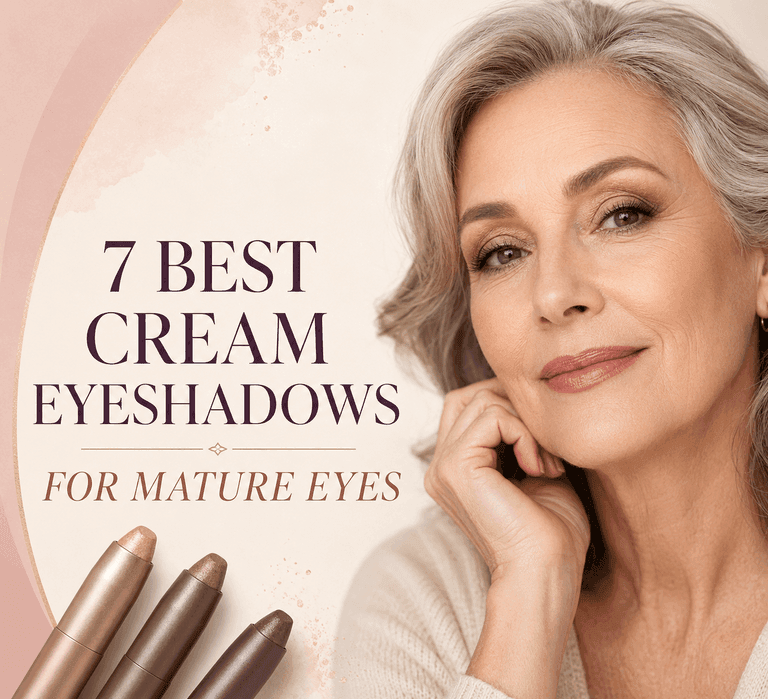
My overall winner is Laura Mercier Caviar Stick Eye Shadow because I found the best balance of creamy playtime, mature-friendly shade options, buildable color and a set finish designed to resist creasing and transfer. My best luxury long-wear option is Bobbi Brown Long-Wear Cream Eyeshadow Stick, while Revlon ColorStay Creme Eyeshadow is my favorite affordable pot and Maybelline Color Tattoo Eye Stix is the budget multitasker I would choose for shadow, liner and primer in one.
If eye makeup tends to end up under your eyes, I would pair the routine in this guide with my best waterproof mascaras for women over 50. And if the rest of your face makeup feels too heavy beside a soft eye, my exact makeup layering routine for mature skin shows how I keep every layer light.
Table of Contents
My Quick Verdict
If you want one answer, I would begin with Laura Mercier. I like that the official formula information gives me more than a vague promise of “long wear.” The brand describes a creamy formula with enough playtime to blend before it sets, and it lists fade-, crease-, transfer-, smudge-, sweat- and waterproof wear. It also says the product is ophthalmologist tested and suitable for sensitive skin and contact lens wearers. Those are brand claims rather than a guarantee for every eye, but they make it a thoughtful all-round choice.
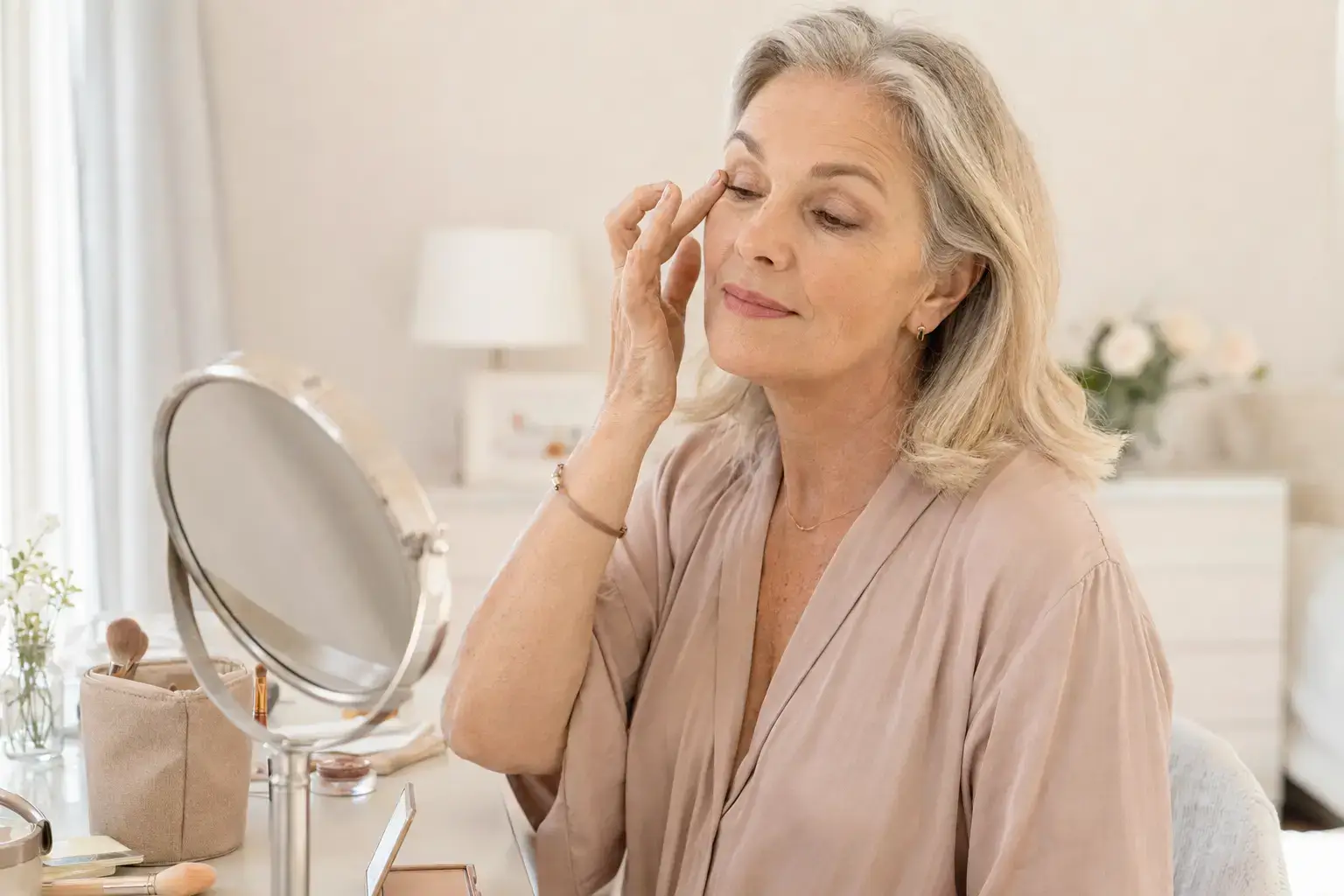
I would choose Bobbi Brown if staying power matters more than price. I would choose Charlotte Tilbury if I wanted a softly luminous pot that feels less like a firm pencil and more like a flexible wash. I would choose IT Cosmetics if pulling at the lid is my biggest concern. Julep is the practical stick for someone who wants a built-in smudger, Revlon is the inexpensive little pot, and Maybelline is the versatile stick I can use in three different ways.
Here is the simplest way I separate them:
- Best overall: Laura Mercier Caviar Stick Eye Shadow
- Best luxury long wear: Bobbi Brown Long-Wear Cream Eyeshadow Stick
- Best for dry, crepey-looking lids: Charlotte Tilbury Eyes to Mesmerise
- Best no-tug formula: IT Cosmetics Superhero No-Tug Waterproof Eyeshadow Stick
- Best easy everyday stick: Julep Eyeshadow 101 Creme-to-Powder Eyeshadow Stick
- Best affordable cream pot: Revlon ColorStay Creme Eyeshadow
- Best budget multitasker: Maybelline Color Tattoo Eye Stix
I do not think the most expensive option is automatically the best. I use the same logic when I compare luxury and drugstore foundations for mature skin: the formula has to solve your problem. A drier lid may love a softly emollient pot, while an oily or deeply hooded lid may need a quicker-setting waterproof stick.
Why Cream Eyeshadow Can Work So Well After 50
The reason I keep coming back to cream eyeshadow is control. A soft cream lets me place color exactly where I want it, blend the edge with a fingertip and stop before the eye looks overloaded.
Powder shadow is not bad for mature eyes. A finely milled powder can be beautiful. The problem is that dry powder can catch on an uneven eyelid, create fallout over concealer and make a simple look require several brushes. A cream stick or pot can remove some of those steps. It can act as color, a base and sometimes a softly smudged liner.
Mature skin often feels drier than it once did. The American Academy of Dermatology notes that skin becomes drier as we age and fine lines become more visible. That does not mean every mature eyelid needs a greasy formula. It means I pay more attention to flexibility, drag and the way a finish reflects light.
I especially like cream eyeshadow for:
- A one-color daytime eye.
- Dry lids that look dusty under powder.
- Hooded eyes that need color blended slightly above the fold.
- Anyone who finds small brushes fiddly.
- Travel or quick makeup.
- Soft liner along the upper lashes.
- Creating a grippy base under a tiny amount of powder shadow.
The finish still matters. A very frosty cream can spotlight every fold, just as an extremely dry matte can look flat. I usually prefer satin, soft pearl, taupe shimmer or a flexible matte. I save metallic sparkle for a small area on the mobile lid rather than covering the whole eye.
That balance is similar to the one I use in my matte versus dewy makeup guide for mature skin: texture is not the enemy, but the wrong amount of shine or powder can make texture louder than I want.
What I Looked for in the Best Cream Eyeshadow for Mature Eyes
I used six main criteria. I wanted this to be a useful ranking, not a list of seven products that all sound equally wonderful.
1. Glide without pulling
The skin around the eyes is delicate. I prefer a stick that deposits color with light contact or a pot that melts under a fingertip. If I have to press hard, draw back and forth repeatedly or hold the lid taut, the product is not giving me the easy mature-eye routine I want.
2. Enough blending time
Long wear is only helpful after the shadow looks right. I want a small window in which I can soften the edge and move the color above a hooded fold. A formula that locks instantly may be excellent as liner but stressful as an all-over shadow.
3. A finish that does not shout “texture”
I looked for soft matte, satin, pearl and refined shimmer options. I am not against shimmer after 50. I am against chunky sparkle that falls into the eye or sits in every line. The American Academy of Ophthalmology specifically advises caution with metallic, glitter and sparkle particles that can fall into the eye and cause irritation. I therefore favor smooth pearl over loose glitter, especially for sensitive or watery eyes.
4. Crease and transfer resistance
Hooded lids touch themselves all day. A lovely cream that never sets can stamp color above the crease. I looked for film formers, wax-based sticks, waterproof or water-resistant claims and clear application advice from the brands. I still treat 16- or 24-hour figures as maximum marketing claims rather than a promise that every lid will look untouched for that long.
5. Useful shades
I wanted wearable neutrals, not only bright trend colors. Taupe, rose-beige, bronze, muted mauve, cocoa and soft champagne are easy to place and easy to pair with mature makeup. They can define the eyes without creating a hard block of color.
6. Sensible application and removal
I gave extra credit to twist-up sticks, built-in smudgers, included brushes and multipurpose formats. I also looked at how firmly the formula sets because the most budge-proof shadow may require a more patient removal routine.
I would use the same “thin layers first” rule here that I use when I stop foundation from separating on mature skin. More product rarely fixes a texture problem. It usually creates a thicker texture problem.
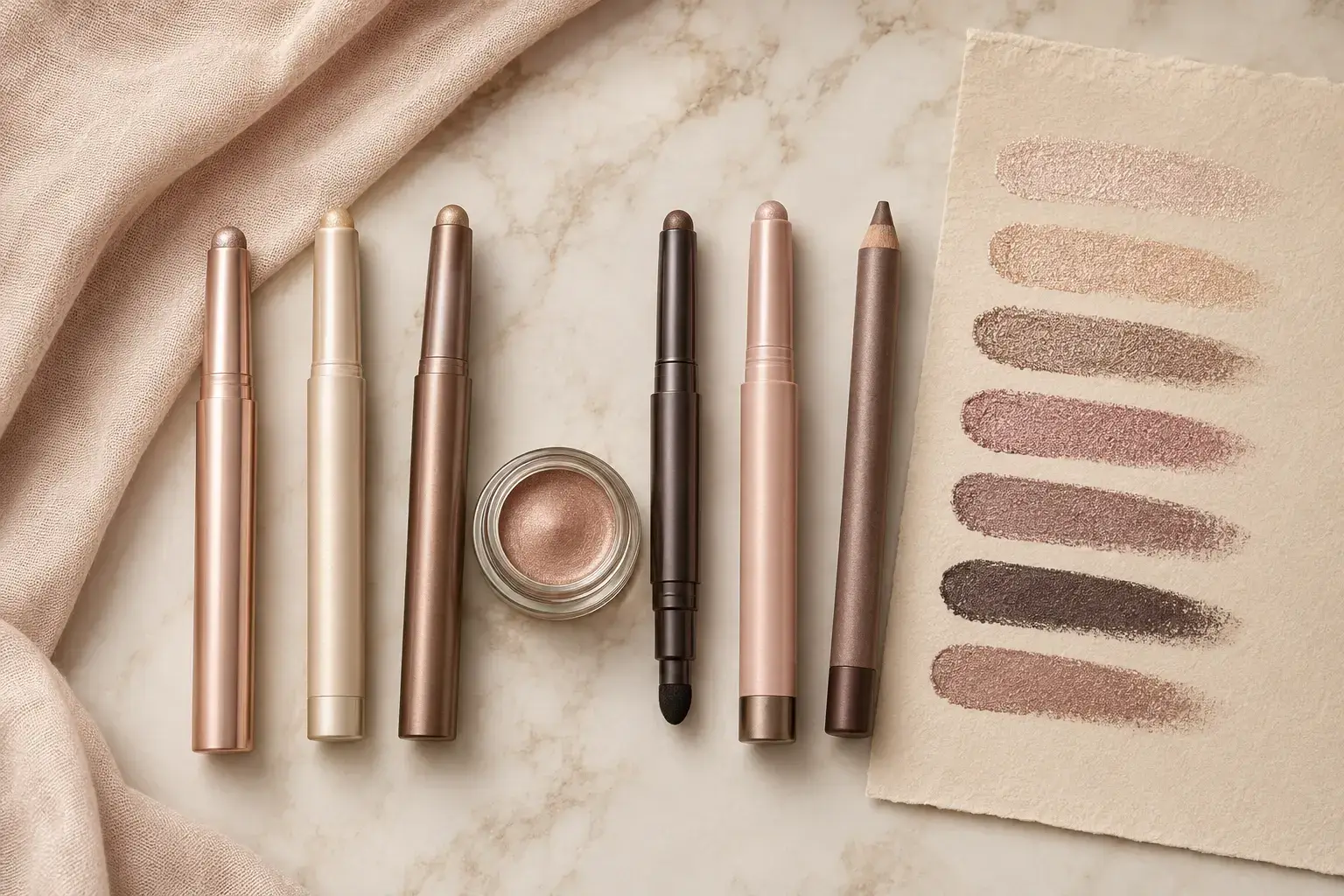

Quick Comparison: The 7 Best Cream Eyeshadows for Mature Eyes
| Product | Best for | Format | Finish options | Wear style | My mature-eye note |
|---|---|---|---|---|---|
Laura Mercier Caviar Stick Eye Shadow | Best overall | Twist-up stick | Shimmer and luminous neutrals | Sets firmly; waterproof claim | Best balance of glide, playtime and hold |
Bobbi Brown Long-Wear Cream Eyeshadow Stick | Luxury long wear | Twist-up stick | Matte, shimmer, multichrome | Waterproof 24-hour claim | Excellent for hooded or oily lids; blend promptly |
Charlotte Tilbury Eyes to Mesmerise | Dry, crepey-looking lids | Cream pot | Luminous metallic pearl | Long-wear, crease-resistant claim | Soft, emollient look; use a thin veil |
IT Cosmetics Superhero No-Tug Waterproof Eyeshadow Stick | No-tug application | Stick | Matte and pearl shades | Waterproof 16-hour claim | Smooth application and a quick set |
Julep Eyeshadow 101 | Easy everyday blending | Stick with smudger | Matte, shimmer, metallic | Waterproof, crease-proof claim | Practical and shade-rich; cream-to-powder feel |
Revlon ColorStay Creme Eyeshadow | Affordable cream pot | Pot with cap brush | Matte and shimmer | Waterproof 24-hour claim | Easy to sheer out; packaging can be awkward |
Maybelline Color Tattoo Eye Stix | Budget multitasking | Twist-up stick with sharpener | Matte and shimmer | Water-, sweat- and crease-resistant claim | Shadow, liner and primer in one |
I have not included exact Amazon prices because they change constantly by shade and seller. I would compare the current price, delivery date and seller on the Amazon page before ordering.
1. Laura Mercier Caviar Stick Eye Shadow – Best Overall


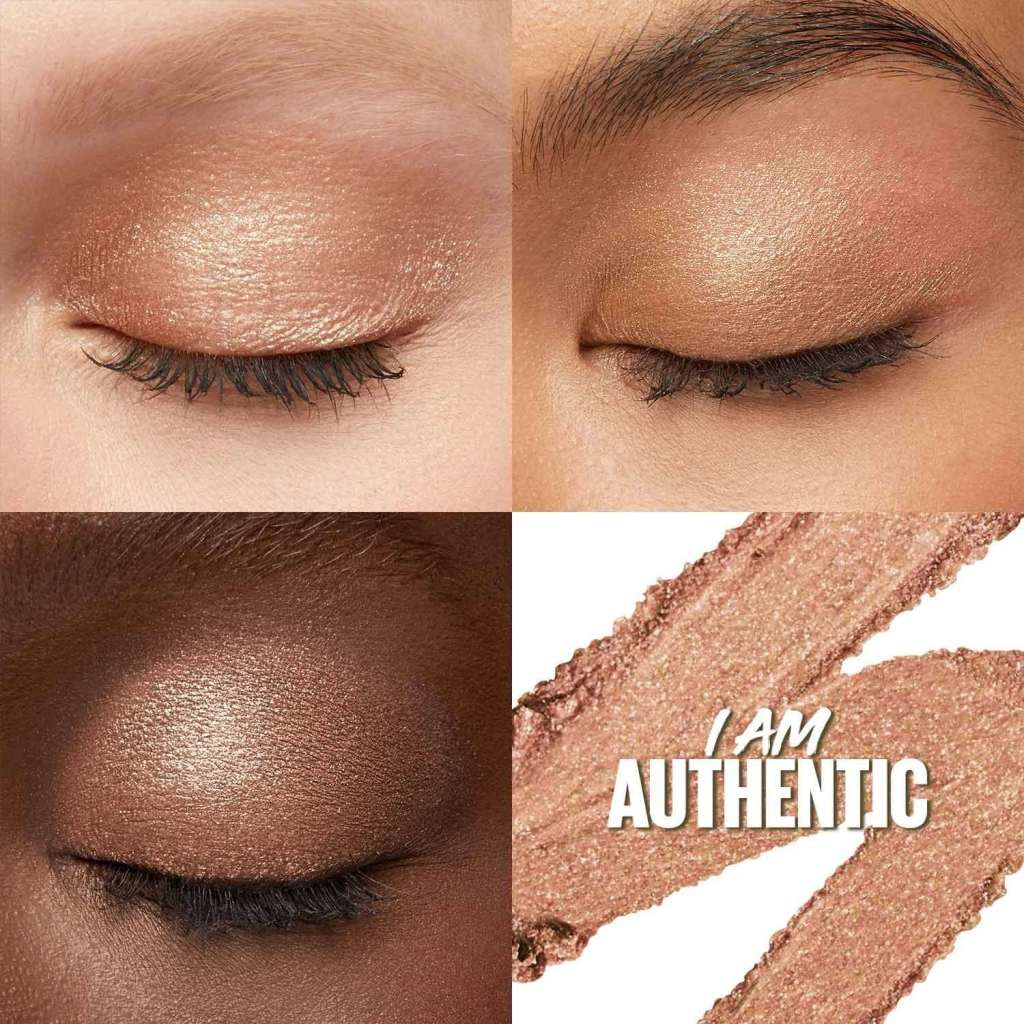
Laura Mercier Caviar Stick takes my top spot because it gives me the most complete mature-eye package on paper: a creamy texture, time to blend, rich but buildable color and a strong set once I finish the placement.
The current formula comes in a refined group of shades that make sense for mature eyes. Amethyst is a soft mauve with hidden pearl, Cocoa is a rich walnut brown, Smoky Quartz is a medium gray-brown and Strapless is a soft nude shimmer. I like colors that already contain a little gray, brown or rose because they create definition without looking stark.
The brand says its 24-hour formula has an easy-to-blend application and a measured amount of playtime. That playtime is the detail that pushed it above the other very long-wearing sticks for me. I need enough time to blur the upper edge, particularly on a hooded lid.
Laura Mercier also lists hyaluronic acid and says it promotes moisture on the eyelid. I do not treat an eyeshadow as skincare, and hyaluronic acid in a color product does not replace a comfortable eye-area routine. Still, I prefer seeing a hydration-minded ingredient in a formula intended to glide over texture.
Why I ranked it first for mature eyes
I ranked it first because it can be sheer or stronger. One light swipe can create a daytime haze; another layer can deepen the outer corner. That flexibility is far more flattering than placing one thick, opaque stripe and trying to erase the edge.
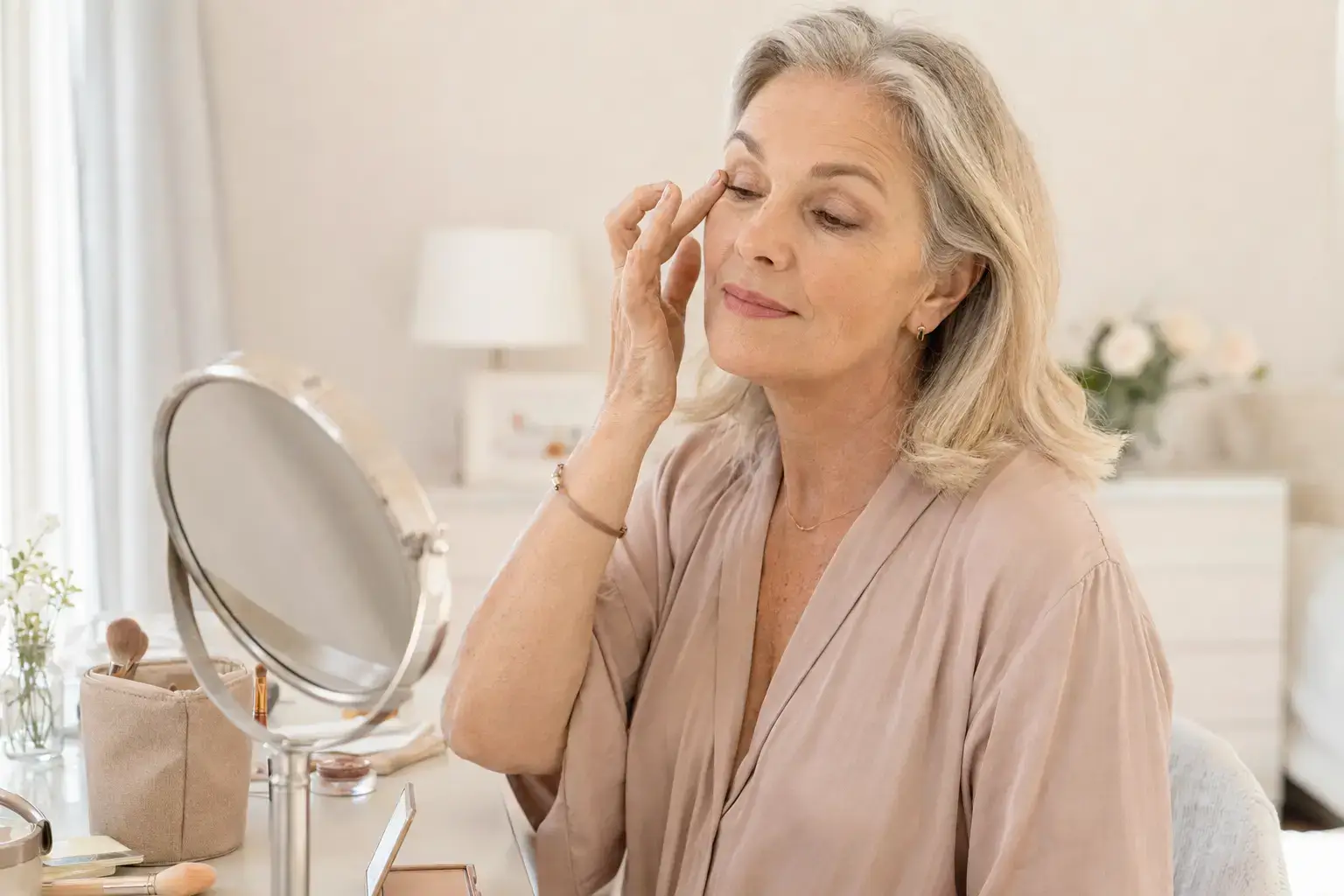
I would use a fingertip for the mobile lid and a small synthetic brush only at the lash line or outer corner. I would work one eye at a time. The official instructions also say to blend quickly before the product sets, which is exactly how I would approach a long-wear stick.
For a simple everyday look, I would pair a taupe or mauve stick with softly lifted lashes and a light base. My Clinique Even Better Clinical foundation review is a useful companion if you like polished, skin-like makeup rather than a heavily powdered face.


The drawback
This is not the cheapest stick, and most of the current shades lean shimmer or pearl rather than truly matte. If your eyelids are very textured and you dislike any reflection, Bobbi Brown or Julep gives you more matte choice. A strongly set stick can also feel less forgiving if you keep blending after it dries.
My best shade direction
I would begin with Smoky Quartz for a balanced gray-brown, Amethyst for a softer mauve or Strapless for an easy nude shimmer. I would keep the brightest shimmer near the center of the lid, not all the way into a deep crease.
Best for: most mature eyes, one-and-done makeup, hooded lids, contact lens wearers who tolerate the formula, and anyone who wants a refined neutral stick.
Check Laura Mercier Caviar Stick on Amazon
2. Bobbi Brown Long-Wear Cream Eyeshadow Stick – Best Luxury Long Wear


Bobbi Brown is the formula I would choose when a hooded lid, oily eyelid or long day makes staying power the first priority. It is creamy during application, but its personality is more “blend and set” than “keep moving me around.”
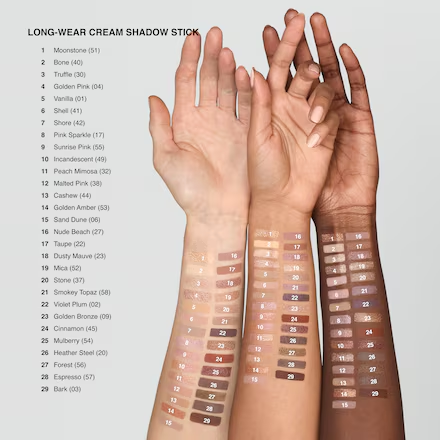
The shade range is one of the strongest reasons to consider it. There are mattes such as Taupe, Antique Rose, Hazelnut, Cinnamon and Bark, as well as softer shimmers and multichromes. I appreciate that choice because not every mature eye wants a luminous finish. A matte mid-tone can create shape above the crease, while a tiny amount of champagne or rose shimmer can brighten the mobile lid.
Bobbi Brown says the smooth formula applies without tugging and that its waterproof color is designed for non-settling, non-creasing and non-smudging wear. I would still judge the result at the end of my day rather than taking 24 hours literally, but this is clearly the most stay-put-focused luxury option in the group.
Why I like it for hooded mature eyes
Hooded eyes need two things that can feel contradictory: enough slip to place color above the fold and enough hold to stop it stamping onto the upper lid. Bobbi Brown addresses both better than a soft, never-setting pot.
The brand’s own hooded-eye advice is sensible: apply a medium shade on the lid and blend it above the crease so the color remains visible when the eye is open. That is the placement I use in this guide too. I do not chase a crease that disappears when I relax my face; I create a soft visible shape while looking straight into the mirror.
If my under-eye area is already shadowy, I would keep the lower lash line very soft. A thin veil of Taupe or Antique Rose on top, followed by the right amount of concealer for mature skin, looks fresher than surrounding the whole eye with deep brown.

The drawback
The quick set can punish overworking. I would not draw a thick block over both eyes and then start blending. I would do one eye, use small amounts and keep the cap closed between steps. The strongest waterproof formulas also need a proper remover rather than repeated rubbing.
My best shade direction
I would choose Taupe or Antique Rose for an understated matte, Golden Pink for soft warmth, or a restrained touch of Mica near the inner lid. I would treat the deeper shades as liner or outer-corner definition, not as an all-over wash unless I wanted a smoky evening eye.
Best for: hooded mature eyes, oily lids, long days, matte lovers and anyone who wants a cream stick that functions almost like its own primer.
Check Bobbi Brown Cream Eyeshadow Stick on Amazon
3. Charlotte Tilbury Eyes to Mesmerise – Best for Dry, Crepey-Looking Lids


Charlotte Tilbury Eyes to Mesmerise is the outlier in this ranking because it is a soft cream pot rather than a firm stick. I chose it for the mature eyelid that looks worse under dry powder and prefers a luminous, flexible wash.
The formula contains water, silicones, emollients and vitamin E. The brand describes a cooling, easy-glide texture and says its illuminating pigments create a soft-focus effect. More importantly for application, it says the formula is easy to blend and build. That gives me the freedom to use a very small amount and press it onto the lid instead of drawing a line.
The brand reports that 85% of a 60-person test group agreed it was long lasting and 88% agreed it was easy to blend. Those results are useful context, although they do not tell me how it behaves on every eyelid shape or skin type.
Why I chose it for drier lids
A pot lets me control pressure. I can warm a rice-grain amount between my ring finger and thumb, then press rather than swipe. That is helpful if the lid folds when a pencil touches it or if the skin feels tight.
The luminous finish can also make a dry lid look less flat. The trick is quantity. A whisper of rose-beige or champagne can look fresh; a thick metallic layer can gather in folds and become more reflective than flattering.
I would keep the rest of the look equally soft. A luminous cream eye works beautifully with the kind of restrained glow I discuss in my highlighters that give mature skin lift without obvious sparkle. I would not combine a frosty eyelid, a very shiny cheek and a glossy base all at full strength.

The drawback
This may not be the best choice for very oily lids or a deep hood that transfers every creamy product. It can crease if I apply too much, and a pot is less convenient for travel or shaky hands than a twist-up stick. The finish is luminous, so someone who wants a true matte should choose another product.
My best shade direction
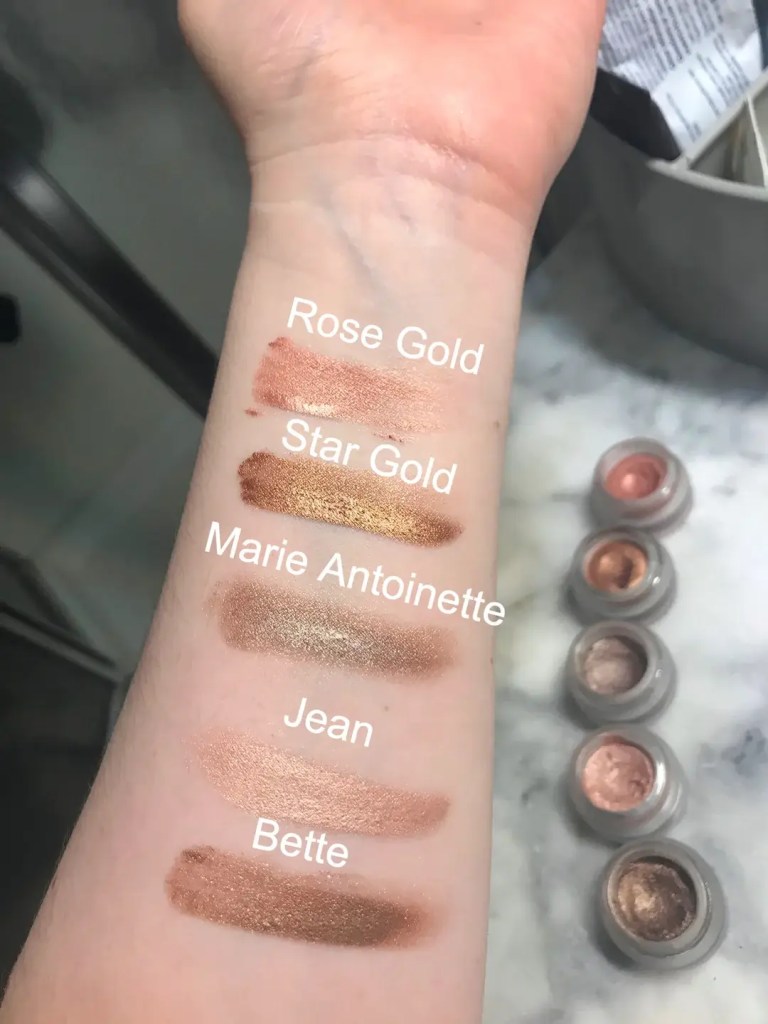
Champagne gives a pink-champagne glow; Oyster Pearl is a taupe-toned classic in markets where it is available; Rose Gold is warmer and more romantic. I would use a single thin layer and add depth with soft brown liner rather than piling on a second metallic layer everywhere.
Best for: dry-looking lids, a soft evening glow, fingertip application and women who dislike the firmer feel of a set cream stick.
Check Charlotte Tilbury Eyes to Mesmerise on Amazon
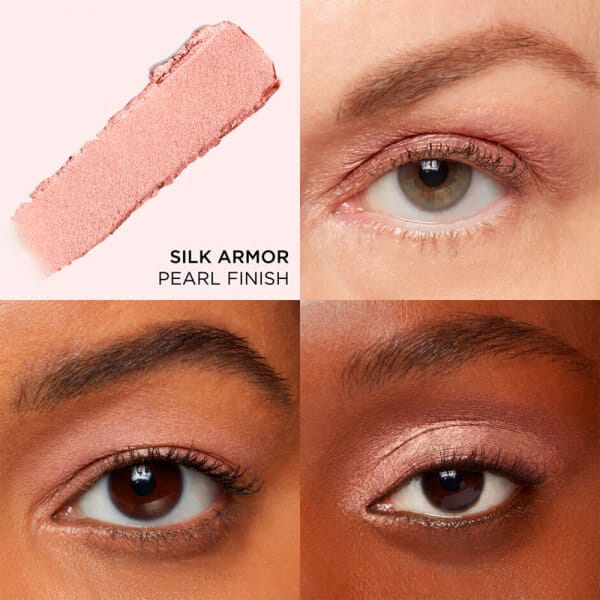
4. IT Cosmetics Superhero No-Tug Waterproof Eyeshadow Stick – Best No-Tug Formula


The name tells me exactly what this stick is trying to solve: pulling. IT Cosmetics positions Superhero No-Tug as a smooth, blendable, waterproof stick with all-day wear, and I chose it for anyone whose lid bunches or shifts under a drier pencil.
The brand lists “super smooth glide,” “super blendable” and “super creaseless” among its headline benefits. Its current product information also cites a 16-hour wear claim and reports that 90% said it applied evenly and 85% said it visibly smoothed the look of the eyelid. I treat those numbers as brand study results, not a promise, but they are at least focused on the application concerns that matter here.
Why I like the no-tug idea after 50
I do not want to stretch an eyelid flat every morning just to make a product move. A cream stick should transfer with light contact. I would dot or make two short swipes close to the lash line, then immediately tap upward with my ring finger.
The waterproof set also makes sense for a watery eye. If watery eyes are a frequent problem, I would keep the whole routine minimal and use the same careful approach I use in my waterproof mascara guide for mature lashes: flexible layers, clean tools and gentle removal.

The drawback
This stick is designed to set, so speed matters. Very dry lids may prefer the cushion of the Charlotte Tilbury pot. Shade availability can also vary by retailer, and some of the prettier pearl shades may show more texture than the soft mattes if I apply them heavily.
My best shade direction
I would look first at soft rose, taupe, bronze or a muted matte rather than the palest high-shine shade. I would use a deeper color only along the outer third and upper lash line, where it can give lift without shrinking the visible lid.
Best for: delicate lids, quick application, watery eyes, travel and women who want strong hold without repeatedly dragging a pencil across the skin.
Check IT Cosmetics Superhero No-Tug on Amazon
5. Julep Eyeshadow 101 Creme-to-Powder Eyeshadow Stick – Best Easy Everyday Stick

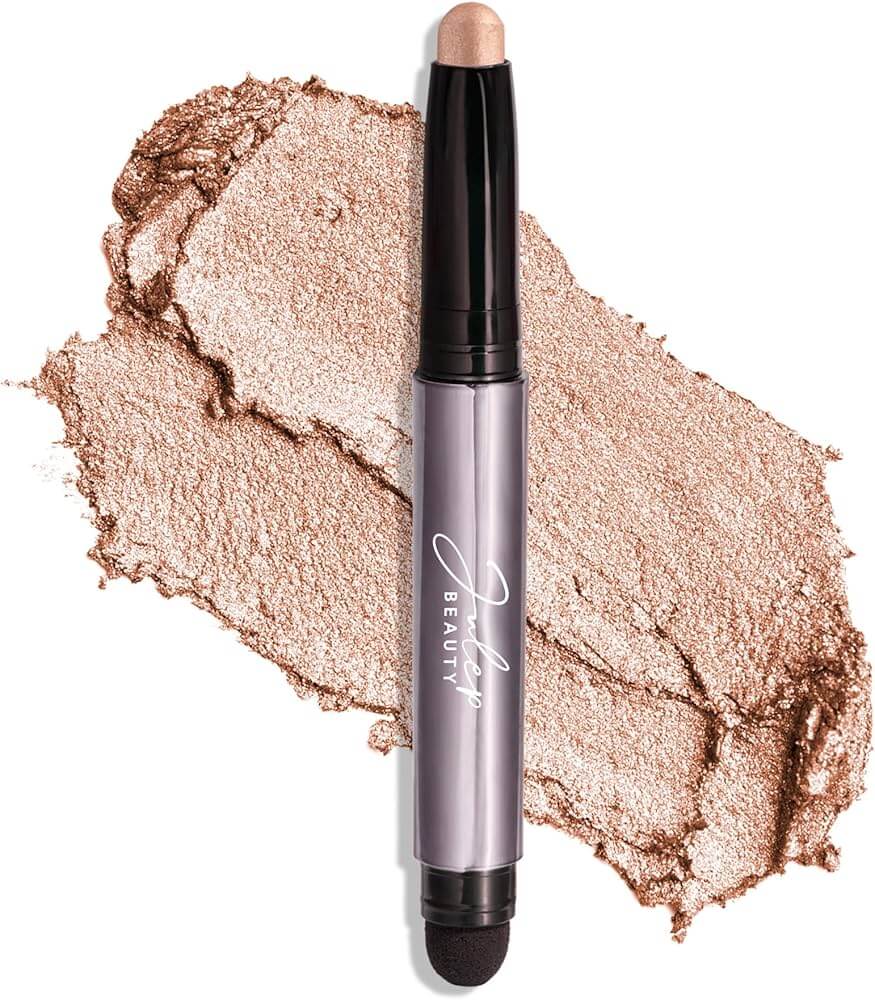
Julep Eyeshadow 101 is the practical choice in this list. It gives me a stick at one end and a smudger at the other, plus a broad range of matte, shimmer and metallic shades. I chose it for someone who wants an uncomplicated everyday shadow without luxury pricing.
Julep describes it as a creme-to-powder stick with a built-in smudger, and says the formula delivers waterproof, crease-proof, all-day color. It also highlights vitamin E, vitamin C and candelilla wax, although I rank the application and shade choice above skincare-style ingredient marketing.
The built-in smudger is useful for soft liner, but I would not rely on it to blend the entire lid if my skin is very dry. A clean fingertip usually gives more warmth and less friction. I would use the smudger at the upper lashes, then tap the top edge with a finger.
Why I like it for beginners
Julep has obvious, wearable shade names and multiple finishes. Putty Matte, Stone Matte, Desert Matte and Hazelnut Matte make sense for softly shaping the eye. Champagne Shimmer, Taupe Shimmer, Rose Shimmer and Smoky Amethyst Shimmer can add light without forcing me into a complicated color story.
I also like a creme-to-powder formula for someone who dislikes tacky lids. It starts with slip, then settles into a drier finish. That can be helpful under a hood, although it may be less comfortable on a very dehydrated lid.
When I want the whole face to look softly balanced, I would echo a rose or taupe eye with a restrained cheek. My seven-step blush routine for mature skin shows how I keep cream color lifted rather than pulling it down toward the mouth.


The drawback
The formula can set more powdery than the softer luxury creams, so I would prep a dry lid carefully and avoid stacking several layers. The large shade range can also be confusing online because finish and depth look different from one listing to another. I would check the exact shade name and finish before ordering.
My best shade direction
Putty Matte is the kind of quiet base I would choose for a natural look. Taupe Shimmer or Smoky Amethyst can add dimension, while Champagne Shimmer is better as a small brightening accent than a thick all-over layer.
Best for: beginners, quick one-shadow looks, travel, matte lovers and anyone who appreciates a built-in smudger.
Check Julep Eyeshadow 101 on Amazon
6. Revlon ColorStay Creme Eyeshadow – Best Affordable Cream Pot
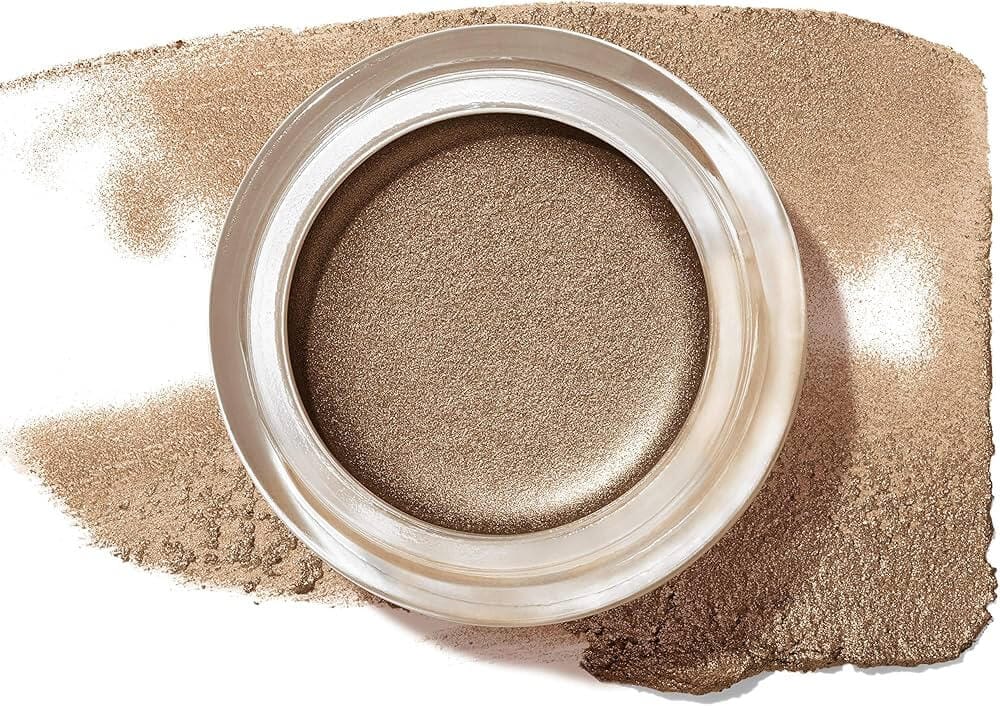

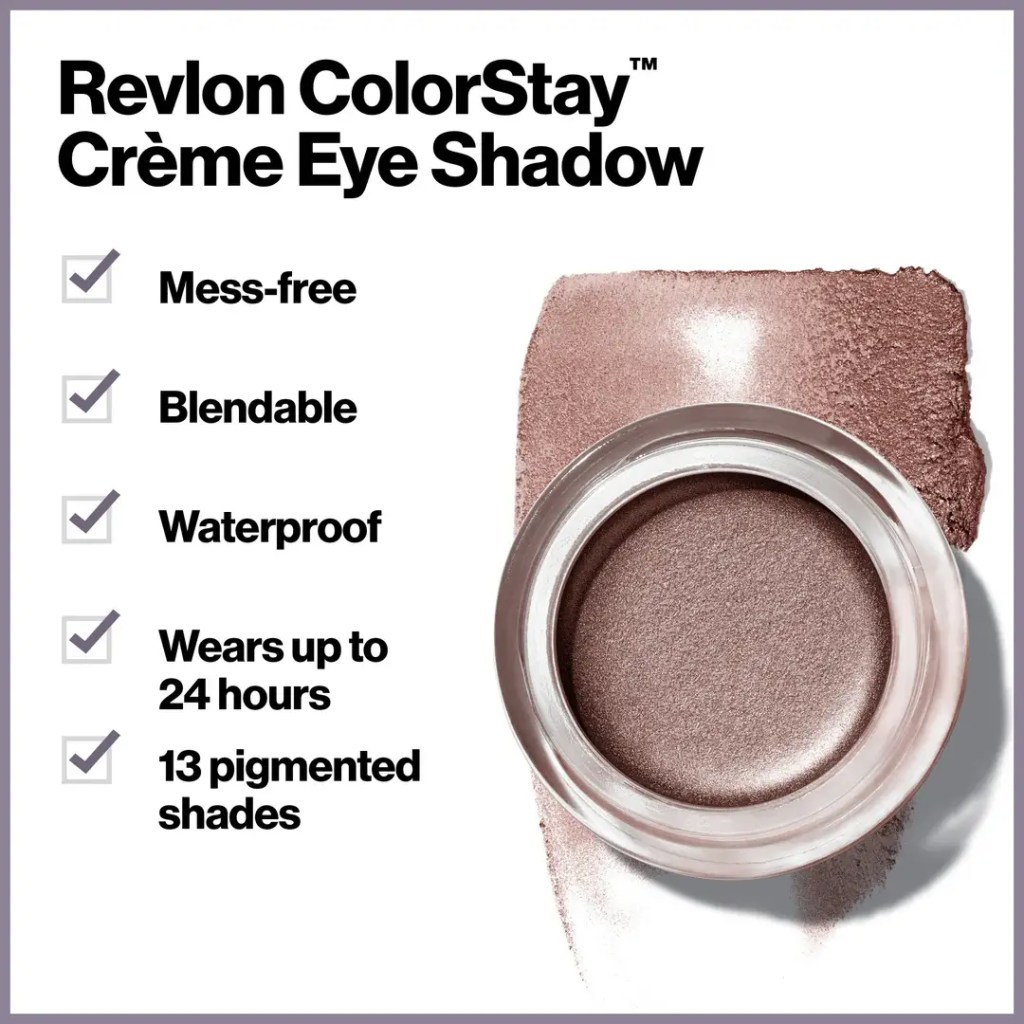
Revlon ColorStay Creme Eyeshadow is the budget pot I would choose when I want the softness of fingertip application without paying for a luxury jar. It can give either a sheer wash or more saturated color, and the small brush in the cap offers another application option.
Revlon says the smooth cream is waterproof and designed to wear for up to 24 hours. It also lists the product as ophthalmologist tested. I would never expect a low-cost pot to look pristine for a literal 24 hours on every hooded eye, but I do like that it aims for a set finish rather than remaining slippery.
Why I chose it over another budget stick
The pot format is different enough to earn a place. I can pick up almost nothing, warm it between two fingertips and press on a translucent veil. That makes it easy to avoid the thick stripe that sometimes happens with a stick.
The official instructions make the same distinction I would: use a finger for the sheerest wash and the included sponge-tip brush for bolder color. I would add one mature-eye adjustment – wipe or tap excess from the brush before it touches the lid.
The packaging warning
The product itself is appealing, but I found repeated complaints on Revlon’s own page about the jar being difficult to open. That matters. Makeup should not require a wrestling match, especially if grip strength or hand stiffness is an issue. I would watch a quick packaging demonstration before deciding that the pot is defective, and I would skip it if easy opening is a priority.
My best shade direction
Praline and Caramel are the sort of warm neutrals I would consider for everyday use; Chocolate or Espresso can be used sparingly as liner. I would choose a satin or soft shimmer over the frostiest option if texture is my main concern.
Best for: budget shoppers, sheer fingertip application, dry-looking lids that prefer a pot and anyone who wants both matte and shimmer choices.
Check Revlon ColorStay Creme Eyeshadow on Amazon
7. Maybelline Color Tattoo Eye Stix – Best Budget Multitasker


Maybelline Color Tattoo Eye Stix is the product I would pack when I wanted one pencil to act as eyeshadow, liner and primer. The twist-up stick includes a sharpener in the base, comes in matte and shimmer shades and is designed to resist creasing, water and sweat.
Maybelline describes it as a multi-use formula with up to 24-hour wear. The brand clarifies that it is water-resistant rather than made for swimming, heavy rain or tears. I appreciate that nuance. “Waterproof” and “water-resistant” are often treated as if they mean the same thing, but they do not.
The most useful official claim is its versatility: the stick can be used as shadow, eyeliner or eyeshadow primer. That makes it the best value if I genuinely use all three functions.
How I would use it after 50
As shadow, I would draw one short line close to the lashes and blend upward. As liner, I would sharpen the tip and press it between the lashes rather than drawing a hard, thick wing. As primer, I would choose a skin-toned or neutral matte, apply the thinnest possible veil and let it set before adding powder. If I’m using the stick as liner, I follow my seven-step eyeliner routine for mature eyes so the line stays thin, lifted and soft.
I would not apply it as liner on the inner waterline unless the exact product directions say that use is appropriate. The FDA advises consumers to use products near the eyes only for the eye-area purpose stated on the label.

The drawback
Some long-wear pencils become harder to blend as they age or if the cap is not closed securely. The built-in sharpener is useful, but it adds a small maintenance step and can waste product if I sharpen too aggressively. I would also work quickly; user feedback on the brand page repeatedly notes that the formula becomes difficult to move once set.
My best shade direction
I would choose a matte taupe or rose-beige for crease placement, a muted bronze for the lid or a deeper brown as liner. I would avoid taking a pale shimmer too far up toward the brow, which can flatten the eye shape instead of opening it.
Best for: budget makeup, travel, minimal makeup bags, soft liner and anyone who wants a long-wear cream base under powder shadow.
Check Maybelline Color Tattoo Eye Stix on Amazon
My Final Ranking by Mature-Eye Need
I do not think one cream eyeshadow wins every category. This is how I would narrow the list if I were choosing for a very specific concern:
- For the safest all-round starting point: Laura Mercier Caviar Stick.
- For a deep hood or oily eyelid: Bobbi Brown Long-Wear Cream Eyeshadow Stick.
- For a dry lid that hates pencils: Charlotte Tilbury Eyes to Mesmerise.
- For minimum drag: IT Cosmetics Superhero No-Tug.
- For a straightforward everyday stick: Julep Eyeshadow 101.
- For the lowest-cost pot experience: Revlon ColorStay Creme Eyeshadow.
- For shadow, liner and primer in one: Maybelline Color Tattoo Eye Stix.
If I wanted the most natural result, I would spend more time choosing the shade than obsessing over the longest wear claim. A soft taupe that suits my coloring will look more expensive than a luxury metallic that is too icy, too dark or too thick.
How I Apply Cream Eyeshadow on Mature Eyes
My application goal is not to erase every line. It is to create a soft shape that remains visible when the eye is open and looks blended in normal daylight.
Step 1: Start with a clean, comfortable lid
I remove leftover skincare, sunscreen or concealer from the mobile lid with a clean fingertip or dry cotton swab. I do not want the lid stripped and tight, but I also do not want a slippery layer that prevents the shadow from setting.
If the whole face is very dry, I prep it first and give skincare time to settle. My mature-skin foundation prep routine explains the same waiting principle: makeup behaves better when the skincare underneath has absorbed rather than sitting wet on the surface.
Step 2: Decide whether I need primer
I do not automatically prime every lid. A self-setting stick can perform perfectly on a clean eyelid. I add a very thin eye primer only if my lids are oily, the shadow transfers or I need the look to last through heat.
I avoid using a thick layer of face concealer as universal eye primer. A creamy concealer may crease under a cream shadow and create more product in the fold. If I do use concealer, I choose a tiny amount and let it set.
Step 3: Apply less than I think I need
With a stick, I make one short swipe along the upper lashes or place two small dashes on the mobile lid. With a pot, I pick up a rice-grain amount. I can always add more, but removing a thick set layer without disturbing the rest of my makeup is difficult.
Step 4: Blend upward, not outward and down
I tap across the mobile lid, then soften the upper edge slightly above the natural fold. I keep the highest point above the outer half of the iris rather than dragging the shadow toward the tail of the eyebrow.
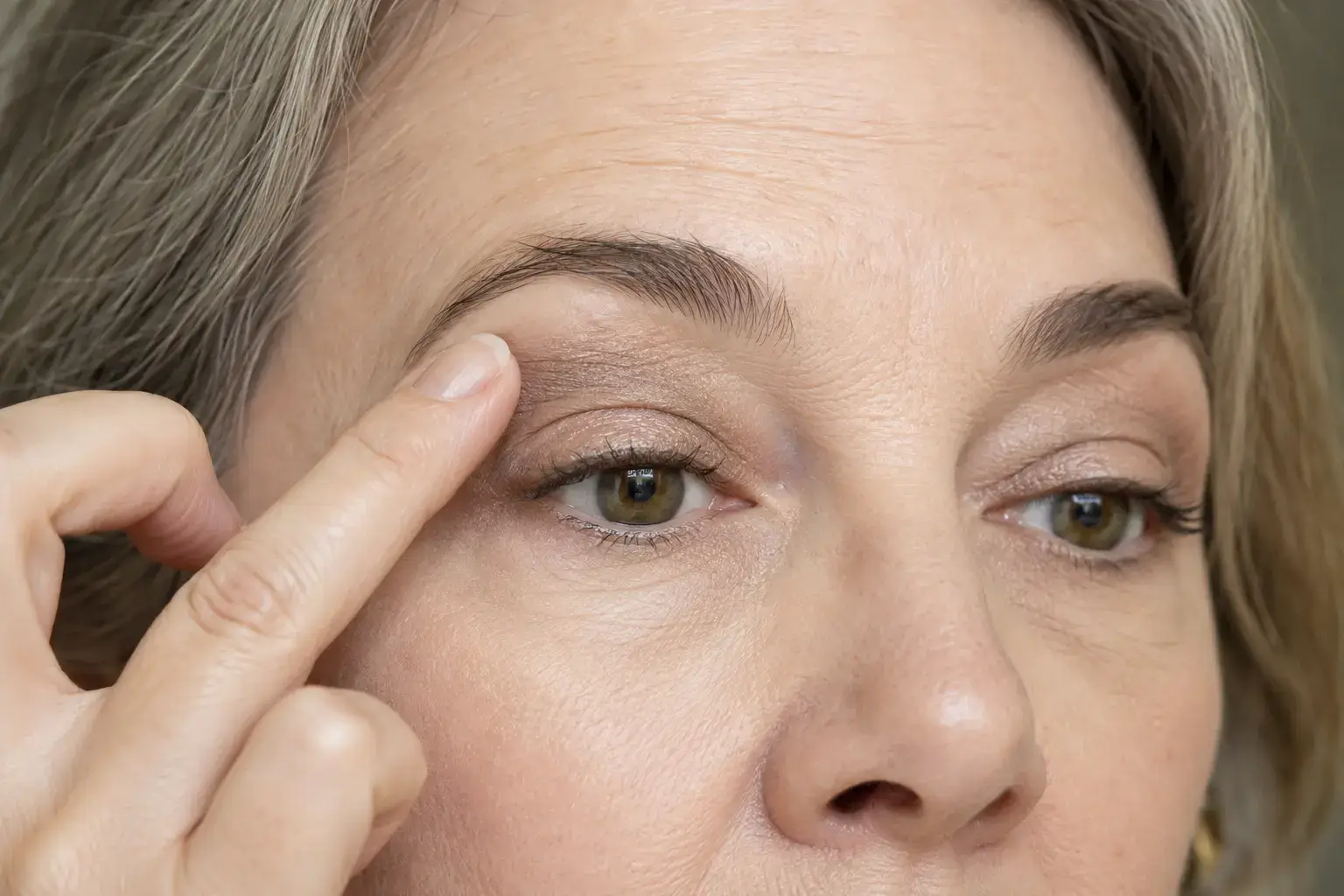

For a hooded eye, I relax my face and look straight ahead. If the color disappears, I add a tiny amount just above the fold. This is much more reliable than closing one eye, creating a beautiful shape and discovering that the entire design vanishes when I open it.
Step 5: Build depth only where it helps
I add a second layer at the outer third or near the lashes. I do not repaint the entire lid. Concentrating depth makes the eye look defined while keeping the center lighter and more open.
Step 6: Keep the lower lash line softer
I use whatever remains on the brush or fingertip under the outer lower lashes. A strong band under the whole eye can emphasize darkness and make the eye look smaller. If I already use under-eye concealer, I protect that smoothness rather than covering it with fallout and heavy liner.
My best concealers for mature skin guide can help if the eye shadow looks lovely but the under-eye makeup keeps creasing.
Step 7: Finish with controlled lashes and brows
I curl the lashes if needed and use mascara mainly at the roots. With a luminous eye, brown-black or soft black often looks more harmonious than an extremely heavy jet-black lash. I fill only obvious gaps in the brow so the eye remains the focus.
How I Choose a Cream Eyeshadow Shade After 50
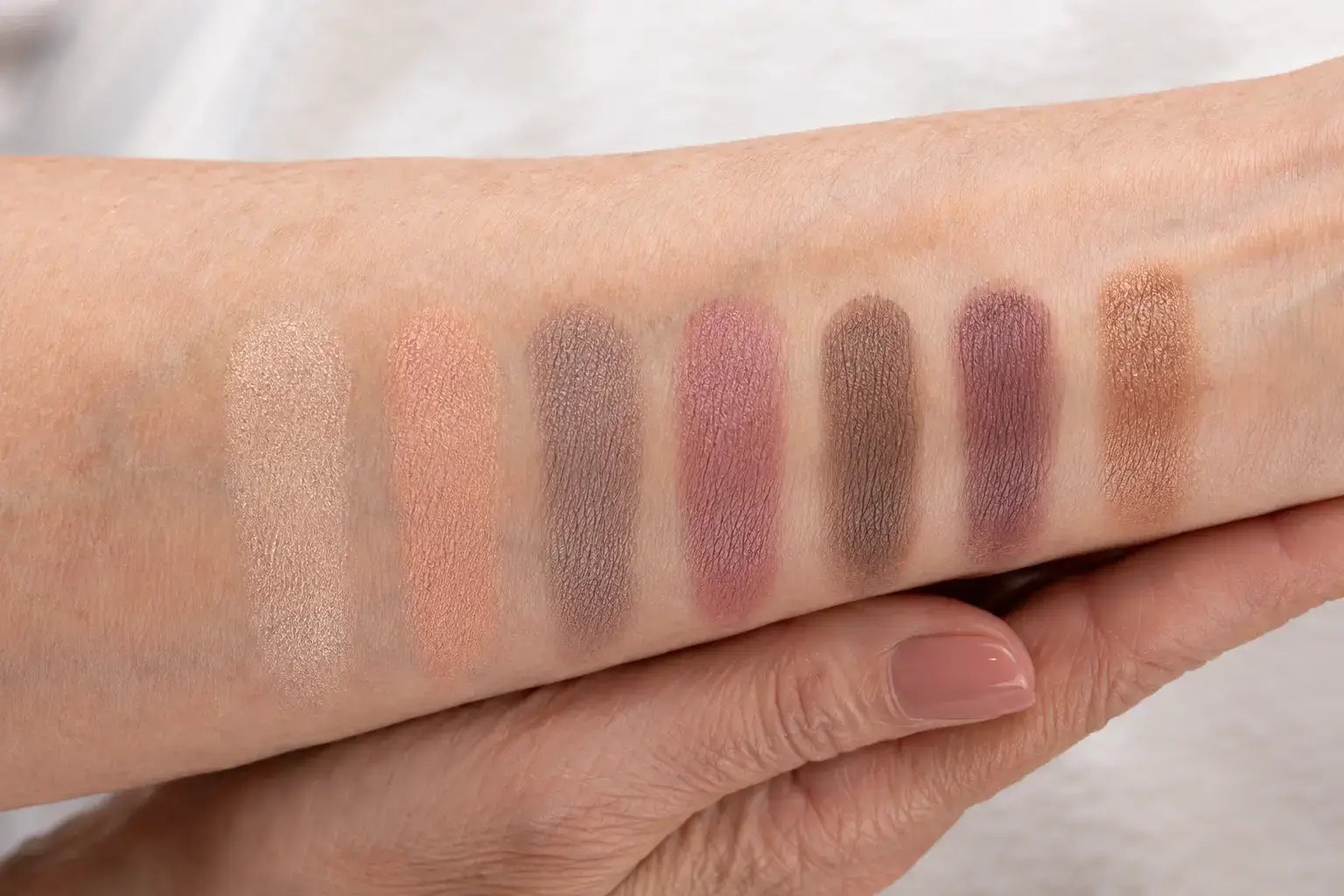
I do not believe women over 50 must wear beige. Color can be beautiful. I simply prefer color with a little softness in it: gray in a purple, brown in a rose, bronze in a gold or taupe in a shimmer.

For blue eyes
I would try warm taupe, bronze, copper, peach-champagne or a muted rose. I keep orange warmth controlled; I want contrast, not a bright block.
For green or hazel eyes
Mauve, plum-brown, rosewood and warm bronze can bring out green. I prefer a smoky amethyst to a cold violet because the brown or gray base makes it easier to wear.
For brown eyes
Brown eyes can carry almost anything. I especially like bronze, olive-brown, taupe, plum and soft gold. A deep cocoa used as liner can give definition without the harshness of black.
For gray eyes
Soft pewter, cool taupe, dusty mauve and rose-beige can echo gray eyes without washing them out. I add a slightly deeper lash line so the iris still has contrast.
For very fair skin
I start with champagne-beige, light taupe, muted rose and soft gray-brown. Very deep color can still work, but I introduce it at the lash line rather than covering the whole lid.
For medium to deep skin
I look for enough pigment to remain visible: warm bronze, rich cocoa, plum, copper, rose gold and deep taupe. A pale beige that turns ashy is not automatically “natural.” Natural means harmonious with the skin, not simply light.
I use the same color-balance idea when choosing blush and bronzer for mature skin and lipsticks that do not feather. The eye, cheek and lip do not need to match, but they should feel as though they belong in the same room.
Matte, Satin or Shimmer: Which Finish Is Best?
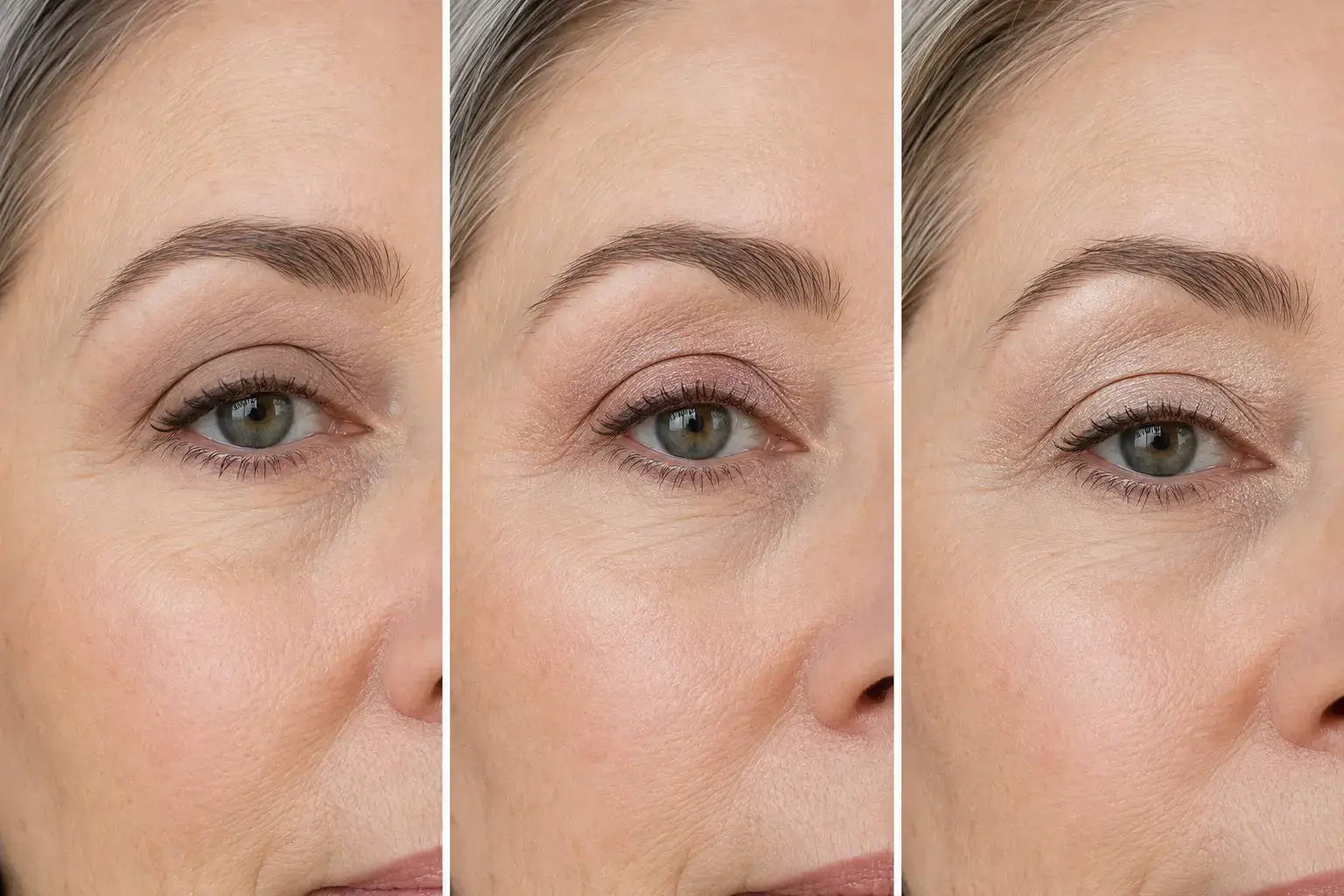
There is no rule that shimmer ages the eyes. Poorly placed, chunky shimmer can emphasize texture; a refined satin can make the eyes look brighter and more alive.

Matte
I use matte to create shape. A flexible taupe, rose-brown or cocoa matte is excellent just above a hooded crease or along the lash line. I avoid very pale, dry chalky mattes across a crepey lid.
Satin
Satin is my most forgiving finish. It reflects enough light to look fresh but not enough to make every fold sparkle. If I were uncertain, I would choose satin first.
Refined shimmer or pearl
I use shimmer on the center of the mobile lid or inner third. A smooth pearl in champagne, taupe, mauve or bronze can be beautiful. I stop before the brow bone and keep loose glitter away from sensitive eyes.
Metallic
I treat metallic as an accent. I press a small amount where the lid is smoothest and avoid building thick layers. A metallic formula that looks impressive in a swatch can look much stronger on an eyelid.
Common Cream Eyeshadow Mistakes I Would Avoid
Applying too much at once
This is the biggest mistake. A thick cream layer has more material to crease, transfer and gather. I use thin layers and deepen only the outer third.
Blending after the formula has set
Once a waterproof stick sets, rubbing harder does not make the edge prettier. It creates patchiness. I work one eye at a time and stop when the edge is soft.
Placing all the color inside a hidden crease
On hooded eyes, color can disappear. I check placement with my eyes open and face relaxed.
Taking pale shimmer to the brow
An all-over pale shimmer can flatten the shape of the eye. I keep the brow bone mostly quiet and let the mobile lid carry the light.
Using a greasy eye cream immediately underneath
Rich skincare can make shadow slide. I let eye products absorb and remove obvious residue from the lid before makeup.
Trying to fix creasing with more powder
A heavy powder layer over cream can become dry and thick. If creasing continues, I use less cream or a thin eye primer. This is the eye-area version of the “do not keep adding product” lesson in my guide to avoiding common foundation mistakes on mature skin.
How I Remove Long-Wear Cream Eyeshadow Gently
I treat removal as part of the product test. If a shadow looks beautiful but demands aggressive rubbing every night, it is not an easy mature-eye product for me.
I soak a soft pad with an eye-safe remover, hold it over the closed eye for 15 to 30 seconds and let the formula dissolve. Then I wipe downward and outward with very light pressure. I repeat with a clean section of the pad instead of scrubbing back and forth.


The FDA advises that eye cosmetics should be stopped immediately if they cause irritation. It also recommends clean hands and clean instruments around the eyes. I do not share a cream shadow or dip an unwashed brush repeatedly into a pot.
If I wear soft contact lenses, I follow the American Optometric Association’s advice to put soft lenses in before applying makeup. Anyone with recurring irritation, inflamed eyelids or an eye infection should pause eye makeup and follow professional medical advice.
Final Thoughts
The best cream eyeshadow for mature eyes is not the shiniest, the driest or the one with the boldest wear claim. It is the one that gives me enough glide to apply gently, enough time to soften the edge and enough hold to stay where I placed it.
Laura Mercier is my best overall choice because it balances those needs. Bobbi Brown is my long-wear specialist. Charlotte Tilbury is the soft luminous pot I would choose for a dry-looking lid. IT Cosmetics focuses on no-tug application, Julep makes everyday blending simple, Revlon gives me an affordable pot and Maybelline earns its place by doing three jobs.
Whichever one I choose, I would begin with a small amount, check the placement with my eyes open and let real skin remain real. A soft taupe haze, a little rose-bronze at the lid and clean mascara can do far more for the eyes than a complicated routine built to hide every line.
For a complete face that stays equally light, I would move next to my 25 makeup tips for mature skin or my summer makeup routine for mature skin when heat and humidity are part of the problem.
Frequently Asked Questions About Cream Eyeshadow for Mature Eyes
Is cream or powder eyeshadow better for mature eyes?
I do not think cream is automatically better than powder for every mature eye. I think cream is often easier when the lid is dry, the skin moves under a brush or I want one soft color without fallout. Powder can still be excellent when it is finely milled, softly pigmented and applied over a comfortable base.
I choose cream when I want speed, fingertip blending or a smooth satin finish. I choose powder when I want several carefully blended colors, a very soft matte transition or the ability to build depth slowly. Sometimes I use both: a thin cream shadow as a base, then a whisper of powder at the outer corner. The key is keeping the total amount of product light.
I use the same judgment with face makeup. A cream product is not always more flattering simply because skin is mature. In my best blush and bronzer guide, I compare how cream and powder behave rather than banning one texture. My setting powder guide for mature skin also shows that a fine powder can be helpful when I place it only where it is needed.
If powder shadow makes the under-eye area look messy, I would finish the eyes before foundation or protect the under-eye area, then apply a thin concealer. My concealer guide for mature skin explains why adding thick coverage over fallout usually makes lines more obvious. If the entire face feels dry and powdery, I would step back and review my winter makeup routine for mature skin before blaming the eyeshadow alone.
My simple answer is this: choose cream for easy glide and a one-step wash; choose powder for controlled layering; combine them only in thin layers. The finish and technique matter more than the category name.
What is the best eyeshadow for crepey eyelids over 50?
For crepey-looking eyelids, I prefer a thin satin or soft matte cream that moves easily and does not require repeated swiping. From this list, I would start with Laura Mercier for the overall balance, Charlotte Tilbury for a softly emollient pot or IT Cosmetics when avoiding drag is the priority.
I would not try to fill every line with product. That almost always creates a thicker layer that later gathers in the same folds I wanted to hide. I use one light veil close to the lashes, blend the edge while the formula is still flexible and place any shimmer only where the lid is relatively smooth.
Skin comfort matters too. The AAD explains that during menopause skin can become dry, slack and thin. I respond by using gentle skincare and allowing it to absorb, not by applying a heavy eye cream immediately before a waterproof shadow.
If dryness affects the whole makeup look, my skin-prep routine before foundation is a good starting point. I also explain useful hydrators and potential irritants in skincare ingredients women over 50 should know. For an occasional hydrating step away from eye makeup, my Korean face masks for mature skin guide helps me choose treatments without pretending a mask can permanently erase texture.
On the makeup side, I would pair a softly luminous lid with a skin-like base rather than a heavy matte face. My Giorgio Armani Luminous Silk review and Chanel Les Beiges review for mature skin both explore that lighter, refined finish. The result I want is harmony: soft eye, soft skin and no single texture fighting for attention.
How should I apply cream eyeshadow on hooded mature eyes?
I apply cream eyeshadow to hooded eyes while looking straight into the mirror. I keep my forehead relaxed and do not lift the eyebrow to manufacture more lid space. That shows me which part of the shadow will remain visible in real life.
I begin with one small swipe near the upper lashes. I tap it across the mobile lid, then blend a little color above the natural fold, mainly over the outer half of the eye. I keep the upper edge soft and slightly lifted. If I drag the color too far down at the outer corner, the eye can look tired; if I keep everything below the fold, the shadow disappears.
For a two-color look, I use a mid-tone taupe, rose-brown or muted mauve as the visible shape and place a lighter satin only on the mobile lid. I use a deeper shade like cocoa as a narrow upper-lash definition. I do not need a complicated cut crease.
Bobbi Brown’s own instructions for hooded eyes support this approach: blend a medium shade above the crease so it remains visible with the eye open.
I finish with lifted, separated mascara instead of a very thick lash. My waterproof mascara picks for women over 50 include options for hooded lids and watery eyes. If mascara or shadow still transfers, I check the amount of skincare and concealer around the eye before adding more powder. My guide to applying setting powder without drying mature skin shows the tiny, targeted amount I prefer.
For the rest of the face, I continue the upward direction with blush placement that creates a natural lifted look and a small amount of highlighter that does not look glittery after 50. Those details make the whole look feel intentional without turning it into heavy “lifting” makeup.
Do mature eyelids need primer under cream eyeshadow?
Not always. I use primer when it solves a real problem: oil breakthrough, transfer, fading or a deep crease that eats every shadow. I skip it when the cream stick already sets well on a clean lid and another layer would only make the eye feel thicker.
If I use primer, I apply a nearly invisible amount and let it dry. I do not coat the entire eye with thick face primer, wet concealer and powder before adding cream shadow. Too many incompatible layers can roll, separate or crease. That is exactly why I emphasize product compatibility in my makeup layering routine for mature skin.
A creamy face primer is not necessarily an eye primer. Some face primers are very emollient or silicone-rich and can make a shadow slip; others are not intended for use close to the eyes. I follow the label. My Primer 101 guide for older women explains what different primer categories do, while my best primers for mature skin focuses mainly on the face rather than automatically extending every product onto the eyelids.
I also avoid using powder as a reflex. A tiny veil can reduce tack on an oily fold, but a heavy layer under or over cream shadow may look dry. If I struggle with this same urge elsewhere on my face, I revisit my guide to stopping foundation separation and my common foundation mistakes on mature skin. Both remind me that more layers do not automatically create more wear.
My test is simple: I wear the shadow on a clean lid for a normal day. If it stays smooth, I do not add primer. If it transfers, I repeat with a thin eye primer. I change one variable at a time so I know what actually helped.
Which cream eyeshadow is best for sensitive eyes, watery eyes or contact lenses?
No eyeshadow can be guaranteed irritation-free for every person. “Ophthalmologist tested” and “suitable for sensitive eyes” are useful signals, but they are not the same as a personal tolerance guarantee.
Laura Mercier states that Caviar Stick is ophthalmologist tested, dermatologist approved, suitable for sensitive skin and safe for contact lens wearers. Revlon lists ColorStay Creme Eyeshadow as ophthalmologist tested. Those claims make them reasonable products to investigate first, but I would still read the full ingredient list for any known allergy and stop immediately if I felt burning, persistent itching or swelling.
For watery eyes, I prefer a set, transfer-resistant formula and I keep color away from the inner corner and waterline unless the product is specifically approved for that placement. The FDA advises clean hands, clean instruments and no sharing of eye cosmetics. It also says to avoid eye cosmetics during an eye infection or while the surrounding skin is inflamed.
I keep pot products especially clean because a finger or brush returns to the jar. I wash my hands, use a clean brush and never add water or another liquid to “revive” a dried eye product. The FDA explains that cosmetics can become harmful when contaminated with bacteria or fungi.
I also keep the under-eye routine simple because watery eyes plus rich concealer can create a mobile mixture. My best concealers for mature skin and setting sprays that do not feel tight after 50 help me finish the rest of the makeup without overloading the eye area. Persistent symptoms belong with an optometrist, ophthalmologist or doctor, not another layer of makeup.
What cream eyeshadow colors make mature eyes look brighter?
I think the most brightening shade is usually a mid-light color with enough contrast to define the eye and enough softness to blend into the skin. Very pale frost can make the lid look lighter but may not make the eye look brighter. Sometimes a soft taupe, bronze or mauve creates more brightness because it frames the iris.
For blue eyes, I like warm taupe, rose-bronze and peach-champagne. For green or hazel eyes, I like smoky mauve, plum-brown and bronze. For brown eyes, I like bronze, olive-taupe, cocoa and soft gold. For gray eyes, I like pewter, dusty rose and cool taupe.
I also consider the rest of the makeup. A bright eye can look disconnected if the cheeks are very flat or the lipstick is fighting the undertone. I use my best lipsticks for mature skin to choose a soft rose, berry, nude or warm red that relates to the eye without matching it exactly. I use my blush and bronzer picks for mature skin to bring back enough warmth after foundation.
If I am wearing a very light base, I keep the eye equally breathable. My top BB and CC creams for mature skin and tinted moisturizers with SPF for women over 50 fit naturally with one cream shadow, mascara and cream blush. If I want a polished event look, I might pair a taupe or rose-bronze eye with one of my luxury foundation picks for mature skin.
The final test is daylight. I swatch the shade, look at it near a window and check whether it turns orange, gray or too icy on my skin. The prettiest color in the tube is not always the one that makes my eyes look most awake.
How do I stop cream eyeshadow from creasing and make it last all day?
I begin by using less. Creasing is often a product-quantity problem before it is a product-quality problem. I apply a thin layer to a clean lid, blend promptly and let it set before opening and closing my eyes repeatedly or adding mascara.
If that is not enough, I add a tiny amount of eye primer. On a very oily or hooded lid, I may place the faintest veil of translucent powder only in the deepest fold, not over the entire eye. I avoid rich eye cream immediately before makeup and I do not use wet concealer underneath unless I have already tested that combination.
I choose the formula for the day. Bobbi Brown, Laura Mercier, IT Cosmetics and Maybelline are the more set-focused sticks in this group. Charlotte Tilbury gives a softer luminous effect but may need more careful quantity control on an oily hood. Revlon and Julep sit between those experiences depending on shade and application.
Heat and humidity can change the result. If the whole face is moving, I use the lighter layers in my summer makeup guide for mature skin and finish the base with one of my setting sprays for mature skin. I do not spray directly into open eyes; I close them and follow the label.
At night, I remove long-wear shadow patiently. I hold remover over the closed eye, let it dissolve the film and wipe gently. I never treat strong adhesion as permission to scrub. That gentler finish is also how I remove the products in my waterproof mascara routine after 50.
Finally, I remember that “all day” does not have to mean 24 hours. I want my shadow to look smooth through the hours I actually wear it, then come off without a fight. A ten-hour result that feels comfortable and removes gently is more useful to me than a 24-hour claim that leaves the eye area irritated.